保留正文与补采附件。源页面当前未重新核验;具体限制见交付清单。
 We value your privacy
We use cookies to enhance your browsing experience, serve personalised ads or content, and analyse our traffic. By clicking "Accept All", you consent to our use of cookies.
Customise Reject All Accept All
Customise Consent Preferences
 We use cookies to help you navigate efficiently and perform certain functions. You will find detailed information about all cookies under each consent category below.
The cookies that are categorised as "Necessary" are stored on your browser as they are essential for enabling the basic functionalities of the site. ... Show more
NecessaryAlways Active
Necessary cookies are required to enable the basic features of this site, such as providing secure log-in or adjusting your consent preferences. These cookies do not store any personally identifiable data.
-
Cookie
BCTempID
-
Duration
10 minutes
-
Description
No description available.
-
Cookie
__cf_bm
-
Duration
1 hour
-
Description
This cookie, set by Cloudflare, is used to support Cloudflare Bot Management.
-
Cookie
AWSALBCORS
-
Duration
7 days
-
Description
Amazon Web Services set this cookie for load balancing.
-
Cookie
_cfuvid
-
Duration
session
-
Description
Cloudflare sets this cookie to track users across sessions to optimize user experience by maintaining session consistency and providing personalized services
-
Cookie
li_gc
-
Duration
6 months
-
Description
Linkedin set this cookie for storing visitor's consent regarding using cookies for non-essential purposes.
-
Cookie
__hssrc
-
Duration
session
-
Description
This cookie is set by Hubspot whenever it changes the session cookie. The __hssrc cookie set to 1 indicates that the user has restarted the browser, and if the cookie does not exist, it is assumed to be a new session.
-
Cookie
__hssc
-
Duration
1 hour
-
Description
HubSpot sets this cookie to keep track of sessions and to determine if HubSpot should increment the session number and timestamps in the __hstc cookie.
-
Cookie
wpEmojiSettingsSupports
-
Duration
session
-
Description
WordPress sets this cookie when a user interacts with emojis on a WordPress site. It helps determine if the user's browser can display emojis properly.
-
Cookie
BCSessionID
-
Duration
1 year 1 month 4 days
-
Description
Blueconic sets this cookie as a unique identifier for the BlueConic profile.
-
Cookie
_octo
-
Duration
1 year
-
Description
No description available.
-
Cookie
logged_in
-
Duration
1 year
-
Description
No description available.
-
Cookie
__Secure-YEC
-
Duration
past
-
Description
YouTube sets this cookie to stores the user's video player preferences using embedded YouTube video
-
Cookie
__eoi
-
Duration
6 months
-
Description
Description is currently not available.
-
Cookie
AWSALBTGCORS
-
Duration
7 days
-
Description
No description available.
-
Cookie
login-status-p
-
Duration
past
-
Description
Description is currently not available.
-
Cookie
AWSALBTG
-
Duration
7 days
-
Description
No description available.
-
Cookie
csrf_token
-
Duration
session
-
Description
No description available.
-
Cookie
token_v2
-
Duration
1 day
-
Description
Description is currently not available.
-
Cookie
D
-
Duration
1 year
-
Description
Description is currently not available.
-
Cookie
PHPSESSID
-
Duration
session
-
Description
This cookie is native to PHP applications. The cookie stores and identifies a user's unique session ID to manage user sessions on the website. The cookie is a session cookie and will be deleted when all the browser windows are closed.
-
Cookie
VISITOR_PRIVACY_METADATA
-
Duration
6 months
-
Description
YouTube sets this cookie to store the user's cookie consent state for the current domain.
-
Cookie
cookietest
-
Duration
session
-
Description
The cookietest cookie is typically used to determine whether the user's browser accepts cookies, essential for website functionality and user experience.
-
Cookie
__Host-airtable-session
-
Duration
1 year
-
Description
This cookie is used to enable us to integrate the services of Airtable.
-
Cookie
__Host-airtable-session.sig
-
Duration
1 year
-
Description
This cookie is used to enable us to integrate the services of Airtable.
-
Cookie
m
-
Duration
1 year 1 month 4 days
-
Description
Stripe sets this cookie for fraud prevention purposes. It identifies the device used to access the website, allowing the website to be formatted accordingly.
-
Cookie
BIGipServer*
-
Duration
session
-
Description
Marketo sets this cookie to collect information about the user's online activity and build a profile about their interests to provide advertisements relevant to the user.
-
Cookie
__cfruid
-
Duration
session
-
Description
Cloudflare sets this cookie to identify trusted web traffic.
-
Cookie
_GRECAPTCHA
-
Duration
6 months
-
Description
Google Recaptcha service sets this cookie to identify bots to protect the website against malicious spam attacks.
-
Cookie
__Secure-YNID
-
Duration
6 months
-
Description
Google cookie used to protect user security and prevent fraud, especially during the login process.
-
Cookie
cookieyes-consent
-
Duration
1 year
-
Description
CookieYes sets this cookie to remember users' consent preferences so that their preferences are respected on subsequent visits to this site. It does not collect or store any personal information about the site visitors.
Functional
Functional cookies help perform certain functionalities like sharing the content of the website on social media platforms, collecting feedback, and other third-party features.
-
Cookie
lidc
-
Duration
1 day
-
Description
LinkedIn sets the lidc cookie to facilitate data center selection.
-
Cookie
brw
-
Duration
1 year
-
Description
No description available.
-
Cookie
brwConsent
-
Duration
5 minutes
-
Description
Description is currently not available.
-
Cookie
WMF-Uniq
-
Duration
1 year
-
Description
Description is currently not available.
-
Cookie
loom_anon_comment
-
Duration
1 year
-
Description
No description available.
-
Cookie
loom_referral_video
-
Duration
session
-
Description
Description is currently not available.
-
Cookie
VISITOR_INFO1_LIVE
-
Duration
6 months
-
Description
A cookie set by YouTube to measure bandwidth that determines whether the user gets the new or old player interface.
-
Cookie
yt-remote-connected-devices
-
Duration
Never Expires
-
Description
YouTube sets this cookie to store the user's video preferences using embedded YouTube videos.
-
Cookie
ytidb::LAST_RESULT_ENTRY_KEY
-
Duration
Never Expires
-
Description
The cookie ytidb::LAST_RESULT_ENTRY_KEY is used by YouTube to store the last search result entry that was clicked by the user. This information is used to improve the user experience by providing more relevant search results in the future.
-
Cookie
yt-remote-device-id
-
Duration
Never Expires
-
Description
YouTube sets this cookie to store the user's video preferences using embedded YouTube videos.
-
Cookie
yt-remote-session-name
-
Duration
session
-
Description
The yt-remote-session-name cookie is used by YouTube to store the user's video player preferences using embedded YouTube video.
-
Cookie
yt-remote-fast-check-period
-
Duration
session
-
Description
The yt-remote-fast-check-period cookie is used by YouTube to store the user's video player preferences for embedded YouTube videos.
-
Cookie
yt-remote-session-app
-
Duration
session
-
Description
The yt-remote-session-app cookie is used by YouTube to store user preferences and information about the interface of the embedded YouTube video player.
-
Cookie
yt-remote-cast-available
-
Duration
session
-
Description
The yt-remote-cast-available cookie is used to store the user's preferences regarding whether casting is available on their YouTube video player.
-
Cookie
yt-remote-cast-installed
-
Duration
session
-
Description
The yt-remote-cast-installed cookie is used to store the user's video player preferences using embedded YouTube video.
-
Cookie
cp_session
-
Duration
3 months
-
Description
Codepen sets this cookie for Help systems found in the website.
-
Cookie
loid
-
Duration
1 year 1 month 4 days
-
Description
This cookie is set by the Reddit. The cookie enables the sharing of content from the website onto the social media platform.
Analytics
Analytical cookies are used to understand how visitors interact with the website. These cookies help provide information on metrics such as the number of visitors, bounce rate, traffic source, etc.
-
Cookie
__hstc
-
Duration
6 months
-
Description
Hubspot set this main cookie for tracking visitors. It contains the domain, initial timestamp (first visit), last timestamp (last visit), current timestamp (this visit), and session number (increments for each subsequent session).
-
Cookie
hubspotutk
-
Duration
6 months
-
Description
HubSpot sets this cookie to keep track of the visitors to the website. This cookie is passed to HubSpot on form submission and used when deduplicating contacts.
-
Cookie
_ga
-
Duration
1 year 1 month 4 days
-
Description
Google Analytics sets this cookie to calculate visitor, session and campaign data and track site usage for the site's analytics report. The cookie stores information anonymously and assigns a randomly generated number to recognise unique visitors.
-
Cookie
ga*
-
Duration
1 year 1 month 4 days
-
Description
Google Analytics sets this cookie to store and count page views.
-
Cookie
__Host-psifi.analyticsTrace
-
Duration
6 hours
-
Description
Description is currently not available.
-
Cookie
__Host-psifi.analyticsTraceV2
-
Duration
6 hours
-
Description
Description is currently not available.
-
Cookie
_gh_sess
-
Duration
session
-
Description
GitHub sets this cookie for temporary application and framework state between pages like what step the user is on in a multiple step form.
-
Cookie
YSC
-
Duration
session
-
Description
YSC cookie is set by Youtube and is used to track the views of embedded videos on Youtube pages.
-
Cookie
ajs_anonymous_id
-
Duration
1 year
-
Description
This cookie is set by Segment to count the number of people who visit a certain site by tracking if they have visited before.
-
Cookie
vuid
-
Duration
1 year 1 month 4 days
-
Description
Vimeo installs this cookie to collect tracking information by setting a unique ID to embed videos on the website.
Performance
Performance cookies are used to understand and analyse the key performance indexes of the website which helps in delivering a better user experience for the visitors.
-
Cookie
AWSALB
-
Duration
7 days
-
Description
AWSALB is an application load balancer cookie set by Amazon Web Services to map the session to the target.
-
Cookie
acq
-
Duration
past
-
Description
Description is currently not available.
-
Cookie
acq.sig
-
Duration
past
-
Description
Description is currently not available.
-
Cookie
ptc
-
Duration
2 years
-
Description
No description available.
Advertisement
Advertisement cookies are used to provide visitors with customised advertisements based on the pages you visited previously and to analyse the effectiveness of the ad campaigns.
-
Cookie
muc_ads
-
Duration
1 year 1 month 4 days
-
Description
Twitter sets this cookie to collect user behaviour and interaction data to optimize the website.
-
Cookie
guest_id_marketing
-
Duration
1 year 1 month 4 days
-
Description
Twitter sets this cookie to identify and track the website visitor.
-
Cookie
guest_id_ads
-
Duration
1 year 1 month 4 days
-
Description
Twitter sets this cookie to identify and track the website visitor.
-
Cookie
personalization_id
-
Duration
1 year 1 month 4 days
-
Description
Twitter sets this cookie to integrate and share features for social media and also store information about how the user uses the website, for tracking and targeting.
-
Cookie
guest_id
-
Duration
1 year 1 month 4 days
-
Description
Twitter sets this cookie to identify and track the website visitor. It registers if a user is signed in to the Twitter platform and collects information about ad preferences.
-
Cookie
bcookie
-
Duration
1 year
-
Description
LinkedIn sets this cookie from LinkedIn share buttons and ad tags to recognize browser IDs.
-
Cookie
__Secure-ROLLOUT_TOKEN
-
Duration
6 months
-
Description
YouTube sets this cookie to manage feature rollout and experimentation. It helps Google control which new features or interface changes are shown to users as part of testing and staged rollouts, ensuring consistent experience for a given user during an experiment.
-
Cookie
yt.innertube::nextId
-
Duration
Never Expires
-
Description
YouTube sets this cookie to register a unique ID to store data on what videos from YouTube the user has seen.
-
Cookie
yt.innertube::requests
-
Duration
Never Expires
-
Description
YouTube sets this cookie to register a unique ID to store data on what videos from YouTube the user has seen.
-
Cookie
session_tracker
-
Duration
session
-
Description
This cookie is set by the Reddit. This cookie is used to identify trusted web traffic. It also helps in adverstising on the website.
-
Cookie
edgebucket
-
Duration
session
-
Description
Reddit sets this cookie to save the information about a log-on Reddit user, for the purpose of advertisement recommendations and updating the content.
-
Cookie
did
-
Duration
1 year
-
Description
Arbor sets this cookie to show targeted ads to site visitors.This cookie expires after 2 months or 1 year.
Uncategorised
Other uncategorised cookies are those that are being analysed and have not been classified into a category as yet.
No cookies to display.
Reject All Save My Preferences Accept All
Toggle SearchToggle Mobile Navigation
Publish AI, ML & data-science insights to a global community of data professionals.
Sign inSubmit an Article
LatestEditor's PicksNewsletterShipAI
Write For TDS
LinkedInXToggle Search
How is Causal Inference Different in Academia and Industry?
A Bonus Article for "The Book of Why" Series
Zijing Zhu, PhD
January 17, 20246 min read
 Photo by Element5 Digital on Unsplash
In two months, we finished reading "The Book of Why," which gave us a glimpse into the fascinating world of causality. As promised, I have a bonus article to close my first Read with Me series officially.
Inspired by my own background as an academic researcher who studied causal inference in economics during my Ph.D. program, as well as my experience as a data scientist in the industry building causal models to make demand forecasts, for the bonus article, I would like to share my understanding of the concept of causal inference and the similarities and differences in how it is applied in academic and industry settings.
Differences
Due to the difference in the nature and purpose of academic research and industry applications, the causal inference workflows are quite different between the two.
Speed
Academic research usually operates at a slower pace, from forming ideas to drawing final conclusions. It focuses on building trust not only on the causal conclusion itself but also on the data involved, methods used, and robustness of the research. Thus, oftentimes, the research process is extended to validate data eligibility, run sensitivity analysis, test causal structures, etc.
However, for business, time is money. Tech firms are more practical. They would rather focus their resources on building scalable applications that can be put into production and bring benefits quickly. The cost of waiting for a perfect and generalizable model is high. Thus, the industry would prefer to have a benchmark model available as a placeholder first before fine-tuning and making adjustments.
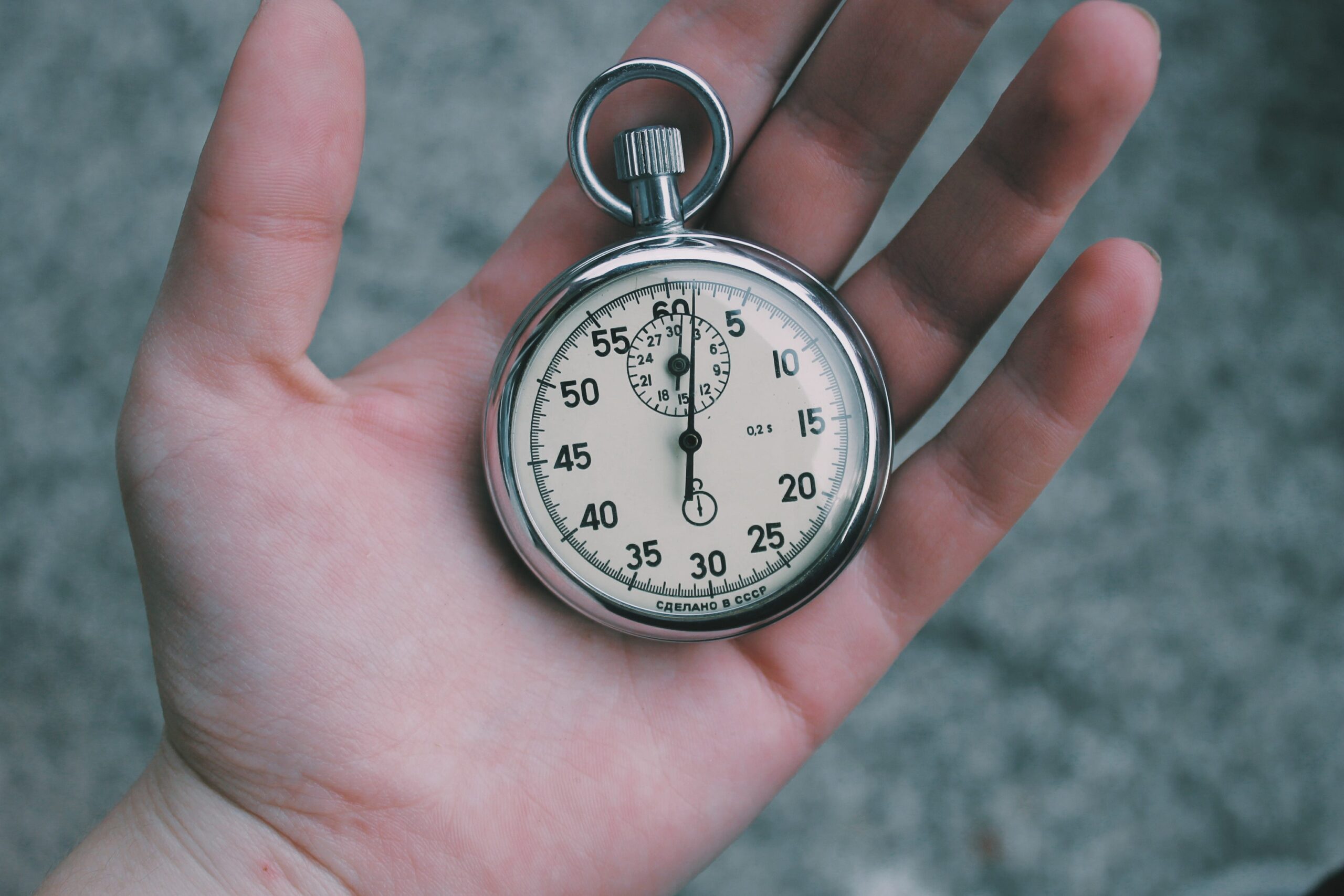 Photo by Veri Ivanova on Unsplash
Method
Indeed, academic research is the source of new approaches and mechanisms for theoretical researchers. However, empirical researchers who focus on observational studies or experiments tend to use standard and well-established methodologies. For example, Difference-in-Differences (DID), Instrument Variables (IV), Propensity Score Matching (PSM), etc. Using these widely-recognized methods will attract fewer questions and doubts about the conclusions.
Industries are always open to cutting-edge techniques. The ones with the buzzwords are more acceptable here. A model that works decent and involves the latest and hottest concepts attracts stakeholders' attention, although building bridges between business impacts and technical terms is also very important.
Feedback Loop
When researchers have some initial results, they will attend conferences or other events to network their findings to gather feedback. Publishing a research paper involves enormous amounts of iterations based on feedback from experts and editors.
When tech companies have a causal model with decent performance, they will launch this application into their business decision-making. Their feedback comes from real-time customer reactions to the model or KPIs for a given time period. For example, a company finds a product that is price elastic and decides to drop the price to increase profits. If later it turns out the company's profit actually drops after the price cut, then they would have to reexamine the model.
Average Treatment Effect (ATE) vs. Individual Treatment Effect (ITE)
In academics, it is often the case to evaluate ATE for a population or subpopulation. It is the result of the purpose of academic research as well as the limitations on data availability.
On one hand, academic research aims to inform general policy-making or derive generalizable and trustworthy theories. On the other hand, researchers are often forced to do analysis on more macro-level data - a country's demographic information, a race's income level, a school's test scores, etc.
On the contrary, industrial causal applications are more focused on individual-level decision-making. Thus, ITE is more important. For example, if I send out an email promotion for this customer, will he or she make the purchase or stay with the current subscription?
The individual-level causality is more meaningful to them because the cost to tailor business decisions at the customer level is minimal, but the gain in profit is huge. Plus, the industry possesses a tremendous amount of data for each customer at each transaction to derive decision-making at a finer granular level.
If you are interested in knowing the difference between ATE and ITE in definitions and mathematic terms, check out this article:
Causal Inference: What, Why, and How
Model Efficiency
Industry applications sometimes need to be put into production to make real-time business decisions. For example, when a customer clicks "cancel subscription," the model needs to make immediate decisions on whether to offer discounts and, if so, how much.
Thus, we need to consider the run time of the model and its scalability when embedding a causal engine into business decision-making, which is less of a concern for academic research.
The Ending
It seems that academic research can go on forever. Even after the research paper has been published, we oftentimes see one paper become a series of research papers by testing causality in different populations or time periods. Research is the process of extending the knowledge frontiers so that any learning along the way can be meaningful.
 Photo by Fab Lentz on Unsplash
On the other hand, industrial applications focus on the key KPI improvements. If an uplift model that predicts customer behaviors increases retention rate and profits, then the model will be launched and maintained.
Similarities
Despite the differences, there are also many similarities that academic research and industry share.
 Photo by Mathilda Khoo on Unsplash
Assumptions
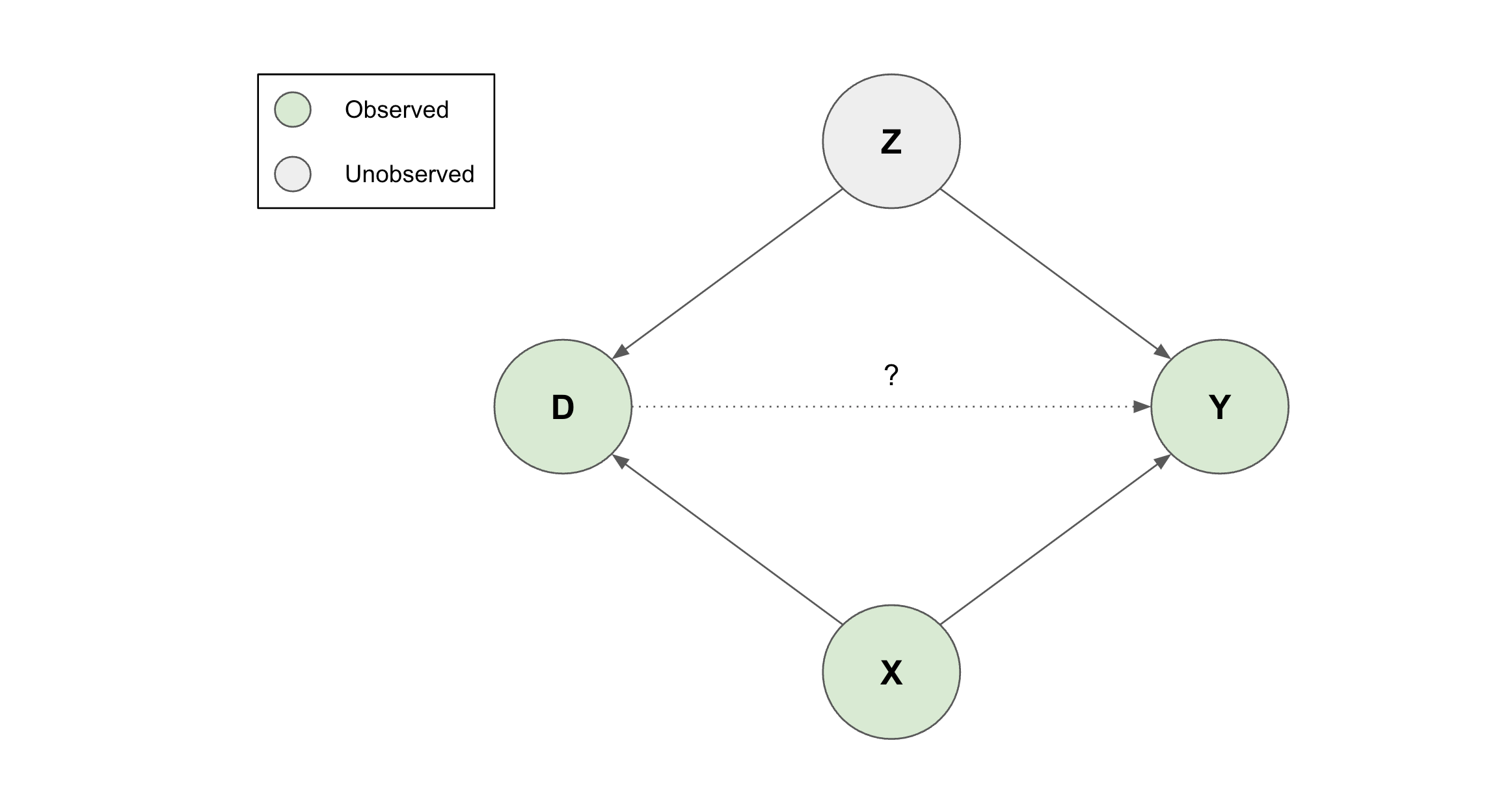
The world is not perfect. Thus, both research and industry applications start with assumptions. For example, the relationship between variable X and Y is linear; the unobserved confounder U can be proxied by variable W; variable Z would be a great instrument variable given this causal structure, etc.
We start from somewhere with a set of assumptions and validate whether having each one of them makes sense or whether one of them is causing issues in the conclusions.
Expert Input
Both research and industry applications need expert input to draft the causal structure. Domain knowledge is very important to identify confounders, mediators, proxies for unobserved confounders, instrument variables, etc.
A causal graph cannot be drawn without understanding the underlying mechanism, and hopefully, after the two-month reading series, you will understand the importance of a causal graph.
Transparency
Both research and industry applications embrace transparency when including causality. Just as Pearl mentioned in the last chapter of "The Book of Why", there are many algorithms that perform well in solving a problem, but embedding causality into the systems gives us transparency. Just as @Hoang Pham said in the comment on the first article of this reading series:
"...I always try to find out "Why does it happen?" or "Why do our users have such behavior", so that I can provide treatments for different groups of users based on their needs and our value proposition..."
Understanding why is extremely powerful not only in business decision-making but also in understanding how the world works and how the mechanism is implemented.
Although differences exist due to the data availability and the purpose of the analysis, ultimately, academic research and industry application progress simultaneously through gathering inspiration from each other, just as I demonstrate in the following article:
The Ultimate Literature Review for Causal Inference
After 12 weeks of effort, we finally finished the first Read with Me series, reading Judea Pearl's masterpiece, "The Book of Why. " I have received many feedback and really enjoyed this reading journey. Although it is a stressful process to keep the updates on time, enforcing output by writing summaries for the chapters helps me complete the learning cycle and pushes me to understand the concepts fully.
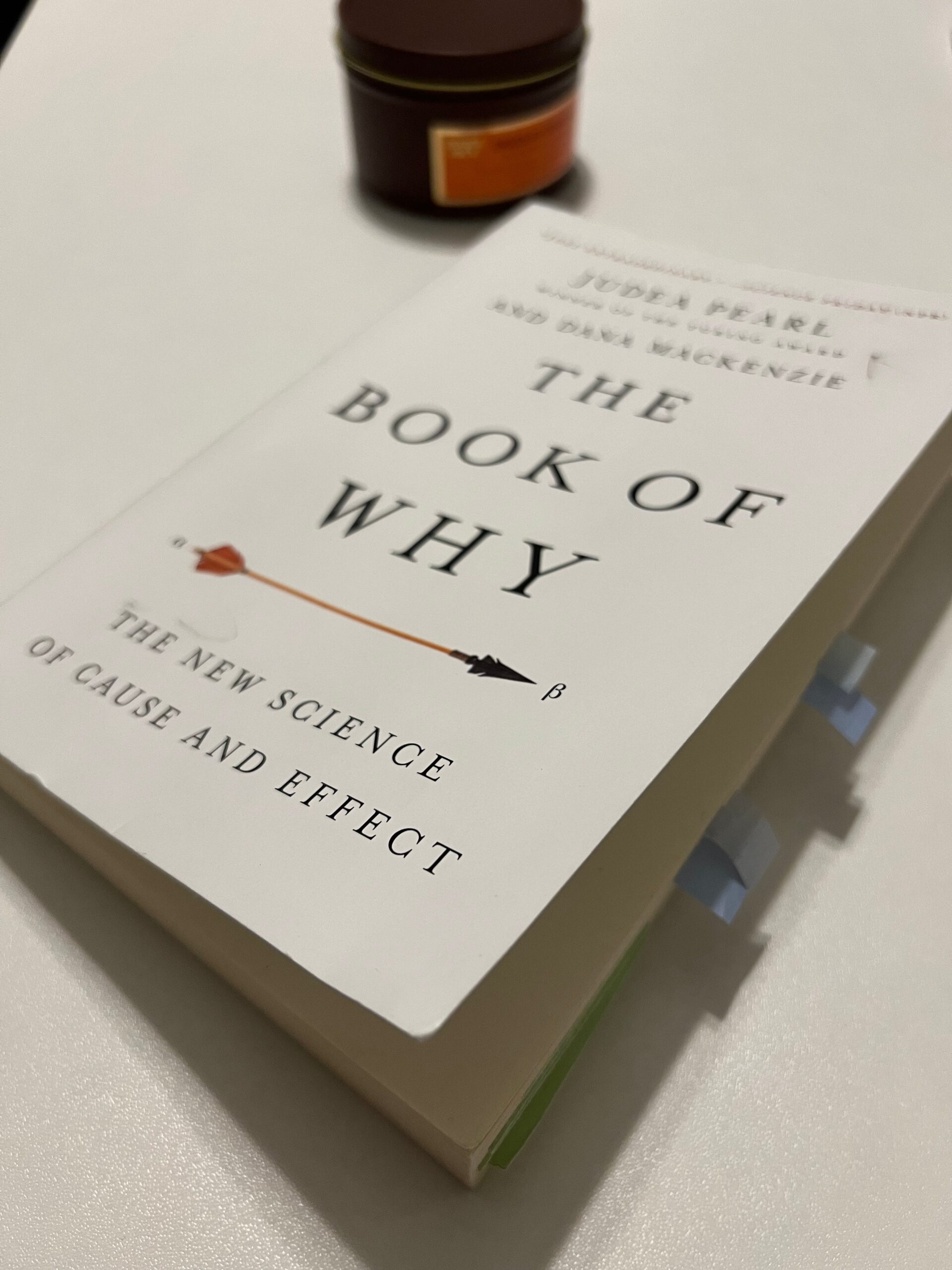
 image by author
Thank you all for signing up my email list to join and provide meaningful feedback. I hope this is also a fruitful journey for you as well, no matter you are reading the book with me, or learning causality through my article summaries. If there are any other books you want to read with a crowd of data enthusiasts and gather collective learning experience, let me know!
If you like this article, don't forget to:
Register Now to Continue Reading
Unlock Towards Data Science with a Free Account
All articles on Towards Data Science are available to registered users. Create a free account today to access this article and thousands more.
Register for freeSign in to your account
 Written By
See all from Zijing Zhu, PhD
AcademiaCausal InferenceCausalityNotes From IndustryTech
Share This Article
Towards Data Science is a community publication. Submit your insights to reach our global audience and earn through the TDS Author Payment Program.
Write for TDS
Related Articles
How to know the unknowable in observational studies
Ugur Yildirim
February 13, 202411 min read
Drive the path to value creation by formalising the commitments of data consumers.
Marc Delbaere
November 16, 20237 min read
Artificial Intelligence
How can multi-armed bandits can help a startup
Javier Marín Valenzuela
June 22, 202113 min read
One of the most powerful, flexible, and under-appreciated tools in data science
Field Cady
August 31, 20219 min read
Data Engineering
Exploiting the full potential of universal data supply
Bernd Wessely
September 22, 20248 min read
Machine Learning
How to frame a machine learning solution to achieve a product goal?
Misbah Uddin
August 30, 20217 min read
Business
Watch out for these three ways too much of a good thing can be dangerous
Kate Minogue
November 15, 20247 min read
Artificial Intelligence
Get Your Work Valued & Recognized...
Vijay Yadav
February 8, 20229 min read
An engineer's journey to building LLM-powered applications
Satwiki De
January 17, 202511 min read
Your home for data science and AI. The world's leading publication for data science, data analytics, data engineering, machine learning, and artificial intelligence professionals.
Subscribe to Our NewsletterWrite For TDS•About•Advertise•Privacy Policy•Terms of Use
© Insight Media Group, LLC 2026•The New Stack•roadmap.sh•Creator Network
Recommended Articles
Close