保留正文与补采附件。源页面当前未重新核验;具体限制见交付清单。
 We value your privacy
We use cookies to enhance your browsing experience, serve personalised ads or content, and analyse our traffic. By clicking "Accept All", you consent to our use of cookies.
Customise Reject All Accept All
Customise Consent Preferences
 We use cookies to help you navigate efficiently and perform certain functions. You will find detailed information about all cookies under each consent category below.
The cookies that are categorised as "Necessary" are stored on your browser as they are essential for enabling the basic functionalities of the site. ... Show more
NecessaryAlways Active
Necessary cookies are required to enable the basic features of this site, such as providing secure log-in or adjusting your consent preferences. These cookies do not store any personally identifiable data.
-
Cookie
BCTempID
-
Duration
10 minutes
-
Description
No description available.
-
Cookie
__cf_bm
-
Duration
1 hour
-
Description
This cookie, set by Cloudflare, is used to support Cloudflare Bot Management.
-
Cookie
AWSALBCORS
-
Duration
7 days
-
Description
Amazon Web Services set this cookie for load balancing.
-
Cookie
_cfuvid
-
Duration
session
-
Description
Cloudflare sets this cookie to track users across sessions to optimize user experience by maintaining session consistency and providing personalized services
-
Cookie
li_gc
-
Duration
6 months
-
Description
Linkedin set this cookie for storing visitor's consent regarding using cookies for non-essential purposes.
-
Cookie
__hssrc
-
Duration
session
-
Description
This cookie is set by Hubspot whenever it changes the session cookie. The __hssrc cookie set to 1 indicates that the user has restarted the browser, and if the cookie does not exist, it is assumed to be a new session.
-
Cookie
__hssc
-
Duration
1 hour
-
Description
HubSpot sets this cookie to keep track of sessions and to determine if HubSpot should increment the session number and timestamps in the __hstc cookie.
-
Cookie
wpEmojiSettingsSupports
-
Duration
session
-
Description
WordPress sets this cookie when a user interacts with emojis on a WordPress site. It helps determine if the user's browser can display emojis properly.
-
Cookie
BCSessionID
-
Duration
1 year 1 month 4 days
-
Description
Blueconic sets this cookie as a unique identifier for the BlueConic profile.
-
Cookie
_octo
-
Duration
1 year
-
Description
No description available.
-
Cookie
logged_in
-
Duration
1 year
-
Description
No description available.
-
Cookie
__Secure-YEC
-
Duration
past
-
Description
YouTube sets this cookie to stores the user's video player preferences using embedded YouTube video
-
Cookie
__eoi
-
Duration
6 months
-
Description
Description is currently not available.
-
Cookie
AWSALBTGCORS
-
Duration
7 days
-
Description
No description available.
-
Cookie
login-status-p
-
Duration
past
-
Description
Description is currently not available.
-
Cookie
AWSALBTG
-
Duration
7 days
-
Description
No description available.
-
Cookie
csrf_token
-
Duration
session
-
Description
No description available.
-
Cookie
token_v2
-
Duration
1 day
-
Description
Description is currently not available.
-
Cookie
D
-
Duration
1 year
-
Description
Description is currently not available.
-
Cookie
PHPSESSID
-
Duration
session
-
Description
This cookie is native to PHP applications. The cookie stores and identifies a user's unique session ID to manage user sessions on the website. The cookie is a session cookie and will be deleted when all the browser windows are closed.
-
Cookie
VISITOR_PRIVACY_METADATA
-
Duration
6 months
-
Description
YouTube sets this cookie to store the user's cookie consent state for the current domain.
-
Cookie
cookietest
-
Duration
session
-
Description
The cookietest cookie is typically used to determine whether the user's browser accepts cookies, essential for website functionality and user experience.
-
Cookie
__Host-airtable-session
-
Duration
1 year
-
Description
This cookie is used to enable us to integrate the services of Airtable.
-
Cookie
__Host-airtable-session.sig
-
Duration
1 year
-
Description
This cookie is used to enable us to integrate the services of Airtable.
-
Cookie
m
-
Duration
1 year 1 month 4 days
-
Description
Stripe sets this cookie for fraud prevention purposes. It identifies the device used to access the website, allowing the website to be formatted accordingly.
-
Cookie
BIGipServer*
-
Duration
session
-
Description
Marketo sets this cookie to collect information about the user's online activity and build a profile about their interests to provide advertisements relevant to the user.
-
Cookie
__cfruid
-
Duration
session
-
Description
Cloudflare sets this cookie to identify trusted web traffic.
-
Cookie
_GRECAPTCHA
-
Duration
6 months
-
Description
Google Recaptcha service sets this cookie to identify bots to protect the website against malicious spam attacks.
-
Cookie
__Secure-YNID
-
Duration
6 months
-
Description
Google cookie used to protect user security and prevent fraud, especially during the login process.
-
Cookie
cookieyes-consent
-
Duration
1 year
-
Description
CookieYes sets this cookie to remember users' consent preferences so that their preferences are respected on subsequent visits to this site. It does not collect or store any personal information about the site visitors.
Functional
Functional cookies help perform certain functionalities like sharing the content of the website on social media platforms, collecting feedback, and other third-party features.
-
Cookie
lidc
-
Duration
1 day
-
Description
LinkedIn sets the lidc cookie to facilitate data center selection.
-
Cookie
brw
-
Duration
1 year
-
Description
No description available.
-
Cookie
brwConsent
-
Duration
5 minutes
-
Description
Description is currently not available.
-
Cookie
WMF-Uniq
-
Duration
1 year
-
Description
Description is currently not available.
-
Cookie
loom_anon_comment
-
Duration
1 year
-
Description
No description available.
-
Cookie
loom_referral_video
-
Duration
session
-
Description
Description is currently not available.
-
Cookie
VISITOR_INFO1_LIVE
-
Duration
6 months
-
Description
A cookie set by YouTube to measure bandwidth that determines whether the user gets the new or old player interface.
-
Cookie
yt-remote-connected-devices
-
Duration
Never Expires
-
Description
YouTube sets this cookie to store the user's video preferences using embedded YouTube videos.
-
Cookie
ytidb::LAST_RESULT_ENTRY_KEY
-
Duration
Never Expires
-
Description
The cookie ytidb::LAST_RESULT_ENTRY_KEY is used by YouTube to store the last search result entry that was clicked by the user. This information is used to improve the user experience by providing more relevant search results in the future.
-
Cookie
yt-remote-device-id
-
Duration
Never Expires
-
Description
YouTube sets this cookie to store the user's video preferences using embedded YouTube videos.
-
Cookie
yt-remote-session-name
-
Duration
session
-
Description
The yt-remote-session-name cookie is used by YouTube to store the user's video player preferences using embedded YouTube video.
-
Cookie
yt-remote-fast-check-period
-
Duration
session
-
Description
The yt-remote-fast-check-period cookie is used by YouTube to store the user's video player preferences for embedded YouTube videos.
-
Cookie
yt-remote-session-app
-
Duration
session
-
Description
The yt-remote-session-app cookie is used by YouTube to store user preferences and information about the interface of the embedded YouTube video player.
-
Cookie
yt-remote-cast-available
-
Duration
session
-
Description
The yt-remote-cast-available cookie is used to store the user's preferences regarding whether casting is available on their YouTube video player.
-
Cookie
yt-remote-cast-installed
-
Duration
session
-
Description
The yt-remote-cast-installed cookie is used to store the user's video player preferences using embedded YouTube video.
-
Cookie
cp_session
-
Duration
3 months
-
Description
Codepen sets this cookie for Help systems found in the website.
-
Cookie
loid
-
Duration
1 year 1 month 4 days
-
Description
This cookie is set by the Reddit. The cookie enables the sharing of content from the website onto the social media platform.
Analytics
Analytical cookies are used to understand how visitors interact with the website. These cookies help provide information on metrics such as the number of visitors, bounce rate, traffic source, etc.
-
Cookie
__hstc
-
Duration
6 months
-
Description
Hubspot set this main cookie for tracking visitors. It contains the domain, initial timestamp (first visit), last timestamp (last visit), current timestamp (this visit), and session number (increments for each subsequent session).
-
Cookie
hubspotutk
-
Duration
6 months
-
Description
HubSpot sets this cookie to keep track of the visitors to the website. This cookie is passed to HubSpot on form submission and used when deduplicating contacts.
-
Cookie
_ga
-
Duration
1 year 1 month 4 days
-
Description
Google Analytics sets this cookie to calculate visitor, session and campaign data and track site usage for the site's analytics report. The cookie stores information anonymously and assigns a randomly generated number to recognise unique visitors.
-
Cookie
ga*
-
Duration
1 year 1 month 4 days
-
Description
Google Analytics sets this cookie to store and count page views.
-
Cookie
__Host-psifi.analyticsTrace
-
Duration
6 hours
-
Description
Description is currently not available.
-
Cookie
__Host-psifi.analyticsTraceV2
-
Duration
6 hours
-
Description
Description is currently not available.
-
Cookie
_gh_sess
-
Duration
session
-
Description
GitHub sets this cookie for temporary application and framework state between pages like what step the user is on in a multiple step form.
-
Cookie
YSC
-
Duration
session
-
Description
YSC cookie is set by Youtube and is used to track the views of embedded videos on Youtube pages.
-
Cookie
ajs_anonymous_id
-
Duration
1 year
-
Description
This cookie is set by Segment to count the number of people who visit a certain site by tracking if they have visited before.
-
Cookie
vuid
-
Duration
1 year 1 month 4 days
-
Description
Vimeo installs this cookie to collect tracking information by setting a unique ID to embed videos on the website.
Performance
Performance cookies are used to understand and analyse the key performance indexes of the website which helps in delivering a better user experience for the visitors.
-
Cookie
AWSALB
-
Duration
7 days
-
Description
AWSALB is an application load balancer cookie set by Amazon Web Services to map the session to the target.
-
Cookie
acq
-
Duration
past
-
Description
Description is currently not available.
-
Cookie
acq.sig
-
Duration
past
-
Description
Description is currently not available.
-
Cookie
ptc
-
Duration
2 years
-
Description
No description available.
Advertisement
Advertisement cookies are used to provide visitors with customised advertisements based on the pages you visited previously and to analyse the effectiveness of the ad campaigns.
-
Cookie
muc_ads
-
Duration
1 year 1 month 4 days
-
Description
Twitter sets this cookie to collect user behaviour and interaction data to optimize the website.
-
Cookie
guest_id_marketing
-
Duration
1 year 1 month 4 days
-
Description
Twitter sets this cookie to identify and track the website visitor.
-
Cookie
guest_id_ads
-
Duration
1 year 1 month 4 days
-
Description
Twitter sets this cookie to identify and track the website visitor.
-
Cookie
personalization_id
-
Duration
1 year 1 month 4 days
-
Description
Twitter sets this cookie to integrate and share features for social media and also store information about how the user uses the website, for tracking and targeting.
-
Cookie
guest_id
-
Duration
1 year 1 month 4 days
-
Description
Twitter sets this cookie to identify and track the website visitor. It registers if a user is signed in to the Twitter platform and collects information about ad preferences.
-
Cookie
bcookie
-
Duration
1 year
-
Description
LinkedIn sets this cookie from LinkedIn share buttons and ad tags to recognize browser IDs.
-
Cookie
__Secure-ROLLOUT_TOKEN
-
Duration
6 months
-
Description
YouTube sets this cookie to manage feature rollout and experimentation. It helps Google control which new features or interface changes are shown to users as part of testing and staged rollouts, ensuring consistent experience for a given user during an experiment.
-
Cookie
yt.innertube::nextId
-
Duration
Never Expires
-
Description
YouTube sets this cookie to register a unique ID to store data on what videos from YouTube the user has seen.
-
Cookie
yt.innertube::requests
-
Duration
Never Expires
-
Description
YouTube sets this cookie to register a unique ID to store data on what videos from YouTube the user has seen.
-
Cookie
session_tracker
-
Duration
session
-
Description
This cookie is set by the Reddit. This cookie is used to identify trusted web traffic. It also helps in adverstising on the website.
-
Cookie
edgebucket
-
Duration
session
-
Description
Reddit sets this cookie to save the information about a log-on Reddit user, for the purpose of advertisement recommendations and updating the content.
-
Cookie
did
-
Duration
1 year
-
Description
Arbor sets this cookie to show targeted ads to site visitors.This cookie expires after 2 months or 1 year.
Uncategorised
Other uncategorised cookies are those that are being analysed and have not been classified into a category as yet.
No cookies to display.
Reject All Save My Preferences Accept All
Toggle SearchToggle Mobile Navigation
Publish AI, ML & data-science insights to a global community of data professionals.
Sign inSubmit an Article
LatestEditor's PicksNewsletterShipAI
Write For TDS
LinkedInXToggle Search
Large Language Models
Bringing Vision-Language Intelligence to RAG with ColPali
Unlocking the value of non-textual contents in your knowledge base
Julian Yip
October 29, 20257 min read
 Source: Image by the author.
If you’ve ever tried building a RAG (Retrieval-Augmented Generation) application, you’re likely familiar with the challenges posed by tables and images. This article explores how to tackle these formats using Vision Language Models, specifically with the ColPali model.
But first, what exactly is RAG — and why do tables and images make it so difficult?
RAG and parsing
Imagine you’re faced with a question like:
What’s the our company’s policy for handling refund?
A foundational LLM (Large Language Model) probably won’t be able to answer this, as such information is company-specific and typically not included in the model’s training data.
Learn this step by step with the interactive AI Engineer roadmap.
That’s why a common approach is to connect the LLM to a knowledge base — such as a SharePoint folder containing various internal documents. This allows the model to retrieve and incorporate relevant context, enabling it to answer questions that require specialized knowledge. This technique is known as Retrieval-Augmented Generation (RAG), and it often involves working with documents like PDFs.
However, extracting the right information from a large and diverse knowledge base requires extensive document preprocessing. Common steps include:
- Parsing : Parsing documents into texts and images, often assisted with Optical Character Recognition (OCR) tools like Tesseract. Tables are most often converted into texts
- Structure Preservation : Maintain the structure of the document, including headings, paragraphs, by converting the extracted text into a format that retains context, such as Markdown
- Chunking : Splitting or merging text passages, so that the contexts can be fed into the context window without causing the passages come across as disjointed
- Enriching : Provide extra metadata e.g. extract keyword or provide summary to the chunks to ease discovery. Optionally, to also caption images with descriptive texts via multimodal LLM to make images searchable
- Embedding : Embed the texts (and potentially the images too with multimodal embedding), and store them into a vector DB
As you can imagine, the process is highly complicated, involves a lot of experimentation, and is very brittle. Worse yet, even if we tried to do it as best as we could, this parsing might not actually work after all.
Why parsing often falls short
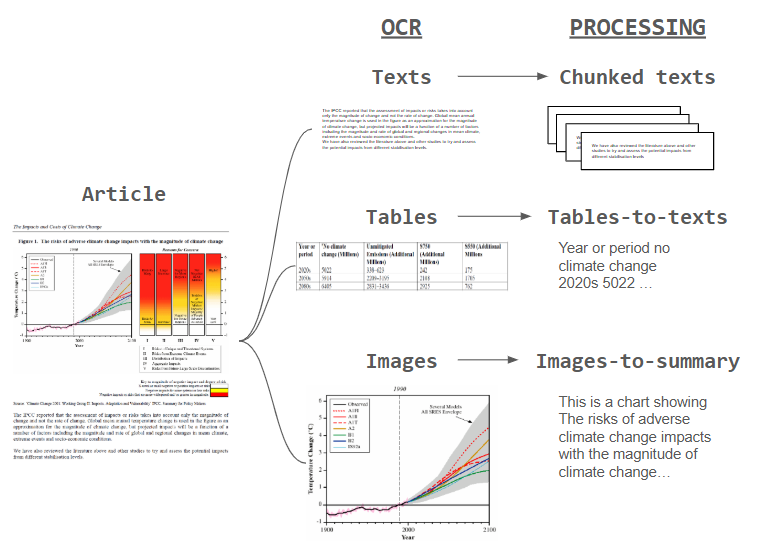
Tables and image often exist in PDFs. The below image shows how they are typically parsed for LLM’s consumption:
 Source: Image by the author.
- Texts are chunked
- Tables are turned into texts, whatever contained within are copied without preserving table boundaries
- Images are fed into multimodal LLM for text summary generation, or alternatively, the original image is fed into multimodal embedding model without needing to generate a text summary
However, there are two inherent issues with such traditional approach.
#1. Complex tables cannot be simply be interpreted as texts
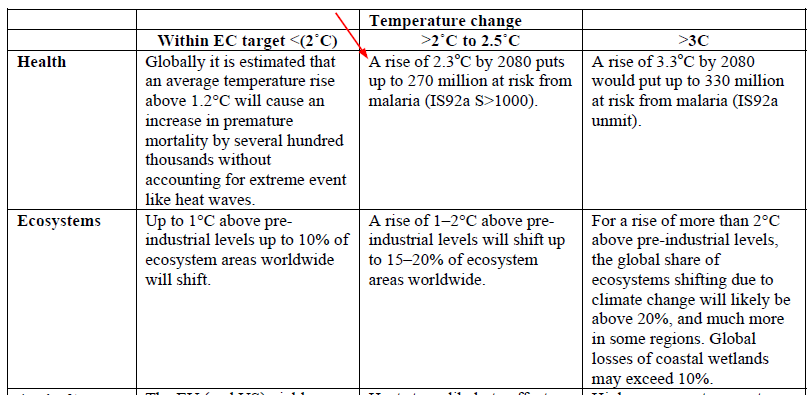
Taking this table as an example, we as human would interpret that a temperature change of **> 2˚C to 2.5˚C’**s implication on Health is A rise of 2.3˚C by 2080 puts up to 270 million at risk from malaria
 Source: The Impacts and Costs of Climate Change
However, if we turn this table into a text, it would look like this:
Temperature change Within EC target <(2˚C) >2˚C to 2.5˚C >3C Health Globally it is estimated that A rise of 2.3oC by 2080 puts A rise of 3.3oC by 2080 an average temperature rise up to 270 million at risk from would put up to 330...
The result is a jumbled block of text with no discernible meaning. Even for a human reader, it’s impossible to extract any meaningful insight from it. When this kind of text is fed into a Large Language Model (LLM), it also fails to produce an accurate interpretation.
#2. Disassociation between texts and images
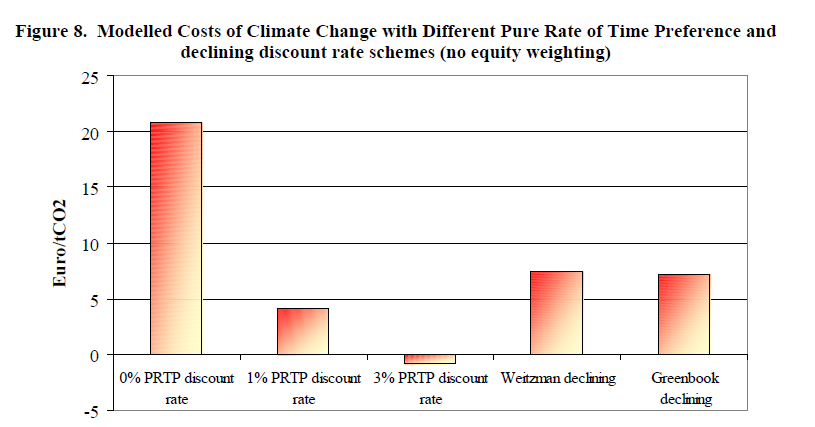
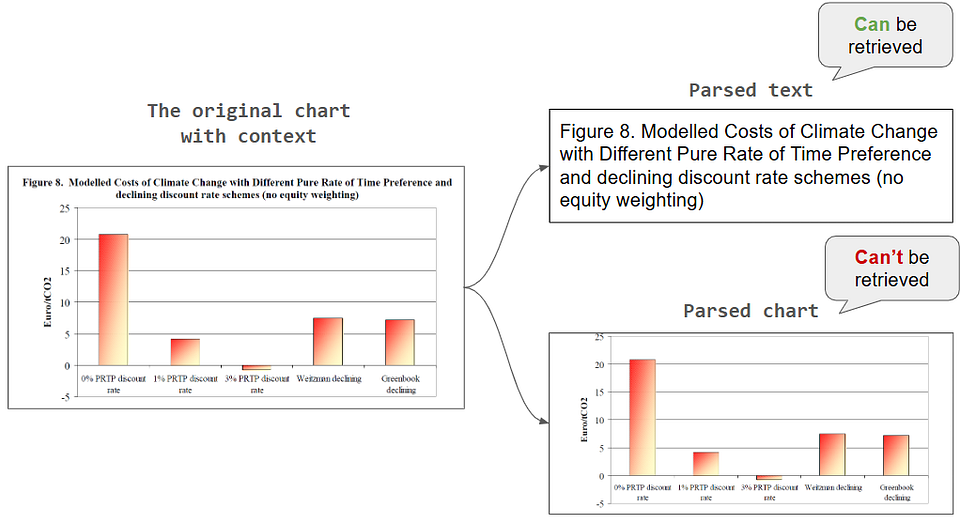
The description of the image is often included in texts and they are inseparable from one another. Taking the below as an example, we know the chart represents the “Modelled Costs of Climate Change with Different Pure Rate of Time Preference and declining discount rate schemes (no equity weighting)”
 Source: The Impacts and Costs of Climate Change
However, as this is parsed, the image description (parsed text) will be disassociated with the image (parsed chart). So we can expect, during RAG, the image would not be retrieved as input when we raise a question like “what’s the cost of climate change?”
 So, even if we attempt to engineer solutions that preserve as much information as possible during parsing, they often fall short when faced with real-world scenarios.
Given how critical parsing is in RAG applications, does this mean RAG agents are destined to fail when working with complex documents? Absolutely not. With ColPali, we have a more refined and effective approach to handling them.
What’s ColPali?
The core premise of ColPali is simple: Human read PDF as pages, not “chunks”, so it makes sense to treat PDF as such: Instead of going through the messy process of parsing, we just turn the PDF pages into images, and use that as context for LLM to provide an answer.
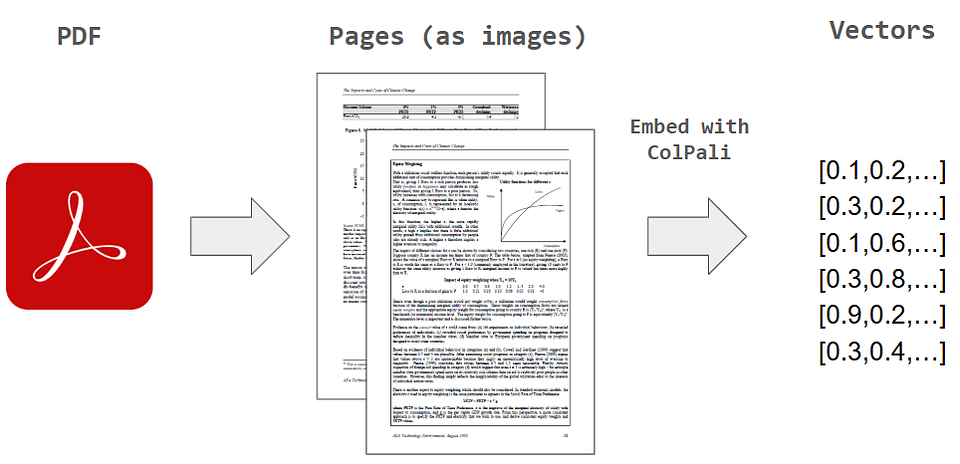 Now, the idea of embedding images using multimodal models isn’t new — it’s a common technique. So what makes ColPali stand out? The key lies in its inspiration from ColBERT, a model that embeds inputs into multi-vectors, enabling more precise and efficient search.
Before diving into ColPali’s capabilities, let me briefly digress to explain what ColBERT is all about.
ColBERT: Granular, context-aware embedding for texts
ColBERT is a text embedding and reranking technique that leverage on multi-vectors to enhance search accuracy for texts.
Let’s consider this case: we have this question: is Paul vegan?, we need to identify which text chuck contains the relevant information.
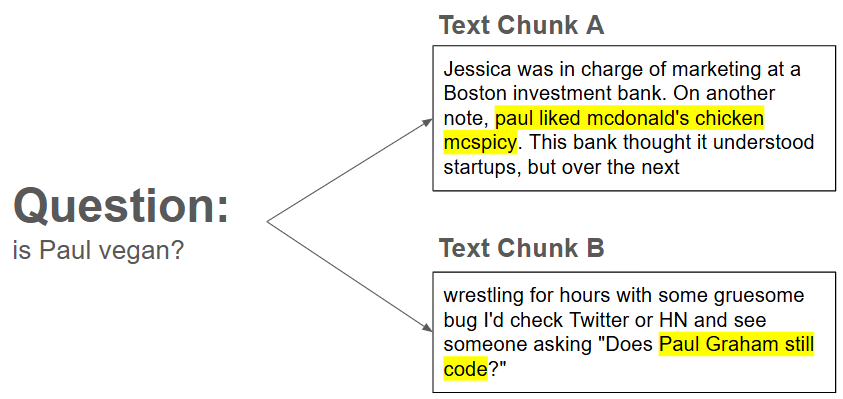 Highlighted in yellow are texts which contain information about Paul
Ideally, we should identify
Text Chunk A as the most relevant one. But if we use a single-vector embedding model (text-ada-002), it will return Text Chunk B instead.
The reason lies in how single-vector bi-encoders — like text-ada-002 — operate. They attempt to compress an entire sentence into a single vector, without encoding individual words in a context-aware manner. In contrast, ColBERT embeds each word with contextual awareness , resulting in a richer, multi-vector representation that captures more nuanced information.
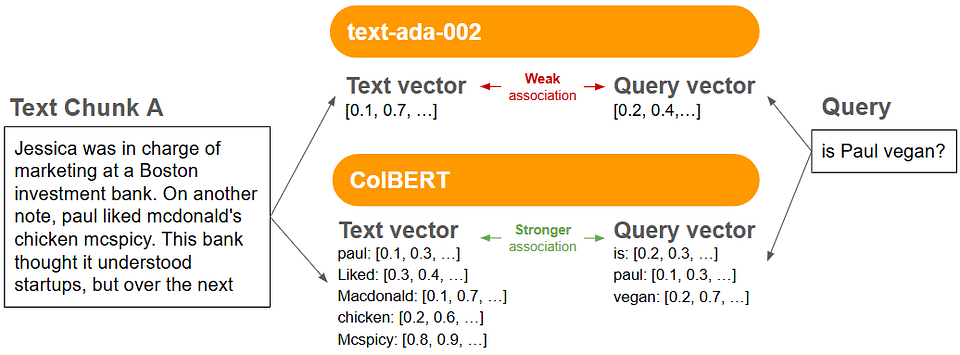 Numbers in the vectors are illustrative and do not represents the actual values
ColPali: ColBERT’s brother for handling document-like images
ColPali follows a similar philosophy but applies it to document-like images. Just as ColBERT breaks down text and embeds each word individually, ColPali divides an image into patches and generates embeddings for each patch. This approach preserves more of the image’s contextual detail, enabling more accurate and meaningful interpretation.
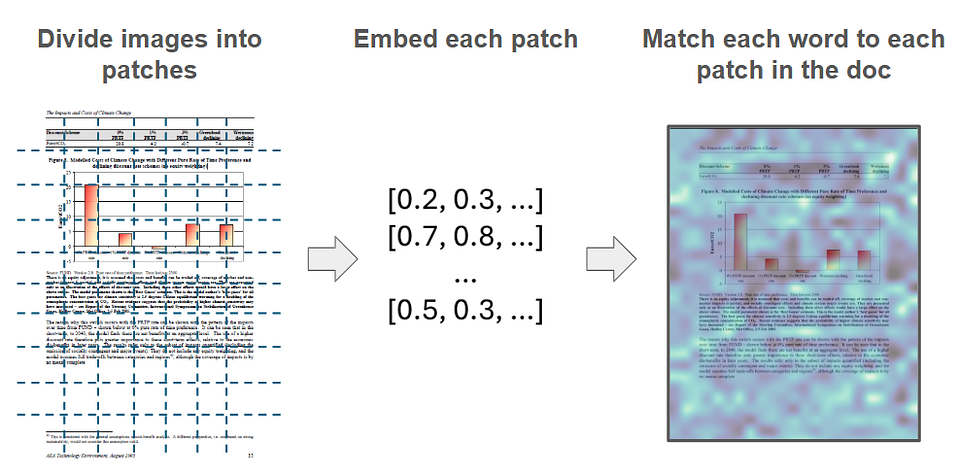 Apart from higher retrieval accuracy, benefits of ColPali includes:
- Explainability : ColPali enables word-level comparison between the query and individual image patches of a document. This allows us to clearly understand and justify why a particular document is deemed more relevant.
- Reduced Development Effort & Greater Robustness: By eliminating the need for complex preprocessing pipelines — such as chunking, OCR, and layout parsing — ColPali significantly reduces development time and minimizes potential points of failure.
- Performance Gains : Embedding and retrieval processes are faster, resulting in improved overall system responsiveness.
Now you know what ColPali is, let’s dive into the code and see if ColPali can resolve the challenges we mentioned earlier!
Illustration
My code can be found in my Github. A few words about it:
- Instance : Running the code requires a machine with A100 GPU
- Embedding model : ColPali has a number of variants, I am using
vidore/colqwen2-v0.1 for demonstration. You can refer to the leaderboard here and switch to other models
- Agent:
- LLM : I am using OpenRouter to consume LLM, and the agent is powered by GPT-4o. You can substitute it with any multimodal LLM that can take image as input
- Orchestration :
LangGraph is used to develop the agent
- Library used for converting PDF into images :
pdf2image which is a wrapper for poppler. So please make sure you also have poppler installed
- Sample data : “The Impacts and Costs of Climate Change” written by Paul Watkiss et al, which is publicly available here
Results
The code is pretty straightforward, so I will jump into conclusion instead: How well can ColPali deal with the problems we have seen in the “Why parsing often falls short?” section?
#1. Complex tables cannot be simply be interpreted as texts
Question : What’s the health impact if temperature rises above pre-industrial level by 3 degrees?
Answer : If the temperature rises above pre-industrial levels by 3 degrees Celsius, the health impact would be significant. Specifically, it is estimated that by the 2080s, up to 330 million people would be at risk from malaria. This is a substantial increase compared to the 1920s, where the number at risk was between 50 to 100 million.
This is correctly referred from this table in the PDF!
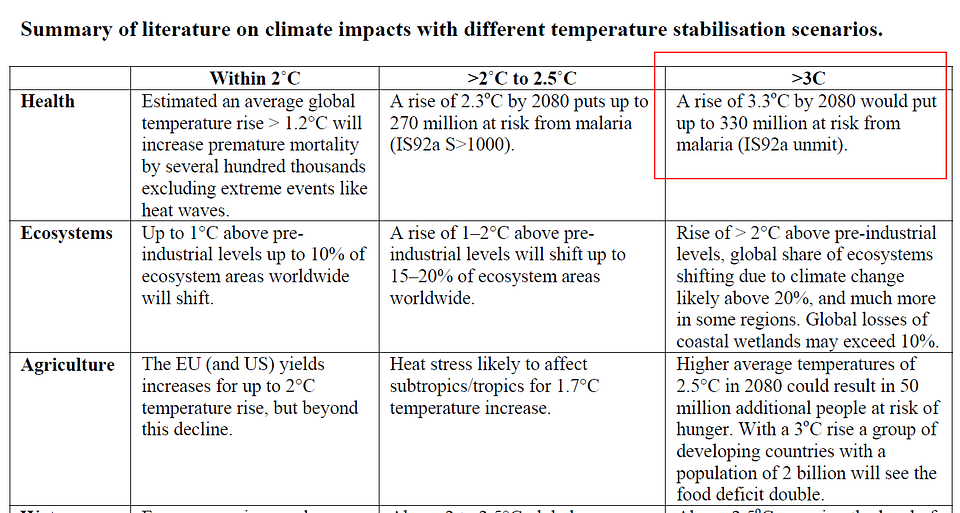 Source: Page 3 of The Impacts and Costs of Climate Change
#2. Disassociation between texts and images
Question : What’s the modelled cost of climate change, according to the Greenbook declining model?
Answer : According to the Greenbook declining model, the modelled cost of climate change is 7.2 Euro/tCO2
The correct answer should be 7.4 Euro/tCO2, but we can see it is close to correct!
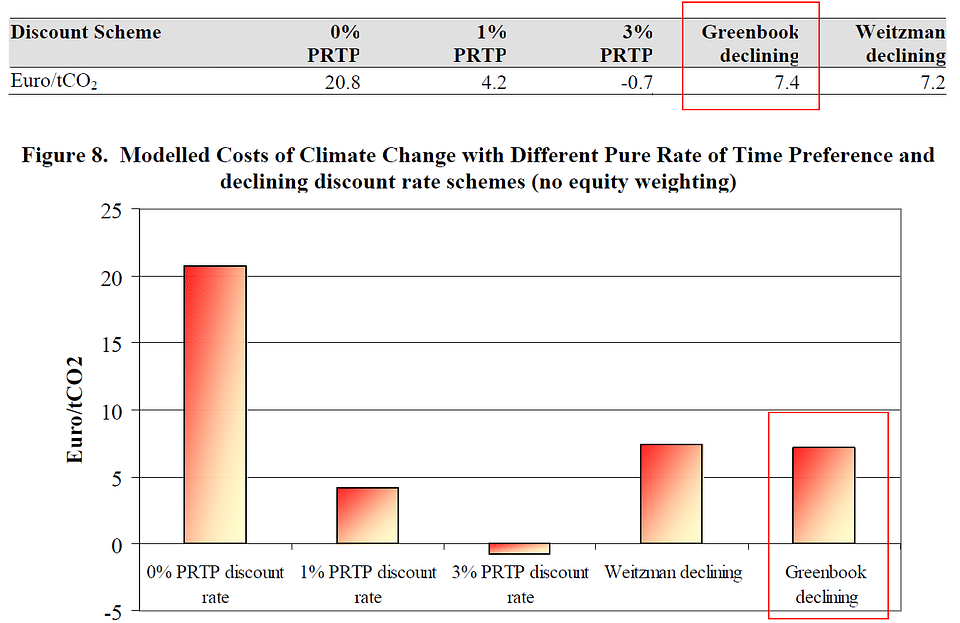 Source: Page 46 of The Impacts and Costs of Climate Change
Conclusion
Traditional RAG pipelines struggle with non-textual content. ColPali treats each PDF page as an image, allowing it to process visual layouts, tables, charts, and embedded graphics — formats that standard text parsers often distort or ignore.
ColPali brings vision-language intelligence to RAG, making it far more capable of handling the messy, multimodal reality of enterprise documents.
*Unless otherwise noted, all images are by the author
Register Now to Continue Reading
Unlock Towards Data Science with a Free Account
All articles on Towards Data Science are available to registered users. Create a free account today to access this article and thousands more.
Register for freeSign in to your account
 Written By
See all from Julian Yip
Editor's PicksArtificial IntelligenceGenerative AiMultimodalityRag
Share This Article
Towards Data Science is a community publication. Submit your insights to reach our global audience and earn through the TDS Author Payment Program.
Write for TDS
Related Articles
Large Language Models
Prompt Experiments for Python Vulnerability Detection
Melanie Hart Buehler
March 21, 202411 min read
Large Language Models
Clearly explained guide for running quantized open-source LLM applications on CPUs using LLama 2, C Transformers, GGML, and LangChain
Kenneth Leung
July 18, 20234 min read
How to benchmark/spot differences between time series datasets?
M Adel
October 20, 20213 min read
Large Language Models
Python tutorial for reproducible labeling of cutting-edge topic models with GPT4-o-mini.
Petr Koráb
July 14, 20256 min read
Deep Learning
Were you not able to attend KDD? Learn from my summary about the hottest topic at the conference: LLMs
Gabriel Moreira
September 11, 20238 min read
Artificial Intelligence
Cleveland Heart Disease(UCI Repository) dataset - classification with various models.
Shubhankar Rawat
August 10, 20198 min read
Artificial Intelligence
The tech is called "Silent Voice."
Rafe Brena, Ph.D.
June 27, 20248 min read
Large Language Models
Learn how to empower your LLMs by leveraging additional metadata
Eivind Kjosbakken
September 16, 20257 min read
Large Language Models
AI companies quietly watermark billions of words a day. Here’s how to apply the same three families of techniques to your own writing—and what real experiments reveal about which watermarks survive copy-paste, editing, and paraphrasing.
Chien Vu Minh
September 6, 202626 min read
Your home for data science and AI. The world's leading publication for data science, data analytics, data engineering, machine learning, and artificial intelligence professionals.
Subscribe to Our NewsletterWrite For TDS•About•Advertise•Privacy Policy•Terms of Use
© Insight Media Group, LLC 2026•The New Stack•roadmap.sh•Creator Network
Recommended Articles
Close