保留正文与补采附件。源页面当前未重新核验;具体限制见交付清单。
 We value your privacy
We use cookies to enhance your browsing experience, serve personalised ads or content, and analyse our traffic. By clicking "Accept All", you consent to our use of cookies.
Customise Reject All Accept All
Customise Consent Preferences
 We use cookies to help you navigate efficiently and perform certain functions. You will find detailed information about all cookies under each consent category below.
The cookies that are categorised as "Necessary" are stored on your browser as they are essential for enabling the basic functionalities of the site. ... Show more
NecessaryAlways Active
Necessary cookies are required to enable the basic features of this site, such as providing secure log-in or adjusting your consent preferences. These cookies do not store any personally identifiable data.
-
Cookie
BCTempID
-
Duration
10 minutes
-
Description
No description available.
-
Cookie
__cf_bm
-
Duration
1 hour
-
Description
This cookie, set by Cloudflare, is used to support Cloudflare Bot Management.
-
Cookie
AWSALBCORS
-
Duration
7 days
-
Description
Amazon Web Services set this cookie for load balancing.
-
Cookie
_cfuvid
-
Duration
session
-
Description
Cloudflare sets this cookie to track users across sessions to optimize user experience by maintaining session consistency and providing personalized services
-
Cookie
li_gc
-
Duration
6 months
-
Description
Linkedin set this cookie for storing visitor's consent regarding using cookies for non-essential purposes.
-
Cookie
__hssrc
-
Duration
session
-
Description
This cookie is set by Hubspot whenever it changes the session cookie. The __hssrc cookie set to 1 indicates that the user has restarted the browser, and if the cookie does not exist, it is assumed to be a new session.
-
Cookie
__hssc
-
Duration
1 hour
-
Description
HubSpot sets this cookie to keep track of sessions and to determine if HubSpot should increment the session number and timestamps in the __hstc cookie.
-
Cookie
wpEmojiSettingsSupports
-
Duration
session
-
Description
WordPress sets this cookie when a user interacts with emojis on a WordPress site. It helps determine if the user's browser can display emojis properly.
-
Cookie
BCSessionID
-
Duration
1 year 1 month 4 days
-
Description
Blueconic sets this cookie as a unique identifier for the BlueConic profile.
-
Cookie
_octo
-
Duration
1 year
-
Description
No description available.
-
Cookie
logged_in
-
Duration
1 year
-
Description
No description available.
-
Cookie
__Secure-YEC
-
Duration
past
-
Description
YouTube sets this cookie to stores the user's video player preferences using embedded YouTube video
-
Cookie
__eoi
-
Duration
6 months
-
Description
Description is currently not available.
-
Cookie
AWSALBTGCORS
-
Duration
7 days
-
Description
No description available.
-
Cookie
login-status-p
-
Duration
past
-
Description
Description is currently not available.
-
Cookie
AWSALBTG
-
Duration
7 days
-
Description
No description available.
-
Cookie
csrf_token
-
Duration
session
-
Description
No description available.
-
Cookie
token_v2
-
Duration
1 day
-
Description
Description is currently not available.
-
Cookie
D
-
Duration
1 year
-
Description
Description is currently not available.
-
Cookie
PHPSESSID
-
Duration
session
-
Description
This cookie is native to PHP applications. The cookie stores and identifies a user's unique session ID to manage user sessions on the website. The cookie is a session cookie and will be deleted when all the browser windows are closed.
-
Cookie
VISITOR_PRIVACY_METADATA
-
Duration
6 months
-
Description
YouTube sets this cookie to store the user's cookie consent state for the current domain.
-
Cookie
cookietest
-
Duration
session
-
Description
The cookietest cookie is typically used to determine whether the user's browser accepts cookies, essential for website functionality and user experience.
-
Cookie
__Host-airtable-session
-
Duration
1 year
-
Description
This cookie is used to enable us to integrate the services of Airtable.
-
Cookie
__Host-airtable-session.sig
-
Duration
1 year
-
Description
This cookie is used to enable us to integrate the services of Airtable.
-
Cookie
m
-
Duration
1 year 1 month 4 days
-
Description
Stripe sets this cookie for fraud prevention purposes. It identifies the device used to access the website, allowing the website to be formatted accordingly.
-
Cookie
BIGipServer*
-
Duration
session
-
Description
Marketo sets this cookie to collect information about the user's online activity and build a profile about their interests to provide advertisements relevant to the user.
-
Cookie
__cfruid
-
Duration
session
-
Description
Cloudflare sets this cookie to identify trusted web traffic.
-
Cookie
_GRECAPTCHA
-
Duration
6 months
-
Description
Google Recaptcha service sets this cookie to identify bots to protect the website against malicious spam attacks.
-
Cookie
__Secure-YNID
-
Duration
6 months
-
Description
Google cookie used to protect user security and prevent fraud, especially during the login process.
-
Cookie
cookieyes-consent
-
Duration
1 year
-
Description
CookieYes sets this cookie to remember users' consent preferences so that their preferences are respected on subsequent visits to this site. It does not collect or store any personal information about the site visitors.
Functional
Functional cookies help perform certain functionalities like sharing the content of the website on social media platforms, collecting feedback, and other third-party features.
-
Cookie
lidc
-
Duration
1 day
-
Description
LinkedIn sets the lidc cookie to facilitate data center selection.
-
Cookie
brw
-
Duration
1 year
-
Description
No description available.
-
Cookie
brwConsent
-
Duration
5 minutes
-
Description
Description is currently not available.
-
Cookie
WMF-Uniq
-
Duration
1 year
-
Description
Description is currently not available.
-
Cookie
loom_anon_comment
-
Duration
1 year
-
Description
No description available.
-
Cookie
loom_referral_video
-
Duration
session
-
Description
Description is currently not available.
-
Cookie
VISITOR_INFO1_LIVE
-
Duration
6 months
-
Description
A cookie set by YouTube to measure bandwidth that determines whether the user gets the new or old player interface.
-
Cookie
yt-remote-connected-devices
-
Duration
Never Expires
-
Description
YouTube sets this cookie to store the user's video preferences using embedded YouTube videos.
-
Cookie
ytidb::LAST_RESULT_ENTRY_KEY
-
Duration
Never Expires
-
Description
The cookie ytidb::LAST_RESULT_ENTRY_KEY is used by YouTube to store the last search result entry that was clicked by the user. This information is used to improve the user experience by providing more relevant search results in the future.
-
Cookie
yt-remote-device-id
-
Duration
Never Expires
-
Description
YouTube sets this cookie to store the user's video preferences using embedded YouTube videos.
-
Cookie
yt-remote-session-name
-
Duration
session
-
Description
The yt-remote-session-name cookie is used by YouTube to store the user's video player preferences using embedded YouTube video.
-
Cookie
yt-remote-fast-check-period
-
Duration
session
-
Description
The yt-remote-fast-check-period cookie is used by YouTube to store the user's video player preferences for embedded YouTube videos.
-
Cookie
yt-remote-session-app
-
Duration
session
-
Description
The yt-remote-session-app cookie is used by YouTube to store user preferences and information about the interface of the embedded YouTube video player.
-
Cookie
yt-remote-cast-available
-
Duration
session
-
Description
The yt-remote-cast-available cookie is used to store the user's preferences regarding whether casting is available on their YouTube video player.
-
Cookie
yt-remote-cast-installed
-
Duration
session
-
Description
The yt-remote-cast-installed cookie is used to store the user's video player preferences using embedded YouTube video.
-
Cookie
cp_session
-
Duration
3 months
-
Description
Codepen sets this cookie for Help systems found in the website.
-
Cookie
loid
-
Duration
1 year 1 month 4 days
-
Description
This cookie is set by the Reddit. The cookie enables the sharing of content from the website onto the social media platform.
Analytics
Analytical cookies are used to understand how visitors interact with the website. These cookies help provide information on metrics such as the number of visitors, bounce rate, traffic source, etc.
-
Cookie
__hstc
-
Duration
6 months
-
Description
Hubspot set this main cookie for tracking visitors. It contains the domain, initial timestamp (first visit), last timestamp (last visit), current timestamp (this visit), and session number (increments for each subsequent session).
-
Cookie
hubspotutk
-
Duration
6 months
-
Description
HubSpot sets this cookie to keep track of the visitors to the website. This cookie is passed to HubSpot on form submission and used when deduplicating contacts.
-
Cookie
_ga
-
Duration
1 year 1 month 4 days
-
Description
Google Analytics sets this cookie to calculate visitor, session and campaign data and track site usage for the site's analytics report. The cookie stores information anonymously and assigns a randomly generated number to recognise unique visitors.
-
Cookie
ga*
-
Duration
1 year 1 month 4 days
-
Description
Google Analytics sets this cookie to store and count page views.
-
Cookie
__Host-psifi.analyticsTrace
-
Duration
6 hours
-
Description
Description is currently not available.
-
Cookie
__Host-psifi.analyticsTraceV2
-
Duration
6 hours
-
Description
Description is currently not available.
-
Cookie
_gh_sess
-
Duration
session
-
Description
GitHub sets this cookie for temporary application and framework state between pages like what step the user is on in a multiple step form.
-
Cookie
YSC
-
Duration
session
-
Description
YSC cookie is set by Youtube and is used to track the views of embedded videos on Youtube pages.
-
Cookie
ajs_anonymous_id
-
Duration
1 year
-
Description
This cookie is set by Segment to count the number of people who visit a certain site by tracking if they have visited before.
-
Cookie
vuid
-
Duration
1 year 1 month 4 days
-
Description
Vimeo installs this cookie to collect tracking information by setting a unique ID to embed videos on the website.
Performance
Performance cookies are used to understand and analyse the key performance indexes of the website which helps in delivering a better user experience for the visitors.
-
Cookie
AWSALB
-
Duration
7 days
-
Description
AWSALB is an application load balancer cookie set by Amazon Web Services to map the session to the target.
-
Cookie
acq
-
Duration
past
-
Description
Description is currently not available.
-
Cookie
acq.sig
-
Duration
past
-
Description
Description is currently not available.
-
Cookie
ptc
-
Duration
2 years
-
Description
No description available.
Advertisement
Advertisement cookies are used to provide visitors with customised advertisements based on the pages you visited previously and to analyse the effectiveness of the ad campaigns.
-
Cookie
muc_ads
-
Duration
1 year 1 month 4 days
-
Description
Twitter sets this cookie to collect user behaviour and interaction data to optimize the website.
-
Cookie
guest_id_marketing
-
Duration
1 year 1 month 4 days
-
Description
Twitter sets this cookie to identify and track the website visitor.
-
Cookie
guest_id_ads
-
Duration
1 year 1 month 4 days
-
Description
Twitter sets this cookie to identify and track the website visitor.
-
Cookie
personalization_id
-
Duration
1 year 1 month 4 days
-
Description
Twitter sets this cookie to integrate and share features for social media and also store information about how the user uses the website, for tracking and targeting.
-
Cookie
guest_id
-
Duration
1 year 1 month 4 days
-
Description
Twitter sets this cookie to identify and track the website visitor. It registers if a user is signed in to the Twitter platform and collects information about ad preferences.
-
Cookie
bcookie
-
Duration
1 year
-
Description
LinkedIn sets this cookie from LinkedIn share buttons and ad tags to recognize browser IDs.
-
Cookie
__Secure-ROLLOUT_TOKEN
-
Duration
6 months
-
Description
YouTube sets this cookie to manage feature rollout and experimentation. It helps Google control which new features or interface changes are shown to users as part of testing and staged rollouts, ensuring consistent experience for a given user during an experiment.
-
Cookie
yt.innertube::nextId
-
Duration
Never Expires
-
Description
YouTube sets this cookie to register a unique ID to store data on what videos from YouTube the user has seen.
-
Cookie
yt.innertube::requests
-
Duration
Never Expires
-
Description
YouTube sets this cookie to register a unique ID to store data on what videos from YouTube the user has seen.
-
Cookie
session_tracker
-
Duration
session
-
Description
This cookie is set by the Reddit. This cookie is used to identify trusted web traffic. It also helps in adverstising on the website.
-
Cookie
edgebucket
-
Duration
session
-
Description
Reddit sets this cookie to save the information about a log-on Reddit user, for the purpose of advertisement recommendations and updating the content.
-
Cookie
did
-
Duration
1 year
-
Description
Arbor sets this cookie to show targeted ads to site visitors.This cookie expires after 2 months or 1 year.
Uncategorised
Other uncategorised cookies are those that are being analysed and have not been classified into a category as yet.
No cookies to display.
Reject All Save My Preferences Accept All
Toggle SearchToggle Mobile Navigation
Publish AI, ML & data-science insights to a global community of data professionals.
Sign inSubmit an Article
LatestEditor's PicksNewsletterShipAI
Write For TDS
LinkedInXToggle Search
Large Language Models
Topic Model Labelling with LLMs
Python tutorial for reproducible labeling of cutting-edge topic models with GPT4-o-mini.
Petr Koráb
July 14, 20256 min read
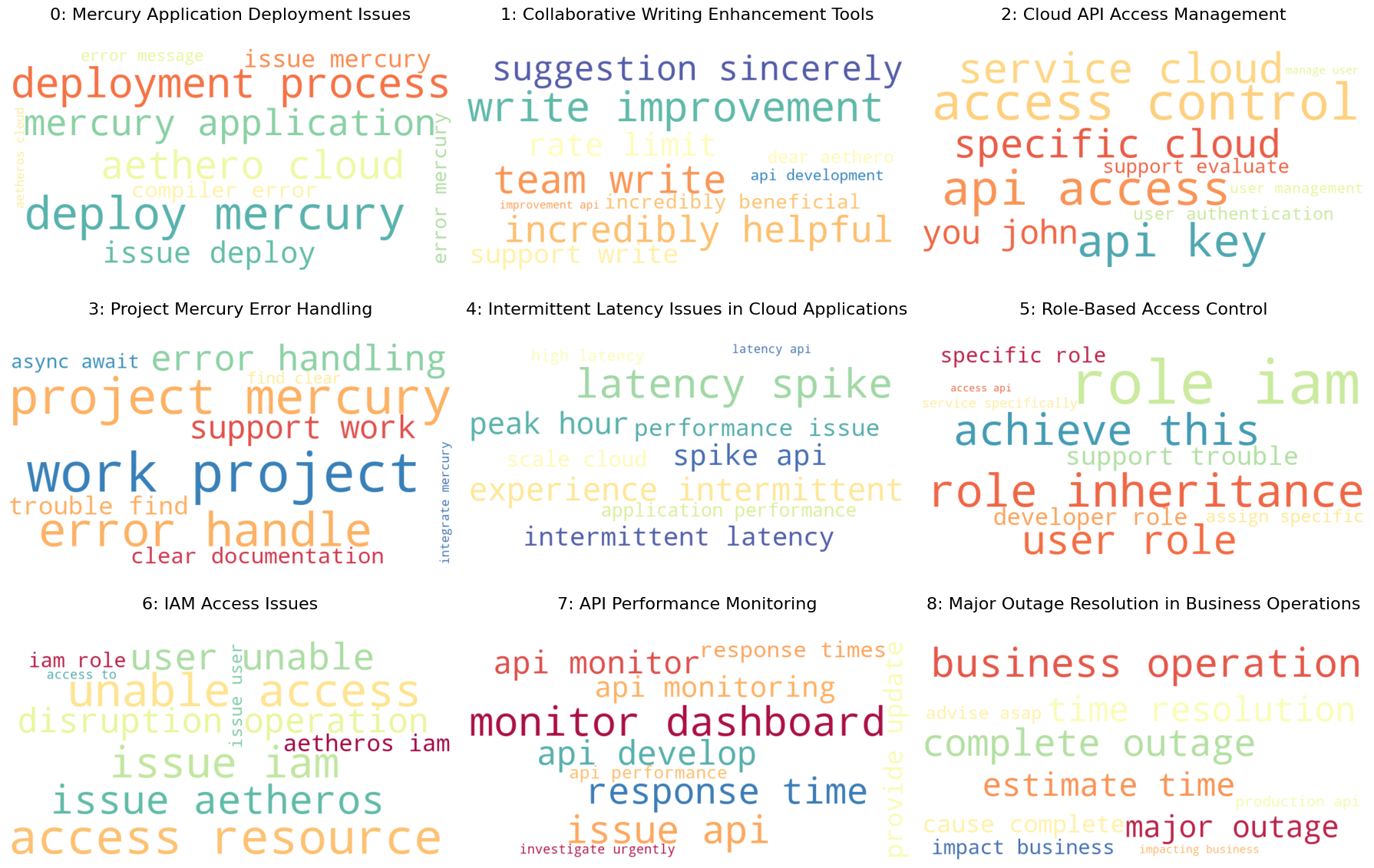 Image by authors
By : Petr Koráb , _Martin Feldkircher*, *** Viktoriya Teliha_ ** (*Text Mining Stories, Prague, **Vienna School of International Studies, ***Centre for Applied Macroeconomic Analysis, Australia).
Manual labeling of terms produced by topic models requires domain experience and may be subjective to the labeler. Especially when the number of topics grows large, it might be convenient to assign human-readable names to topics automatically with an LLM. Simply copying and pasting the results into UIs, such as chatgpt.com, is quite a “black-box” and unsystematic. A better choice would be to add topic labeling to the code with a documented labeler, which gives the engineer more control over the results and ensures reproducibility. This tutorial will explore in detail:
- How to train a topic model with a fresh new Turftopic Python package
- How to label topic model results with GPT-4.0 mini.
We will train a cutting-edge FASTopic model by [Xiaobao Wu et al. 3] presented at last year’s NeurIPS. This model outperforms other competing models, such as BERTopic , in several key metrics (e.g., topic diversity) and has broad applications in business intelligence.
Learn this step by step with the interactive AI Engineer roadmap.
1. Components of the Topic Modelling Pipeline
Labelling is the essential part of the topic modelling pipeline because it bridges the model outputs with real-world decisions. The model assigns a number to each topic, but a business decision relies on the human-readable text label summarizing the typical terms in each topic. The models are typically labelled by (1) labellers with the domain experience, often using a well-defined labelling strategy, (2) LLMs, and (3) commercial tools. The path from raw data to decision-making through a topic model is nicely explained in Image 1.
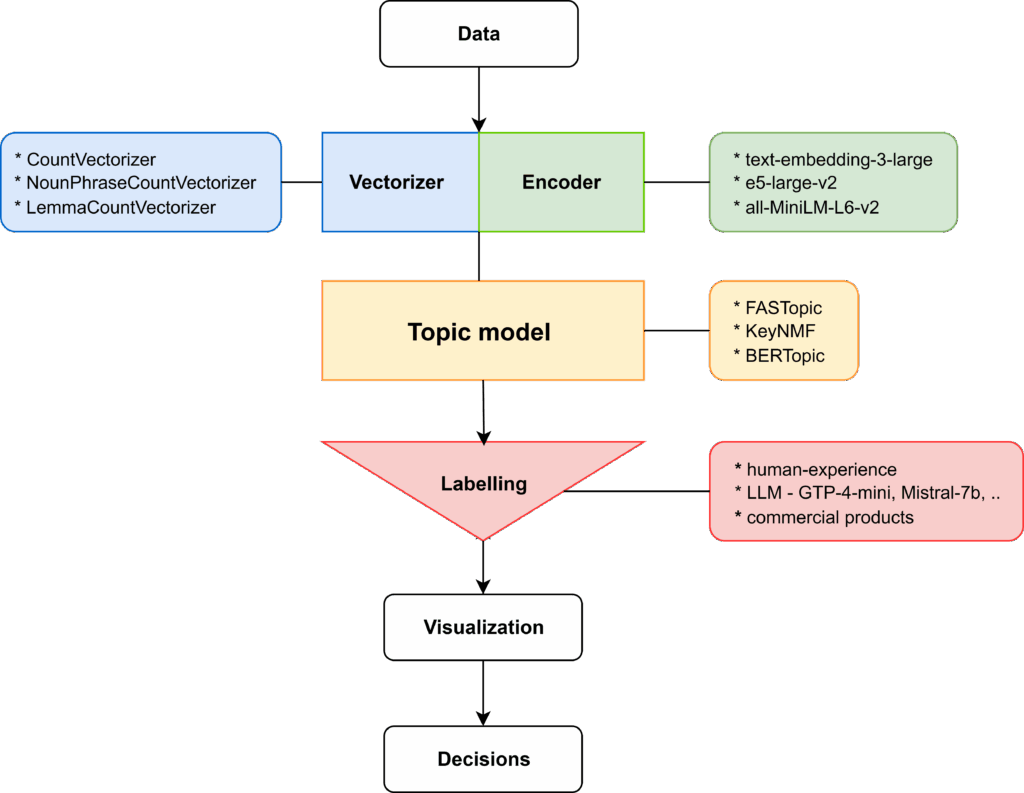 Image 1. Components of the topic modeling pipeline.
Source: adapted and extended from Kardos et al [2].
The pipeline starts with raw data, which is preprocessed and vectorized for the topic model. The model returns topics named with integers, including typical terms (words or bigrams). The labeling layer replaces the integer in the topic name with the text label. The model user (product manager, customer care dept., etc.) then works with labelled terms to make data-informed decisions. In the following modeling example, we will follow it step by step.
2. Data
We will use FASTopic to classify customer complaints data into 10 topics. The example use case uses a synthetically generated Customer Care Email dataset available on Kaggle, licensed under the GPL-3 license. The prefiltered data covers 692 incoming emails to the customer care department and looks like this:
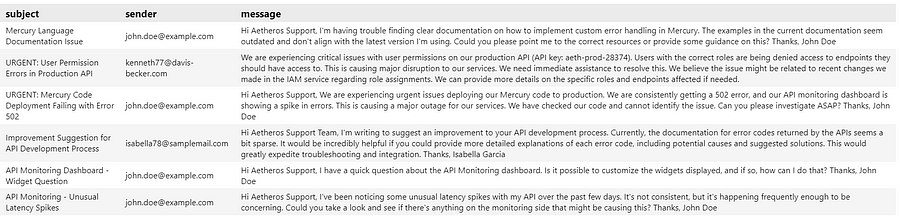 Image 2. Customer Care Email dataset. Image by authors.
2.1. Data preprocessing
Text data is sequentially preprocessed in six steps. Numbers are removed first, followed by emojis. English stopwords are removed afterward, followed by punctuation. Additional tokens (such as company and person names) are removed in the next step before lemmatization. Read more on text preprocessing for topic models in our previous tutorial.
First, we read the clean data and tokenize the dataset:
python
import pandas as pd

# Read data
data = pd.read_csv("data.csv", usecols=['message_clean'])

# Create corpus list
docs = data["message_clean"].tolist()
 Image 3. Recommended cleaning pipeline for topic models. Image by authors.
2.2. Bigram vectorization
Next, we create a bigram tokenizer to process tokens as bigrams during the model training. Bigram models provide more relevant information and identify better key qualities and problems for business decisions than single-word models (“delivery” vs. “poor delivery”, “stomach” vs. “sensitive stomach”, etc.).
python
from sklearn.feature_extraction.text import CountVectorizer

bigram_vectorizer = CountVectorizer(
    ngram_range=(2, 2),               # only bigrams
    max_features=1000                 # top 1000 bigrams by frequency
)
3. Model training
The FASTopic model is currently implemented in two Python packages:
- Fastopic: official package by X. Wu
- Turftopic: new Python package that brings many helpful topic modeling features, including labeling with LLMs [2]
We will use the Turftopic implementation because of the direct link between the model and the Namer that offers LLM labelling.
Let’s set up the model and fit it to the data. It is essential to set a random state to secure training reproducibility.
python
from turftopic import FASTopic

# Model specification
topic_size  = 10
model = FASTopic(n_components = topic_size,       # train for 10 topics
                 vectorizer = bigram_vectorizer,  # generate bigrams in topics
                 random_state = 32).fit(docs)     # set random state

# Fit model to corpus
topic_data = model.prepare_topic_data(docs)
Now, let's prepare a dataframe with topic IDs and the top 10 bigrams with the highest probability received from the model (code is here).
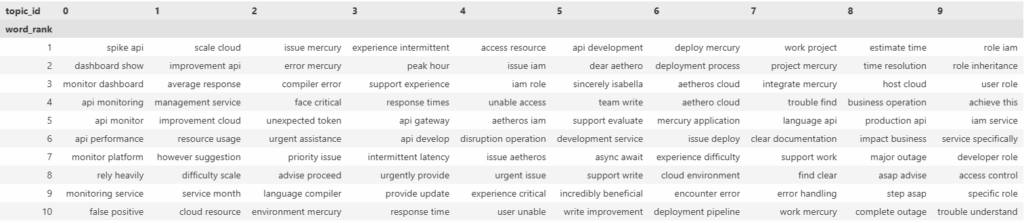 Image 4. Unlabeled topics in FASTopic. Image by authors.
4. Topic labeling
In the next step, we add text labels to the topic IDs with GPT4-o-mini. Let’s follow these steps:
- Create an 𝐎𝐩𝐞𝐧 𝐀𝐈 𝐚𝐜𝐜𝐨𝐮𝐧𝐭 and choose a billing plan (e.g. “𝘗𝘢𝘺 𝘢𝘴 𝘺𝘰𝘶 𝘨𝘰”)
- Set an environment variable with OpenAI API key
- Use Turftopic’s 𝐍𝐚𝐦𝐞𝐫 to label keywords in the topics with the LLM.
With this code, we label the topics and add a new row topic_name to the dataframe.
python
from turftopic.namers import OpenAITopicNamer
import os

# OpenAI API key key to access GPT-4
os.environ["OPENAI_API_KEY"] = ""

# use Namer to label topic model with LLM
namer = OpenAITopicNamer("gpt-4o-mini")
model.rename_topics(namer)

# create a dataframe with labelled topics
topics_df = model.topics_df()
topics_df.columns = ['topic_id', 'topic_name', 'topic_words']

# split and explode
topics_df['topic_word'] = topics_df['topic_words'].str.split(',')
topics_df = topics_df.explode('topic_word')
topics_df['topic_word'] = topics_df['topic_word'].str.strip()

# add a rank for each word within a topic
topics_df['word_rank'] = topics_df.groupby('topic_id').cumcount() + 1

# pivot to wide format
wide = topics_df.pivot(index='word_rank',
                       columns=['topic_id', 'topic_name'], values='topic_word')
Here is the table with labeled topics after additional transformations. It would be interesting to compare the LLM results with those of a company insider who is familiar with the company's processes and customer base. The dataset is synthetic, so let’s rely on the GPT-4 labeling.
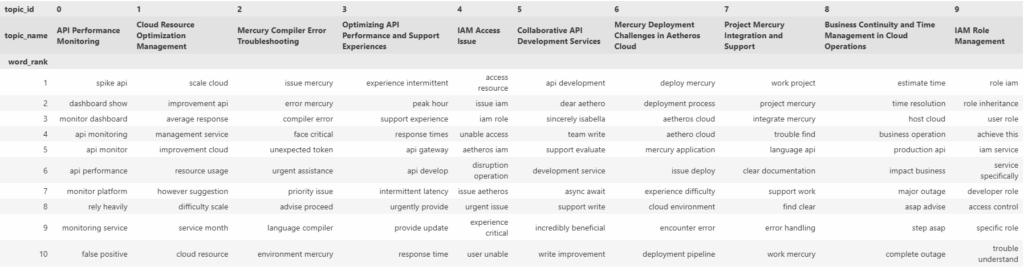 Image 5. Labeled topics in FASTopic by GPT4–o-mini. Image by authors.
We can also visualize the labeled topics for a better presentation. The code for the bigram word cloud visualization, generated from the topics produced by the model, is here.
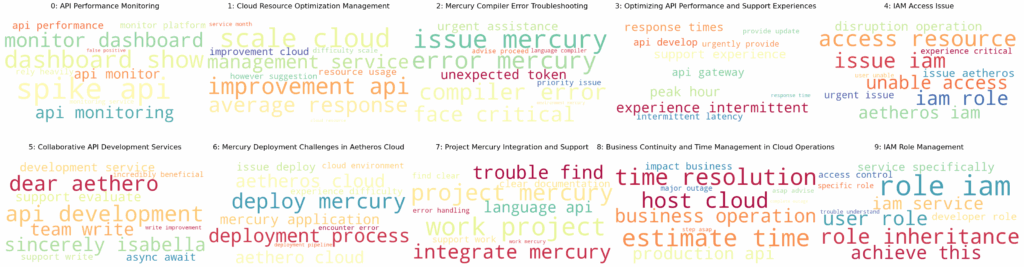 Image 6. Word cloud visualization of labeled topics by GPT4–o-mini. Image by authors.
Summary
- The new Turftopic Python package links recent topic models with the LLM-based labeler for generating human-readable topic names.
- The main benefits are: 1) independence from the labeler’s subjective experience, 2) capacity to label models with a large number of topics that a human labeler might have difficulty labeling independently, and 3) more control of the code and reproducibility.
- Topic labeling with LLMs has a wide range of applications in diverse areas. Read our latest paper on the topic modeling of central bank communication, where GPT-4 labeled the FASTopic model.
- The labels are slightly different for each training, even with the random state. It is not caused by the Namer, but by the random processes in model training that output bigrams with probabilities in descending order. The differences in probabilities are in tiny decimals, so each training generates a few new terms in the top 10, which then impacts the LLM labeler.
The data and complete code for this tutorial are here.
Petr Korab is a Senior Data Analyst and Founder of Text Mining Stories with over eight years of experience in Business Intelligence and NLP.
Sign up for our blog to get the latest news from the NLP industry!
References
[1] Feldkircher, M., Korab, P., Teliha, V., (2025).“What Do Central Bankers Talk About? Evidence From the BIS Archive,” CAMA Working Papers 2025–35, Centre for Applied Macroeconomic Analysis, Crawford School of Public Policy, The Australian National University.
[2] Kardos, M., Enevoldsen, K. C., Kostkan, J., Kristensen-McLachlan, R. D., Rocca, R. (2025). Turftopic: Topic Modelling with Contextual Representations from Sentence Transformers. Journal of Open Source Software , 10(111), 8183, https://doi.org/10.21105/joss.08183.
[3] Wu, X, Nguyen, T., Ce Zhang, D., Yang Wang, W., Luu, A. T. (2024). FASTopic: A Fast, Adaptive, Stable, and Transferable Topic Modeling Paradigm. arXiv preprint: 2405.17978.
Register Now to Continue Reading
Unlock Towards Data Science with a Free Account
All articles on Towards Data Science are available to registered users. Create a free account today to access this article and thousands more.
Register for freeSign in to your account
 Written By
See all from Petr Koráb
LlmMachine LearningNLPPythonTopic Modeling
Share This Article
Towards Data Science is a community publication. Submit your insights to reach our global audience and earn through the TDS Author Payment Program.
Write for TDS
Related Articles
Large Language Models
Using LLMs to create artistic representations of data
Kory Becker
December 30, 20247 min read
Game Development
Programming a quantum computer is fun!
Kory Becker
February 10, 20239 min read
Large Language Models
Enhancing Llama2's proficiency in Python through supervised fine-tuning and low-rank adaptation techniques
Luís Roque
August 17, 202320 min read
Programming
Have wacky dates in your data? Instead of dropping or filtering them, impute or substitute them with a reasonable, best-guess.
Justin Chae
December 30, 20208 min read
Artificial Intelligence
Pushing the boundaries: generalizing temporal difference algorithms
Slava Efimov
August 7, 20246 min read
Artificial Intelligence
How to become an LLM Scientist or Engineer from scratch
Maxime Labonne
January 16, 202518 min read
Artificial Intelligence
Implement, understand and learn about how 3 powerful methods, including Deep Learning, can be used to impute data.
Vagif Aliyev
October 30, 20209 min read
Machine Learning
Our weekly selection of must-read Editors' Picks and original features
TDS Editors
May 5, 20223 min read
Artificial Intelligence
The exciting new world of designing conversation driven APIs for LLMs
Roni Dover
July 28, 20258 min read
Your home for data science and AI. The world's leading publication for data science, data analytics, data engineering, machine learning, and artificial intelligence professionals.
Subscribe to Our NewsletterWrite For TDS•About•Advertise•Privacy Policy•Terms of Use
© Insight Media Group, LLC 2026•The New Stack•roadmap.sh•Creator Network
Recommended Articles
Close