保留正文与补采附件。源页面当前未重新核验;具体限制见交付清单。
 We value your privacy
We use cookies to enhance your browsing experience, serve personalised ads or content, and analyse our traffic. By clicking "Accept All", you consent to our use of cookies.
Customise Reject All Accept All
Customise Consent Preferences
 We use cookies to help you navigate efficiently and perform certain functions. You will find detailed information about all cookies under each consent category below.
The cookies that are categorised as "Necessary" are stored on your browser as they are essential for enabling the basic functionalities of the site. ... Show more
NecessaryAlways Active
Necessary cookies are required to enable the basic features of this site, such as providing secure log-in or adjusting your consent preferences. These cookies do not store any personally identifiable data.
-
Cookie
BCTempID
-
Duration
10 minutes
-
Description
No description available.
-
Cookie
__cf_bm
-
Duration
1 hour
-
Description
This cookie, set by Cloudflare, is used to support Cloudflare Bot Management.
-
Cookie
AWSALBCORS
-
Duration
7 days
-
Description
Amazon Web Services set this cookie for load balancing.
-
Cookie
_cfuvid
-
Duration
session
-
Description
Cloudflare sets this cookie to track users across sessions to optimize user experience by maintaining session consistency and providing personalized services
-
Cookie
li_gc
-
Duration
6 months
-
Description
Linkedin set this cookie for storing visitor's consent regarding using cookies for non-essential purposes.
-
Cookie
__hssrc
-
Duration
session
-
Description
This cookie is set by Hubspot whenever it changes the session cookie. The __hssrc cookie set to 1 indicates that the user has restarted the browser, and if the cookie does not exist, it is assumed to be a new session.
-
Cookie
__hssc
-
Duration
1 hour
-
Description
HubSpot sets this cookie to keep track of sessions and to determine if HubSpot should increment the session number and timestamps in the __hstc cookie.
-
Cookie
wpEmojiSettingsSupports
-
Duration
session
-
Description
WordPress sets this cookie when a user interacts with emojis on a WordPress site. It helps determine if the user's browser can display emojis properly.
-
Cookie
BCSessionID
-
Duration
1 year 1 month 4 days
-
Description
Blueconic sets this cookie as a unique identifier for the BlueConic profile.
-
Cookie
_octo
-
Duration
1 year
-
Description
No description available.
-
Cookie
logged_in
-
Duration
1 year
-
Description
No description available.
-
Cookie
__Secure-YEC
-
Duration
past
-
Description
YouTube sets this cookie to stores the user's video player preferences using embedded YouTube video
-
Cookie
__eoi
-
Duration
6 months
-
Description
Description is currently not available.
-
Cookie
AWSALBTGCORS
-
Duration
7 days
-
Description
No description available.
-
Cookie
login-status-p
-
Duration
past
-
Description
Description is currently not available.
-
Cookie
AWSALBTG
-
Duration
7 days
-
Description
No description available.
-
Cookie
csrf_token
-
Duration
session
-
Description
No description available.
-
Cookie
token_v2
-
Duration
1 day
-
Description
Description is currently not available.
-
Cookie
D
-
Duration
1 year
-
Description
Description is currently not available.
-
Cookie
PHPSESSID
-
Duration
session
-
Description
This cookie is native to PHP applications. The cookie stores and identifies a user's unique session ID to manage user sessions on the website. The cookie is a session cookie and will be deleted when all the browser windows are closed.
-
Cookie
VISITOR_PRIVACY_METADATA
-
Duration
6 months
-
Description
YouTube sets this cookie to store the user's cookie consent state for the current domain.
-
Cookie
cookietest
-
Duration
session
-
Description
The cookietest cookie is typically used to determine whether the user's browser accepts cookies, essential for website functionality and user experience.
-
Cookie
__Host-airtable-session
-
Duration
1 year
-
Description
This cookie is used to enable us to integrate the services of Airtable.
-
Cookie
__Host-airtable-session.sig
-
Duration
1 year
-
Description
This cookie is used to enable us to integrate the services of Airtable.
-
Cookie
m
-
Duration
1 year 1 month 4 days
-
Description
Stripe sets this cookie for fraud prevention purposes. It identifies the device used to access the website, allowing the website to be formatted accordingly.
-
Cookie
BIGipServer*
-
Duration
session
-
Description
Marketo sets this cookie to collect information about the user's online activity and build a profile about their interests to provide advertisements relevant to the user.
-
Cookie
__cfruid
-
Duration
session
-
Description
Cloudflare sets this cookie to identify trusted web traffic.
-
Cookie
_GRECAPTCHA
-
Duration
6 months
-
Description
Google Recaptcha service sets this cookie to identify bots to protect the website against malicious spam attacks.
-
Cookie
__Secure-YNID
-
Duration
6 months
-
Description
Google cookie used to protect user security and prevent fraud, especially during the login process.
-
Cookie
cookieyes-consent
-
Duration
1 year
-
Description
CookieYes sets this cookie to remember users' consent preferences so that their preferences are respected on subsequent visits to this site. It does not collect or store any personal information about the site visitors.
Functional
Functional cookies help perform certain functionalities like sharing the content of the website on social media platforms, collecting feedback, and other third-party features.
-
Cookie
lidc
-
Duration
1 day
-
Description
LinkedIn sets the lidc cookie to facilitate data center selection.
-
Cookie
brw
-
Duration
1 year
-
Description
No description available.
-
Cookie
brwConsent
-
Duration
5 minutes
-
Description
Description is currently not available.
-
Cookie
WMF-Uniq
-
Duration
1 year
-
Description
Description is currently not available.
-
Cookie
loom_anon_comment
-
Duration
1 year
-
Description
No description available.
-
Cookie
loom_referral_video
-
Duration
session
-
Description
Description is currently not available.
-
Cookie
VISITOR_INFO1_LIVE
-
Duration
6 months
-
Description
A cookie set by YouTube to measure bandwidth that determines whether the user gets the new or old player interface.
-
Cookie
yt-remote-connected-devices
-
Duration
Never Expires
-
Description
YouTube sets this cookie to store the user's video preferences using embedded YouTube videos.
-
Cookie
ytidb::LAST_RESULT_ENTRY_KEY
-
Duration
Never Expires
-
Description
The cookie ytidb::LAST_RESULT_ENTRY_KEY is used by YouTube to store the last search result entry that was clicked by the user. This information is used to improve the user experience by providing more relevant search results in the future.
-
Cookie
yt-remote-device-id
-
Duration
Never Expires
-
Description
YouTube sets this cookie to store the user's video preferences using embedded YouTube videos.
-
Cookie
yt-remote-session-name
-
Duration
session
-
Description
The yt-remote-session-name cookie is used by YouTube to store the user's video player preferences using embedded YouTube video.
-
Cookie
yt-remote-fast-check-period
-
Duration
session
-
Description
The yt-remote-fast-check-period cookie is used by YouTube to store the user's video player preferences for embedded YouTube videos.
-
Cookie
yt-remote-session-app
-
Duration
session
-
Description
The yt-remote-session-app cookie is used by YouTube to store user preferences and information about the interface of the embedded YouTube video player.
-
Cookie
yt-remote-cast-available
-
Duration
session
-
Description
The yt-remote-cast-available cookie is used to store the user's preferences regarding whether casting is available on their YouTube video player.
-
Cookie
yt-remote-cast-installed
-
Duration
session
-
Description
The yt-remote-cast-installed cookie is used to store the user's video player preferences using embedded YouTube video.
-
Cookie
cp_session
-
Duration
3 months
-
Description
Codepen sets this cookie for Help systems found in the website.
-
Cookie
loid
-
Duration
1 year 1 month 4 days
-
Description
This cookie is set by the Reddit. The cookie enables the sharing of content from the website onto the social media platform.
Analytics
Analytical cookies are used to understand how visitors interact with the website. These cookies help provide information on metrics such as the number of visitors, bounce rate, traffic source, etc.
-
Cookie
__hstc
-
Duration
6 months
-
Description
Hubspot set this main cookie for tracking visitors. It contains the domain, initial timestamp (first visit), last timestamp (last visit), current timestamp (this visit), and session number (increments for each subsequent session).
-
Cookie
hubspotutk
-
Duration
6 months
-
Description
HubSpot sets this cookie to keep track of the visitors to the website. This cookie is passed to HubSpot on form submission and used when deduplicating contacts.
-
Cookie
_ga
-
Duration
1 year 1 month 4 days
-
Description
Google Analytics sets this cookie to calculate visitor, session and campaign data and track site usage for the site's analytics report. The cookie stores information anonymously and assigns a randomly generated number to recognise unique visitors.
-
Cookie
ga*
-
Duration
1 year 1 month 4 days
-
Description
Google Analytics sets this cookie to store and count page views.
-
Cookie
__Host-psifi.analyticsTrace
-
Duration
6 hours
-
Description
Description is currently not available.
-
Cookie
__Host-psifi.analyticsTraceV2
-
Duration
6 hours
-
Description
Description is currently not available.
-
Cookie
_gh_sess
-
Duration
session
-
Description
GitHub sets this cookie for temporary application and framework state between pages like what step the user is on in a multiple step form.
-
Cookie
YSC
-
Duration
session
-
Description
YSC cookie is set by Youtube and is used to track the views of embedded videos on Youtube pages.
-
Cookie
ajs_anonymous_id
-
Duration
1 year
-
Description
This cookie is set by Segment to count the number of people who visit a certain site by tracking if they have visited before.
-
Cookie
vuid
-
Duration
1 year 1 month 4 days
-
Description
Vimeo installs this cookie to collect tracking information by setting a unique ID to embed videos on the website.
Performance
Performance cookies are used to understand and analyse the key performance indexes of the website which helps in delivering a better user experience for the visitors.
-
Cookie
AWSALB
-
Duration
7 days
-
Description
AWSALB is an application load balancer cookie set by Amazon Web Services to map the session to the target.
-
Cookie
acq
-
Duration
past
-
Description
Description is currently not available.
-
Cookie
acq.sig
-
Duration
past
-
Description
Description is currently not available.
-
Cookie
ptc
-
Duration
2 years
-
Description
No description available.
Advertisement
Advertisement cookies are used to provide visitors with customised advertisements based on the pages you visited previously and to analyse the effectiveness of the ad campaigns.
-
Cookie
muc_ads
-
Duration
1 year 1 month 4 days
-
Description
Twitter sets this cookie to collect user behaviour and interaction data to optimize the website.
-
Cookie
guest_id_marketing
-
Duration
1 year 1 month 4 days
-
Description
Twitter sets this cookie to identify and track the website visitor.
-
Cookie
guest_id_ads
-
Duration
1 year 1 month 4 days
-
Description
Twitter sets this cookie to identify and track the website visitor.
-
Cookie
personalization_id
-
Duration
1 year 1 month 4 days
-
Description
Twitter sets this cookie to integrate and share features for social media and also store information about how the user uses the website, for tracking and targeting.
-
Cookie
guest_id
-
Duration
1 year 1 month 4 days
-
Description
Twitter sets this cookie to identify and track the website visitor. It registers if a user is signed in to the Twitter platform and collects information about ad preferences.
-
Cookie
bcookie
-
Duration
1 year
-
Description
LinkedIn sets this cookie from LinkedIn share buttons and ad tags to recognize browser IDs.
-
Cookie
__Secure-ROLLOUT_TOKEN
-
Duration
6 months
-
Description
YouTube sets this cookie to manage feature rollout and experimentation. It helps Google control which new features or interface changes are shown to users as part of testing and staged rollouts, ensuring consistent experience for a given user during an experiment.
-
Cookie
yt.innertube::nextId
-
Duration
Never Expires
-
Description
YouTube sets this cookie to register a unique ID to store data on what videos from YouTube the user has seen.
-
Cookie
yt.innertube::requests
-
Duration
Never Expires
-
Description
YouTube sets this cookie to register a unique ID to store data on what videos from YouTube the user has seen.
-
Cookie
session_tracker
-
Duration
session
-
Description
This cookie is set by the Reddit. This cookie is used to identify trusted web traffic. It also helps in adverstising on the website.
-
Cookie
edgebucket
-
Duration
session
-
Description
Reddit sets this cookie to save the information about a log-on Reddit user, for the purpose of advertisement recommendations and updating the content.
-
Cookie
did
-
Duration
1 year
-
Description
Arbor sets this cookie to show targeted ads to site visitors.This cookie expires after 2 months or 1 year.
Uncategorised
Other uncategorised cookies are those that are being analysed and have not been classified into a category as yet.
No cookies to display.
Reject All Save My Preferences Accept All
Toggle SearchToggle Mobile Navigation
Publish AI, ML & data-science insights to a global community of data professionals.
Sign inSubmit an Article
LatestEditor's PicksNewsletterShipAI
Write For TDS
LinkedInXToggle Search
Machine Learning
Choose the Right One: Evaluating Topic Models for Business Intelligence
Python tutorial for evaluating top-notch bigram topic models in customer email classification
Petr Koráb
April 24, 202510 min read
 Source: Freepic
Topic models are used in businesses to classify brand-related text datasets (such as product and site reviews, surveys, and social media comments) and to track how customer satisfaction metrics change over time.
There is a myriad of recent topic models one can choose from: the widely used BERTopic by Maarten Grootendorst (2022), the recent FASTopic presented at last year’s NeurIPS, (Xiaobao Wu et al.,2024), the Dynamic Topic Modelby Blei and Lafferty (2006), or a fresh semi-supervised Seeded Poisson Factorization model (Prostmaier et al., 2025).
For a business use case, training topic models on customer texts, we often get results that are not identical and sometimes even conflicting. In business, imperfections cost money, so the engineers should place into production the model that provides the best solution and solves the problem most effectively. At the same pace that new topic models appear on the market, methods for evaluating their quality using new metrics also evolve.
This practical tutorial will focus on bigram topic models , which provide more relevant information and identify better key qualities and problems for business decisions than single-word models (“delivery” vs. “poor delivery”, “stomach” vs. “sensitive stomach”, etc.). On one side, bigram models are more detailed; on the other, many evaluation metrics were not originally designed for their evaluation. To provide more background in this area, we will explore in detail:
- How to evaluate the quality of bigram topic models
- How to prepare an email classification pipeline in Python.
Our example use case will show how bigram topic models (BERTopic and FASTopic) help prioritize email communication with customers on certain topics and reduce response times.
Learn this step by step with the interactive Machine Learning roadmap.
1. What are topic model quality indicators?
The evaluation task should target the ideal state:
The ideal topic model should produce topics where words or bigrams (two consecutive words) in each topic are highly semantically related and distinct for each topic.
In practice, this means that the words predicted for each topic are semantically similar to human judgment, and there is low duplication of words between topics.
It is standard to calculate a set of metrics for each trained model to make a qualified decision on which model to place into production or use for a business decision, comparing the model performance metrics.
- Coherence metricsevaluate how well the words discovered by a topic model make sense to humans (have similar semantics in each topic).
- Topic diversity measures how different the discovered topics are from one another.
Bigram topic models work well with these metrics:
- NPMI (Normalized Point-wise Mutual Information) uses probabilities estimated in a reference corpus to calculate a [-1:1] score for each word (or bigram) predicted by the model. Read [1] for more details.
The reference corpus can be either internal (the training set) or external (e.g., an external email dataset). A large, external, and comparable corpus is a better choice because it can help reduce bias in training sets. Because this metric works with word frequencies,the training set and the reference corpus should be preprocessed the same way(i.e., if we remove numbers and stopwords in the training set, we should also do it in the reference corpus). The aggregate model score is the average of words across topics.
- SC (Semantic Coherence) does not need a reference corpus. It uses the same dataset as was used to train the topic model. Read more in [2].
Let’s say we have the Top 4 words for one topic: “apple”, “banana”, “juice”, “smoothie” predicted by a topic model.Then SC looks at all combinations of words in the training set going from left to right, starting with the first word {apple, banana} , {apple, juice} , {apple, smoothie} then the second word {banana, juice} , {banana, smoothie} , then last word {juice, smoothie} and it counts the number of documents that contain both words, divided by the frequency of documents that contain the first word. Overall SC score for a model is the mean of all topic-level scores.
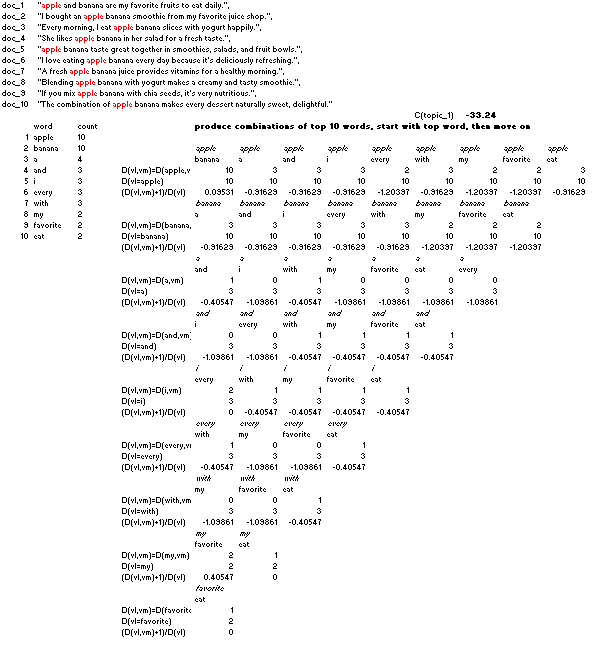 Image 1. Semantic coherence by Mimno et al. (2011) illustration. Image by author.
PUV (Percentage of Unique Words) calculates the share of unique words across topics in the model. PUV = 1 means that each topic in the model contains unique bigrams. Values close to 1 indicate a well-shaped, high-quality model with small word overlap between topics. [3].
The closer to 0 the SC and NIMP scores are , the more coherent the model is (bigrams predicted by the topic model for each topic are semantically similar). The closer to 1 PUV is , the easier the model is to interpret and use, because bigrams between topics do not overlap.
2. How can we prioritize email communication with topic models?
A large share of customer communication, not only in e-commerce businesses, is now solved with chatbots and personal client sections. Yet, it is common to communicate with customers by email. Many email providers offer developers broad flexibility in APIs to customize their email platform (e.g., MailChimp ,SendGrid ,Brevo). In this place, topic models make mailing more flexible and effective.
In this use case, the pipeline takes the input from the incoming emails and uses the trained topic classifier to categorize the incoming email content. The outcome is the classified topic that the Customer Care (CC) Department sees next to each email. The main objective is to allow the CC staff to prioritize the categories of emails and reduce the response time to the most sensitive requests (that directly affect margin-related KPIs or OKRs).
 Image 2. Topic model pipeline illustration. Image by author.
3. Data and model set-ups
We will train FASTopic a nd BERTopic to classify emails into 8 and 10 topics and evaluate the quality of all model specifications. Read my previous TDS tutorial on topic modeling with these cutting-edge topic models.
As a training set, we use a synthetically generated Customer Care Email dataset available on Kaggle with a GPL-3 license. The prefiltered data covers 692 incoming emails and looks like this:
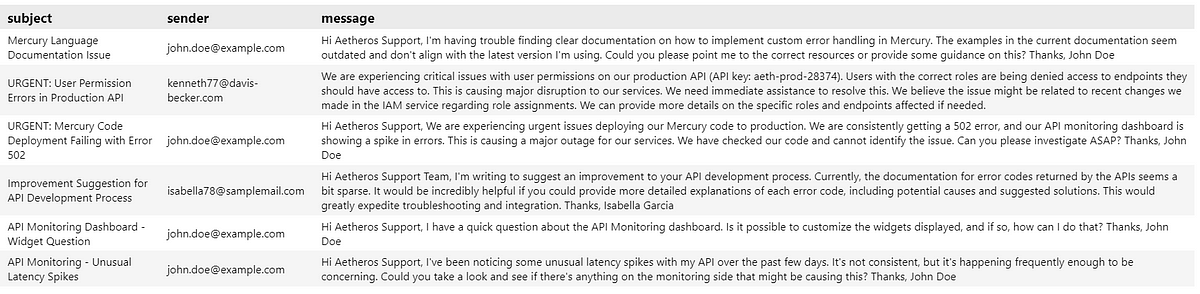 Image 3. Customer Care Email dataset. Image by author.
3.1. Data preprocessing
Cleaning text in the right order is essential for topic models to work in practice because it minimizes the bias of each cleaning operation.
Numbers are typically removed first, followed by emojis, unless we don’t need them for special situations, such as extracting sentiment. Stopwordsfor one or more languages are removed afterward, followed by punctuation so that stopwords don’t break up into two tokens (“we’ve” -> “we” + ‘ve”). Additional tokens(company and people’s names, etc.) are removed in the next step in the clean data before lemmatization, which unifies tokens with the same semantics.
 Image 4. General preprocessing steps for topic modeling. Image by author
“Delivery” and “deliveries”, “box” and “Boxes”, or “Price” and “prices” share the same word root, but without lemmatization, topic models would model them as separate factors. That’s why customer emails should be lemmatized in the last step of preprocessing.
Text preprocessing is model-specific:
- FASTopic works with clean data on input; some cleaning (stopwords) can be done during the training. The simplest and most effective way is to use the Washer, a no-code app for text data cleaningthat offers a no-code way of data preprocessing for text mining projects.
- BERTopic: the documentation recommends that “r emoving stop words as a preprocessing step is not advised as the transformer-based embedding models that we use need the full context to create accurate embeddings”. For this reason, cleaning operations should be included in the model training.
3.2. Model compilation and training
You can check the full codes for FASTopic and BERTopic’s training with bigram preprocessing and cleaning in this repo. My previous TDS tutorials (4) and (5) explain all steps in detail.
We train both models to classify 8 topics in customer email data. A simple inspection of the topic distribution shows that incoming emails to FASTopic are quite well distributed across topics. BERTopic classifies emails unevenly, keeping outliers (uncategorized tokens) in T-1 and a large share of incoming emails in T0.
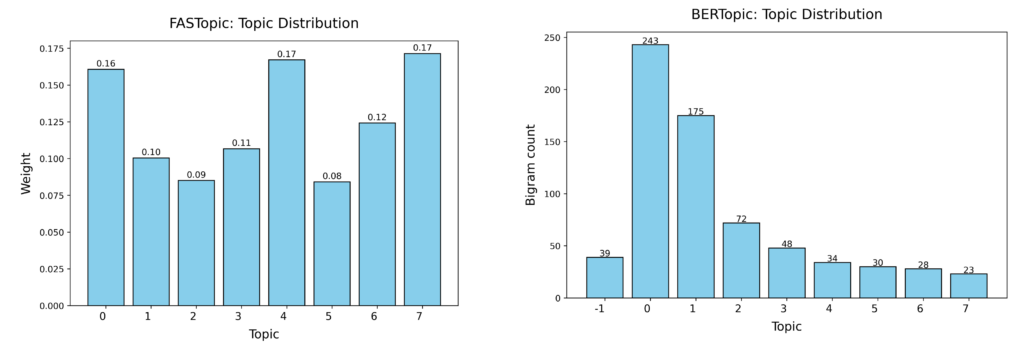 Image 5: Topic distribution, email classification. Image by author.
Here are the predicted bigrams for both models with topic labels:
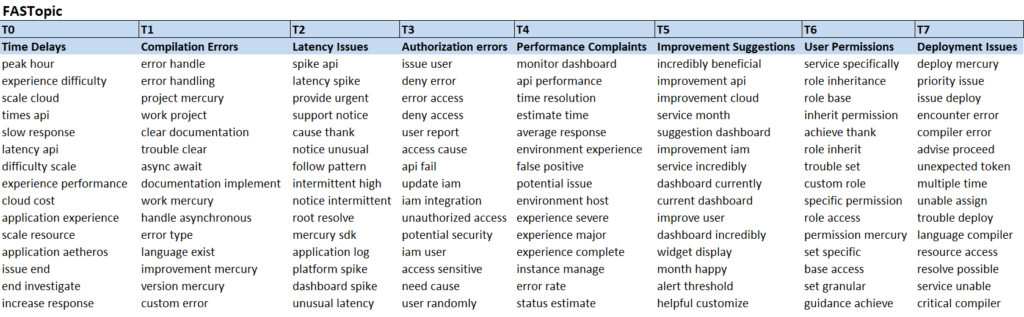
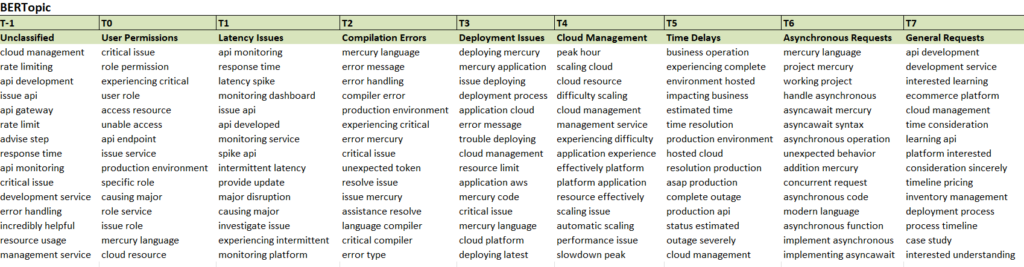 Image 6: Models’ predictions. Image by author.
Because the email corpus is a synthetic LLM-generated dataset, the naive labelling of the topics for both models shows topics that are:
- Comparable:Time Delays, Latency Issues, User Permissions, Deployment Issues, Compilation Errors,
- Differing : Unclassified(BERTopic classifies outliers into T-1), Improvement Suggestions, Authorization Errors, Performance Complaints(FASTopic), Cloud Management, Asynchronous Requests, General Requests (BERTopic)
For business purposes, topics should be labelled by the company’s insiders who know the customer base and the business priorities.
4. Model evaluation
If three out of eight classified topics are labeled differently, then which model should be deployed? Let's now evaluate the coherence and diversity for the trained BERTopic and FASTopic T-8 models.
4.1. NPMI
We need a reference corpus to calculate an NPMI for each model. The Customer IT Support Ticket Dataset from Kaggle, distributed with Attribution 4.0 International license, provides comparable data to our training set. The data is filtered to 11923 English email bodies.
- Calculate an NPMI for each bigram in the reference corpus with this code .
- Merge bigrams predicted by FASTopic and BERTopic with their NPMI scores from the reference corpus. The fewer NaNs are in the table, the more accurate the metric is.
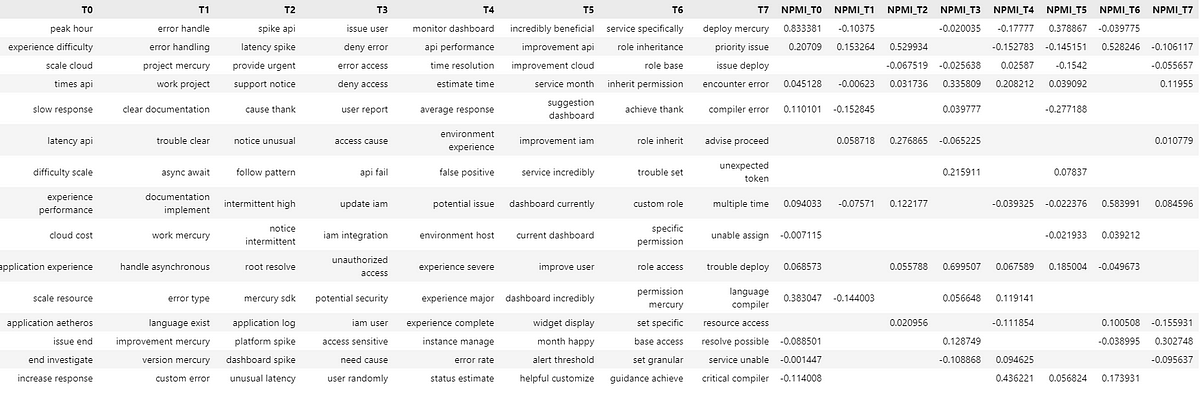 Image 7: NPMI coherence evaluation.Image by author.
3. Average NPMIs within and across topics to get a single score for each model.
4.2. SC
With SC , we learn the context and semantic similarity of bigrams predicted by a topic model by calculating their position in the corpus in relation to other tokens. To do so, we:
- Create a document-term matrix (DTM) with a count of how many times each bigram appears in each document.
- Calculate topic SC scores by searching for bigram co-occurrences in the DTM and the bigrams predicted by topic models.
- Average topic SC to a model SC score.
4.3. PUV
Topic diversity PUV metric checks the duplicates of bigrams between topics in a model.
- Join bigrams into tokens by replacing spaces with underscores in the FASTopic and BERTopic tables of predicted bigrams.
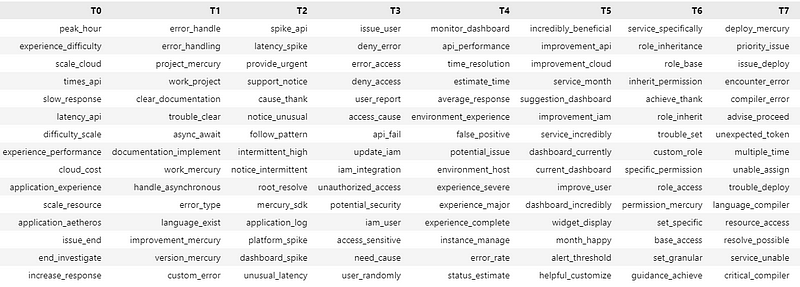 Image 8: Topic diversity illustration. Image by author.
2. Calculate topic diversity as count of distinct tokens/ count of tokens in the tables for both models.
4.4. Model comparison
Let’s now summarize the coherence and diversity evaluation in Image 9. BERTopic models are more coherent but less diverse than FASTopic. The differences are not very large, but BERTopic suffers from uneven distribution of incoming emails into the pipeline (see charts in Image 5). Around 32% of classified emails fall into T0 , and 15% into T-1 , which covers the unclassified outliers. The models are trained with a min. of 20 tokens per topic. Increasing this parameter causes the model to be unable to train, probably because of the small data size.
For this reason, FASTopic is a better choice for topic modelling in email classification with small training datasets.
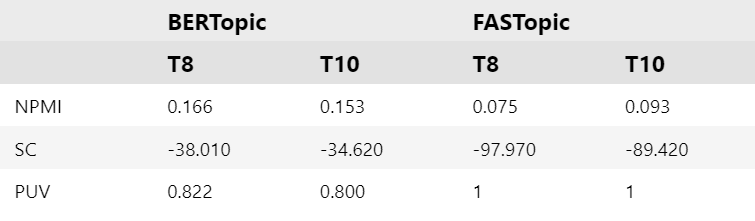 Image 9: Topic model evaluation metrics. Image by author.
The last step is to deploy the model with topic labels in the email platform to classify incoming emails:
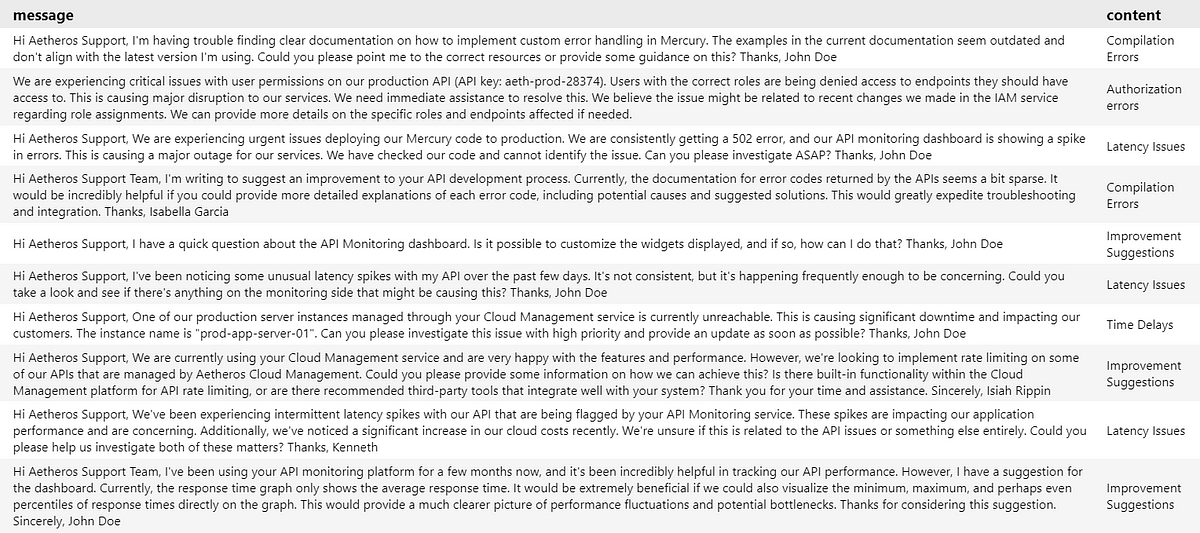 Image 10. Topic model classification pipeline, output. Image by author.
Summary
Coherence and diversity metrics compare models with similar training setups, the same dataset, and cleaning strategy. We cannot compare their absolute values with the results of different training sessions. But they help us decide on the best model for our specific use case. They offer a relative comparison of various model specifications and help decide which model should be deployed in the pipeline. Topic models evaluation should always be the last step before model deployment in business practice.
How does customer care benefit from the topic modelling exercise? After the topic model is put into production, the pipeline sends a classified topic for each email to the email platform that Customer Care uses for communicating with customers. With a limited staff, it is now possible to prioritize and respond faster to the most sensitive business requests (such as “time delays ” and “latency issues”), and change priorities dynamically.
Data and complete codes for this tutorial are here.
···
Petr Korab is a Python Engineer and Founder of Text Mining Stories with over eight years of experience in Business Intelligence and NLP.
Acknowledgments : I thank Tomáš Horský (Lentiamo, Prague), Martin Feldkircher, and Viktoriya Teliha (Vienna School of International Studies) for useful comments and suggestions.
References
[1] Blei, D. M., Lafferty, J. D. 2006. Dynamic topic models. In Proceedings of the 23rd international conference on Machine learning (pp. 113–120).
[2] Dieng A.B., Ruiz F. J. R., and Blei D. M. 2020. Topic modeling in embedding spaces. Transactions of the Association for Computational Linguistics, 8:439-453.
[3] Grootendorst, M. 2022. Bertopic: Neural Topic Modeling With A Class-Based TF-IDF Procedure. Computer Science.
[4] Korab, P. Topic Modelling in Business Intelligence: FASTopic and BERTopic in Code. Towards Data Science. 22.1.2025. Accessible from: link.
[5] Korab, P. Topic Modelling with BERTtopic in Python. Towards Data Science. 4.1.2024. Accessible from: link.
[6] Wu, X, Nguyen, T., Ce Zhang, D., Yang Wang, W., Luu, A. T. 2024. FASTopic: A Fast, Adaptive, Stable, and Transferable Topic Modeling Paradigm. arXiv preprint: 2405.17978.
[7] Mimno, D., Wallach, H., M., Talley, E., Leenders, M, McCallum. A. 2011. Optimizing Semantic Coherence in Topic Models. Proceedings of the 2011 Conference on Empirical Methods in Natural Language Processing.
[8] Prostmaier, B., Vávra, J., Grün, B., Hofmarcher., P. 2025. Seeded Poisson Factorization: Leveraging domain knowledge to fit topic models. arXiv preprint: 2405.17978.
Register Now to Continue Reading
Unlock Towards Data Science with a Free Account
All articles on Towards Data Science are available to registered users. Create a free account today to access this article and thousands more.
Register for freeSign in to your account
 Written By
See all from Petr Koráb
Editor's PicksBertopicModel EvaluationText ClassificationTopic Modeling
Share This Article
Towards Data Science is a community publication. Submit your insights to reach our global audience and earn through the TDS Author Payment Program.
Write for TDS
Related Articles
Machine Learning
Our weekly selection of must-read Editors' Picks and original features
TDS Editors
April 7, 20223 min read
Artificial Intelligence
A new milestone in graph data management
Michael Galkin
March 28, 202315 min read
Data Science
Why I believe my experience at McKinsey made me a better data scientist
Tessa Xie
August 27, 202410 min read
Artificial Intelligence
How to optimize in the right geometry for provably better, faster neural architecture search.
Liam Li
July 16, 202011 min read
Data Science
Understand the standard data quality dimensions used by IBM Cloud Pak for Data and IBM Infosphere Information Server.
Yannick Saillet
November 13, 202015 min read
Conventional optical microscopy is resolution-limited to about 200nm depending on the wavelength of the used light. Smaller structures can...
Dr. Sebastian Reinhard
October 11, 20214 min read
Artificial Intelligence
AI does not decide who gets fired. Companies do.
Marco Baity-Jesi
June 3, 20267 min read
Machine Learning
Data drift meets data profiling
Felipe Adachi
December 14, 202211 min read
Deep Learning
Build optimal ensembles of neural networks with PyTorch and NumPy
Dmitry Borisenko
August 14, 202018 min read
Your home for data science and AI. The world's leading publication for data science, data analytics, data engineering, machine learning, and artificial intelligence professionals.
Subscribe to Our NewsletterWrite For TDS•About•Advertise•Privacy Policy•Terms of Use
© Insight Media Group, LLC 2026•The New Stack•roadmap.sh•Creator Network
Recommended Articles
Close