保留正文与补采附件。源页面当前未重新核验;具体限制见交付清单。
 We value your privacy
We use cookies to enhance your browsing experience, serve personalised ads or content, and analyse our traffic. By clicking "Accept All", you consent to our use of cookies.
Customise Reject All Accept All
Customise Consent Preferences
 We use cookies to help you navigate efficiently and perform certain functions. You will find detailed information about all cookies under each consent category below.
The cookies that are categorised as "Necessary" are stored on your browser as they are essential for enabling the basic functionalities of the site. ... Show more
NecessaryAlways Active
Necessary cookies are required to enable the basic features of this site, such as providing secure log-in or adjusting your consent preferences. These cookies do not store any personally identifiable data.
-
Cookie
BCTempID
-
Duration
10 minutes
-
Description
No description available.
-
Cookie
__cf_bm
-
Duration
1 hour
-
Description
This cookie, set by Cloudflare, is used to support Cloudflare Bot Management.
-
Cookie
AWSALBCORS
-
Duration
7 days
-
Description
Amazon Web Services set this cookie for load balancing.
-
Cookie
_cfuvid
-
Duration
session
-
Description
Cloudflare sets this cookie to track users across sessions to optimize user experience by maintaining session consistency and providing personalized services
-
Cookie
li_gc
-
Duration
6 months
-
Description
Linkedin set this cookie for storing visitor's consent regarding using cookies for non-essential purposes.
-
Cookie
__hssrc
-
Duration
session
-
Description
This cookie is set by Hubspot whenever it changes the session cookie. The __hssrc cookie set to 1 indicates that the user has restarted the browser, and if the cookie does not exist, it is assumed to be a new session.
-
Cookie
__hssc
-
Duration
1 hour
-
Description
HubSpot sets this cookie to keep track of sessions and to determine if HubSpot should increment the session number and timestamps in the __hstc cookie.
-
Cookie
wpEmojiSettingsSupports
-
Duration
session
-
Description
WordPress sets this cookie when a user interacts with emojis on a WordPress site. It helps determine if the user's browser can display emojis properly.
-
Cookie
BCSessionID
-
Duration
1 year 1 month 4 days
-
Description
Blueconic sets this cookie as a unique identifier for the BlueConic profile.
-
Cookie
_octo
-
Duration
1 year
-
Description
No description available.
-
Cookie
logged_in
-
Duration
1 year
-
Description
No description available.
-
Cookie
__Secure-YEC
-
Duration
past
-
Description
YouTube sets this cookie to stores the user's video player preferences using embedded YouTube video
-
Cookie
__eoi
-
Duration
6 months
-
Description
Description is currently not available.
-
Cookie
AWSALBTGCORS
-
Duration
7 days
-
Description
No description available.
-
Cookie
login-status-p
-
Duration
past
-
Description
Description is currently not available.
-
Cookie
AWSALBTG
-
Duration
7 days
-
Description
No description available.
-
Cookie
csrf_token
-
Duration
session
-
Description
No description available.
-
Cookie
token_v2
-
Duration
1 day
-
Description
Description is currently not available.
-
Cookie
D
-
Duration
1 year
-
Description
Description is currently not available.
-
Cookie
PHPSESSID
-
Duration
session
-
Description
This cookie is native to PHP applications. The cookie stores and identifies a user's unique session ID to manage user sessions on the website. The cookie is a session cookie and will be deleted when all the browser windows are closed.
-
Cookie
VISITOR_PRIVACY_METADATA
-
Duration
6 months
-
Description
YouTube sets this cookie to store the user's cookie consent state for the current domain.
-
Cookie
cookietest
-
Duration
session
-
Description
The cookietest cookie is typically used to determine whether the user's browser accepts cookies, essential for website functionality and user experience.
-
Cookie
__Host-airtable-session
-
Duration
1 year
-
Description
This cookie is used to enable us to integrate the services of Airtable.
-
Cookie
__Host-airtable-session.sig
-
Duration
1 year
-
Description
This cookie is used to enable us to integrate the services of Airtable.
-
Cookie
m
-
Duration
1 year 1 month 4 days
-
Description
Stripe sets this cookie for fraud prevention purposes. It identifies the device used to access the website, allowing the website to be formatted accordingly.
-
Cookie
BIGipServer*
-
Duration
session
-
Description
Marketo sets this cookie to collect information about the user's online activity and build a profile about their interests to provide advertisements relevant to the user.
-
Cookie
__cfruid
-
Duration
session
-
Description
Cloudflare sets this cookie to identify trusted web traffic.
-
Cookie
_GRECAPTCHA
-
Duration
6 months
-
Description
Google Recaptcha service sets this cookie to identify bots to protect the website against malicious spam attacks.
-
Cookie
__Secure-YNID
-
Duration
6 months
-
Description
Google cookie used to protect user security and prevent fraud, especially during the login process.
-
Cookie
cookieyes-consent
-
Duration
1 year
-
Description
CookieYes sets this cookie to remember users' consent preferences so that their preferences are respected on subsequent visits to this site. It does not collect or store any personal information about the site visitors.
Functional
Functional cookies help perform certain functionalities like sharing the content of the website on social media platforms, collecting feedback, and other third-party features.
-
Cookie
lidc
-
Duration
1 day
-
Description
LinkedIn sets the lidc cookie to facilitate data center selection.
-
Cookie
brw
-
Duration
1 year
-
Description
No description available.
-
Cookie
brwConsent
-
Duration
5 minutes
-
Description
Description is currently not available.
-
Cookie
WMF-Uniq
-
Duration
1 year
-
Description
Description is currently not available.
-
Cookie
loom_anon_comment
-
Duration
1 year
-
Description
No description available.
-
Cookie
loom_referral_video
-
Duration
session
-
Description
Description is currently not available.
-
Cookie
VISITOR_INFO1_LIVE
-
Duration
6 months
-
Description
A cookie set by YouTube to measure bandwidth that determines whether the user gets the new or old player interface.
-
Cookie
yt-remote-connected-devices
-
Duration
Never Expires
-
Description
YouTube sets this cookie to store the user's video preferences using embedded YouTube videos.
-
Cookie
ytidb::LAST_RESULT_ENTRY_KEY
-
Duration
Never Expires
-
Description
The cookie ytidb::LAST_RESULT_ENTRY_KEY is used by YouTube to store the last search result entry that was clicked by the user. This information is used to improve the user experience by providing more relevant search results in the future.
-
Cookie
yt-remote-device-id
-
Duration
Never Expires
-
Description
YouTube sets this cookie to store the user's video preferences using embedded YouTube videos.
-
Cookie
yt-remote-session-name
-
Duration
session
-
Description
The yt-remote-session-name cookie is used by YouTube to store the user's video player preferences using embedded YouTube video.
-
Cookie
yt-remote-fast-check-period
-
Duration
session
-
Description
The yt-remote-fast-check-period cookie is used by YouTube to store the user's video player preferences for embedded YouTube videos.
-
Cookie
yt-remote-session-app
-
Duration
session
-
Description
The yt-remote-session-app cookie is used by YouTube to store user preferences and information about the interface of the embedded YouTube video player.
-
Cookie
yt-remote-cast-available
-
Duration
session
-
Description
The yt-remote-cast-available cookie is used to store the user's preferences regarding whether casting is available on their YouTube video player.
-
Cookie
yt-remote-cast-installed
-
Duration
session
-
Description
The yt-remote-cast-installed cookie is used to store the user's video player preferences using embedded YouTube video.
-
Cookie
cp_session
-
Duration
3 months
-
Description
Codepen sets this cookie for Help systems found in the website.
-
Cookie
loid
-
Duration
1 year 1 month 4 days
-
Description
This cookie is set by the Reddit. The cookie enables the sharing of content from the website onto the social media platform.
Analytics
Analytical cookies are used to understand how visitors interact with the website. These cookies help provide information on metrics such as the number of visitors, bounce rate, traffic source, etc.
-
Cookie
__hstc
-
Duration
6 months
-
Description
Hubspot set this main cookie for tracking visitors. It contains the domain, initial timestamp (first visit), last timestamp (last visit), current timestamp (this visit), and session number (increments for each subsequent session).
-
Cookie
hubspotutk
-
Duration
6 months
-
Description
HubSpot sets this cookie to keep track of the visitors to the website. This cookie is passed to HubSpot on form submission and used when deduplicating contacts.
-
Cookie
_ga
-
Duration
1 year 1 month 4 days
-
Description
Google Analytics sets this cookie to calculate visitor, session and campaign data and track site usage for the site's analytics report. The cookie stores information anonymously and assigns a randomly generated number to recognise unique visitors.
-
Cookie
ga*
-
Duration
1 year 1 month 4 days
-
Description
Google Analytics sets this cookie to store and count page views.
-
Cookie
__Host-psifi.analyticsTrace
-
Duration
6 hours
-
Description
Description is currently not available.
-
Cookie
__Host-psifi.analyticsTraceV2
-
Duration
6 hours
-
Description
Description is currently not available.
-
Cookie
_gh_sess
-
Duration
session
-
Description
GitHub sets this cookie for temporary application and framework state between pages like what step the user is on in a multiple step form.
-
Cookie
YSC
-
Duration
session
-
Description
YSC cookie is set by Youtube and is used to track the views of embedded videos on Youtube pages.
-
Cookie
ajs_anonymous_id
-
Duration
1 year
-
Description
This cookie is set by Segment to count the number of people who visit a certain site by tracking if they have visited before.
-
Cookie
vuid
-
Duration
1 year 1 month 4 days
-
Description
Vimeo installs this cookie to collect tracking information by setting a unique ID to embed videos on the website.
Performance
Performance cookies are used to understand and analyse the key performance indexes of the website which helps in delivering a better user experience for the visitors.
-
Cookie
AWSALB
-
Duration
7 days
-
Description
AWSALB is an application load balancer cookie set by Amazon Web Services to map the session to the target.
-
Cookie
acq
-
Duration
past
-
Description
Description is currently not available.
-
Cookie
acq.sig
-
Duration
past
-
Description
Description is currently not available.
-
Cookie
ptc
-
Duration
2 years
-
Description
No description available.
Advertisement
Advertisement cookies are used to provide visitors with customised advertisements based on the pages you visited previously and to analyse the effectiveness of the ad campaigns.
-
Cookie
muc_ads
-
Duration
1 year 1 month 4 days
-
Description
Twitter sets this cookie to collect user behaviour and interaction data to optimize the website.
-
Cookie
guest_id_marketing
-
Duration
1 year 1 month 4 days
-
Description
Twitter sets this cookie to identify and track the website visitor.
-
Cookie
guest_id_ads
-
Duration
1 year 1 month 4 days
-
Description
Twitter sets this cookie to identify and track the website visitor.
-
Cookie
personalization_id
-
Duration
1 year 1 month 4 days
-
Description
Twitter sets this cookie to integrate and share features for social media and also store information about how the user uses the website, for tracking and targeting.
-
Cookie
guest_id
-
Duration
1 year 1 month 4 days
-
Description
Twitter sets this cookie to identify and track the website visitor. It registers if a user is signed in to the Twitter platform and collects information about ad preferences.
-
Cookie
bcookie
-
Duration
1 year
-
Description
LinkedIn sets this cookie from LinkedIn share buttons and ad tags to recognize browser IDs.
-
Cookie
__Secure-ROLLOUT_TOKEN
-
Duration
6 months
-
Description
YouTube sets this cookie to manage feature rollout and experimentation. It helps Google control which new features or interface changes are shown to users as part of testing and staged rollouts, ensuring consistent experience for a given user during an experiment.
-
Cookie
yt.innertube::nextId
-
Duration
Never Expires
-
Description
YouTube sets this cookie to register a unique ID to store data on what videos from YouTube the user has seen.
-
Cookie
yt.innertube::requests
-
Duration
Never Expires
-
Description
YouTube sets this cookie to register a unique ID to store data on what videos from YouTube the user has seen.
-
Cookie
session_tracker
-
Duration
session
-
Description
This cookie is set by the Reddit. This cookie is used to identify trusted web traffic. It also helps in adverstising on the website.
-
Cookie
edgebucket
-
Duration
session
-
Description
Reddit sets this cookie to save the information about a log-on Reddit user, for the purpose of advertisement recommendations and updating the content.
-
Cookie
did
-
Duration
1 year
-
Description
Arbor sets this cookie to show targeted ads to site visitors.This cookie expires after 2 months or 1 year.
Uncategorised
Other uncategorised cookies are those that are being analysed and have not been classified into a category as yet.
No cookies to display.
Reject All Save My Preferences Accept All
Toggle SearchToggle Mobile Navigation
Publish AI, ML & data-science insights to a global community of data professionals.
Sign inSubmit an Article
LatestEditor's PicksNewsletterShipAI
Write For TDS
LinkedInXToggle Search
Data Engineering
Six Books that Have Shaped My Data Career
Great reads on modeling, processes, and leadership
Chad Isenberg
March 29, 20239 min read
 Photo by Emil Widlund on Unsplash
At the very start of my journey in data, I thought I was going to be a data scientist, and my first foray into data was centered on studying statistics and linear algebra, not software engineering or database management. Fairly early in my career, however, I realized that I enjoyed building data assets more than reports or ML models. If you're interested in those early days, how I grew my career, and advice for newcomers to data, take a look at my earlier article.
In this article, I want to focus on my on-again, off-again relationship with books and reading. A lifetime ago, I was pursuing an academic career in American and English literature. I specialized in 19th-century American literature, and as anyone who's pursued advanced degrees in any field can tell you, I read a lot: fiction, poetry, non-fiction, non-fiction about fiction, non-fiction about non-fiction about fiction, and other permutations. I burned out spectacularly about a year into a PhD program, and my relationship with books ended for quite some time.
I returned to reading within the last few years, and my desire to grow and learn in the data space has been a huge part of that. I want to stress that reading books is not sufficient for getting into the field, getting a promotion, or getting your next job; there's far more to building a career than accumulating knowledge. Still, I think there are two huge career benefits to reading books from your industry:
Learn this step by step with the interactive Data Engineer roadmap.
- You do get those ideas, concepts, and knowledge in a way that's different from learning on the job or even through watching someone else demonstrate a skill. Not only are you benefiting from the discipline the writer had to go through to create the work, but you're benefiting from your own discipline in reading.
- Reading is a social activity. In addition to the relationship you build between the authors and yourself, by reading a book, you have a touchpoint with the broader community. Even if you haven't read any of the books below, you've probably at least heard of some of them. In much the same way that software frameworks drive alignment, so too can foundational literature in a field.
With that being said, let's get into the books!
The Data Warehouse Toolkit (Kimball & Ross)
The Data Warehouse Toolkit, 3rd Edition - Kimball Group
I'm not going to bury the lead. If you work in data, you at the very least need to be familiar with dimensional modeling concepts, and I personally don't think there's a better way than by going straight to the source. It's possible that just having this on your bookshelf will make you a better data professional; it's just that important.
I was completely naive to dimensional modeling when I first picked up this book as a data analyst, and it was transformational. I ended up reading it cover-to-cover (which I would not recommend; see below), and that's when I knew I wanted to transition from reporting and analytics to modeling and building.
While the book is light on implementation specifics, the concepts are rock-solid. The simple 4-step design process is still shockingly effective, even decades later. Once you understand the fundamentals of dimensions, facts, and how they work together to describe business processes, you have a great set of tools to start solving business problems.
There's an excellent reader's guide from Holistic.io that I would encourage you to check out before diving in. I think that the entire book is worth reading, but when you read those later chapters is going to depend on specific data modeling problems you encounter. And for that matter, while it's no longer maintained, the Kimball Group Articles & Design Tips is still full of excellent ideas and approaches.
Designing Data Intensive Applications (Kleppmann)
Designing Data-Intensive Applications
Several years ago, I was fortunate enough to participate in an 8-week data engineering workshop sponsored by 1904labs, a consultancy in the St. Louis area. At this point in my career, I had only been exposed to SQL and R, so this felt like a huge step forward. During the course, we got hands-on experience with Kafka, Scala, Spark, HBase, and Hive, and I was hooked. I wanted to know more about the platforms and underlying technologies upon which data assets were built.
DDIA is perhaps the second-most recognized text in data, and for good reason. Kleppmann strikes an amazing balance between accessibility and depth. As someone who had minimal exposure to computer science, I felt it pretty easy to follow along with his explanations of encodings, database design (and tradeoffs), and distributed architecture. At the same time, I got a real sense of how various data technologies work.
You don't necessarily have to read the book cover-to-cover, but the book has a narrative structure that makes this reading strategy extremely effective. Even more than the technical details, I found the history of data technologies to be the most important takeaway; you get to understand the motivation behind the tools. Why do we have RDBMS? What problems do document stores solve? Why Spark and not Hadoop? Hands-on experience will give you the most insight into those answers, but DDIA comes in a close second.
The DevOps Handbook (Kim, Humble, et al)
The DevOps Handbook
I found this book immensely motivating at a time when I was struggling professionally. I was in a traditional BI department, and while we were doing great work, I was hungry to lean into processes. I identified strongly with the movement's roots in Lean and The Toyota Way: improvement methodologies I was introduced to during my time in healthcare.
"The Three Ways," flow, feedback, and continuous learning and experimentation, are all broadly applicable across the software development space, with which data has become increasingly more aligned. Whether you're a developer or a manager, you'll find yourself nodding your head at both pain points and solutions. Sections about trust and safety seem especially applicable to the modern data landscape, where some of our biggest challenges are in a) delivering high-quality data and b) getting our stakeholders to accept that the data is indeed high-quality!
The book is full of excellent case studies that illustrate both the rewards and challenges in undergoing a DevOps transformation. As you might expect, processes are important, but culture change is the actual goal. Getting broad business alignment on your value chain is difficult but powerful; ultimately, it's about getting everyone on board to design, develop, deliver, and operate software solutions in the most efficient (and safest) way possible.
Database Reliability Engineering (Campbell & Majors)
Database Reliability Engineering
I started my obsession with process work here. At my BI developer job, we were using Redgate tools to manage some aspects of our development. At some point or another, I became fascinated with some tooling that we didn't use, especially Flyway; there were some immediate pain points that applying version control to our database objects seemed to solve.
That led me to cracking open this concise but excellent book on how to apply site reliability engineering practices to databases. For me, the most valuable takeaways are applying the reliability mindset to data stores. How do you standardize databases with "golden images"? What do error budgets look like? What does proper database instrumentation, monitoring, and observability look like? In short, what really matters when it comes to your databases / data warehouses?
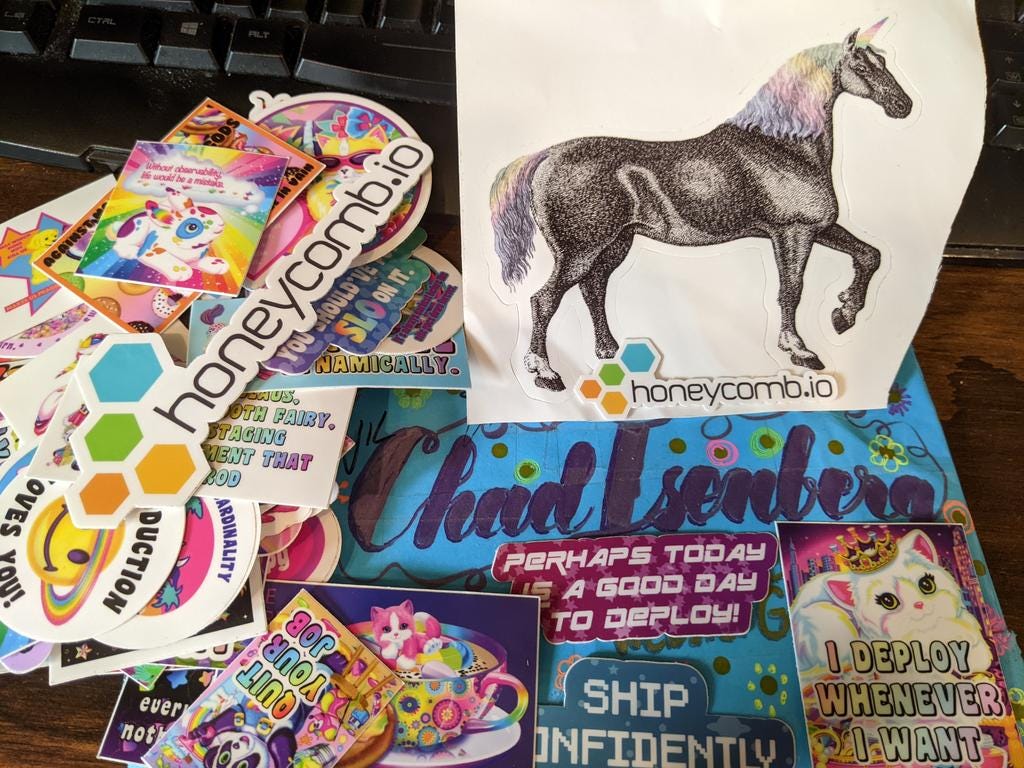
What the authors do best is provide a vision for elevating the DBA role from a purely operational one to a combination of operations and enablement. Yes, you still need someone who can provide operational support to your data stores, but there's a huge amount of value to be had in democratizing them. When individual development teams can safely and easily spin up "blessed" assets, you reduce their friction, and you free up your database team to further refine automation and processes, all of which increases safety.
It doesn't hurt that Charity Majors has awesome stickers:
Team Topologies (Skelton & Pais)
Book - Team Topologies
As I've progressed in my career, I've become increasingly more interested in processes and how they apply to technical solutions. Don't get me wrong; technology is still really important to me, but I also want to see it in action. It's one thing to explore a repository and play with a demo, and it's another thing to see how a technology enables an organization in meeting its goal.
To that end, I finally picked up this book after countless recommendations and endless praise, and all I can say is that it lives up to the hype. Team Topologies is, if nothing else, a case study on Conway's Law, and the authors relentlessly drive toward systematizing it. I think their observations on team types and interactions are especially insightful and provide a roadmap for better projects and better software.
Data products in particular can suffer from silos and fragmentation. Data source owners, engineers, analysts, and business stakeholders typically operate in distinct enclaves, with insufficient contact to accommodate discoveries during development or evolving requirements. Thoughtfully arranging teams and designing the right interfaces could go a long way to reducing friction during the design, development, and eventual release of data assets.
Staff Engineer: Leadership Beyond the Management Track (Larson)
Staff Engineer: Leadership beyond the management track
In my previous career in healthcare, I ultimately found myself doing people management, which I found stressful and unfulfilling. My dissatisfaction is what motivated me to get into data a little over 5 years ago. In that time, I've learned and done more than I ever thought I would, and I'm really happy I made the transition. At this point in my career, I've slowed down on the constant learning; I'm able to recognize patterns, themes, and ways of working. Fairly recently, I've started focusing more on what my career looks like over the coming decades. I want my work to be interesting, but I also want it to be impactful.
Will Larson's staff engineering site and related book are required reading for anyone with a serious interest in software, regardless of level (entry all the way to staff+) and path (individual contributor vs. management). The book does provide some structure, such as defining the staff archetypes, the importance of writing, and how to articulate your technical vision to key stakeholders; however, there are ample case studies from staff engineers from a variety of backgrounds, and I found these some of the most enjoyable reading.
To reiterate, regardless of whether or not you want to be a staff engineer, I think this book is important because it gets you thinking about technical leadership and and impact. Early in your career, delivery and execution seem like the only things that matter. While these are important success criteria, they are far from sufficient to ensure that you and your team are a) doing meaningful work that drives the business forward and b) will be recognized and rewarded for that impact.
I'm glad to have rekindled by relationship with books, not only with non-fiction to help my career, but novels, too. I'm still not as voracious as when I was younger, but I've had my fill of some excellent literature in the last couple of years: Gravity's Rainbow , Pale Fire , Snow Crash , The Alchemist , The Road , and many more. I know that reading isn't everyone's cup of tea, and I won't insist that it's essential to your life and career, but personally, I don't know what I would do without some good books.
Register Now to Continue Reading
Unlock Towards Data Science with a Free Account
All articles on Towards Data Science are available to registered users. Create a free account today to access this article and thousands more.
Register for freeSign in to your account
 Written By
See all from Chad Isenberg
Editor's PicksCareersDataData EngineeringData Modeling
Share This Article
Towards Data Science is a community publication. Submit your insights to reach our global audience and earn through the TDS Author Payment Program.
Write for TDS
Related Articles
Machine Learning
How data scientists convert real-world objects in numerical representation for the development of machine learning models
Andrea D'Agostino
April 25, 20238 min read
Analytics
Data Integration 2.0, Data Mesh, Data warehouse performance, and Data Observability. It's been a rich year for Data & Analytics.
Salma Bakouk
December 30, 20218 min read
Data Engineering
A Practical guide to optimizing non-equi joins in Spark
Jean-Claude Cote
January 25, 20249 min read
Data Engineering
Data Engineering for Big Data Warehouses
John Souza
December 15, 202010 min read
Data Science
Gain real-life experience and start your career.
Sara A. Metwalli
September 12, 20215 min read
How to know the unknowable in observational studies
Ugur Yildirim
February 13, 202411 min read
Data Engineering
Five surfaces collapsed into one declarative layer
Nikola Ilic
June 20, 202613 min read
Data Engineering
You just need one, robust data pipeline system
Olivia Iannone
April 27, 20229 min read
How to make progress on hard problems in AI
James Barney
November 22, 20248 min read
Your home for data science and AI. The world's leading publication for data science, data analytics, data engineering, machine learning, and artificial intelligence professionals.
Subscribe to Our NewsletterWrite For TDS•About•Advertise•Privacy Policy•Terms of Use
© Insight Media Group, LLC 2026•The New Stack•roadmap.sh•Creator Network
Recommended Articles
Close