保留正文与补采附件。源页面当前未重新核验;具体限制见交付清单。
 We value your privacy
We use cookies to enhance your browsing experience, serve personalised ads or content, and analyse our traffic. By clicking "Accept All", you consent to our use of cookies.
Customise Reject All Accept All
Customise Consent Preferences
 We use cookies to help you navigate efficiently and perform certain functions. You will find detailed information about all cookies under each consent category below.
The cookies that are categorised as "Necessary" are stored on your browser as they are essential for enabling the basic functionalities of the site. ... Show more
NecessaryAlways Active
Necessary cookies are required to enable the basic features of this site, such as providing secure log-in or adjusting your consent preferences. These cookies do not store any personally identifiable data.
-
Cookie
BCTempID
-
Duration
10 minutes
-
Description
No description available.
-
Cookie
__cf_bm
-
Duration
1 hour
-
Description
This cookie, set by Cloudflare, is used to support Cloudflare Bot Management.
-
Cookie
AWSALBCORS
-
Duration
7 days
-
Description
Amazon Web Services set this cookie for load balancing.
-
Cookie
_cfuvid
-
Duration
session
-
Description
Cloudflare sets this cookie to track users across sessions to optimize user experience by maintaining session consistency and providing personalized services
-
Cookie
li_gc
-
Duration
6 months
-
Description
Linkedin set this cookie for storing visitor's consent regarding using cookies for non-essential purposes.
-
Cookie
__hssrc
-
Duration
session
-
Description
This cookie is set by Hubspot whenever it changes the session cookie. The __hssrc cookie set to 1 indicates that the user has restarted the browser, and if the cookie does not exist, it is assumed to be a new session.
-
Cookie
__hssc
-
Duration
1 hour
-
Description
HubSpot sets this cookie to keep track of sessions and to determine if HubSpot should increment the session number and timestamps in the __hstc cookie.
-
Cookie
wpEmojiSettingsSupports
-
Duration
session
-
Description
WordPress sets this cookie when a user interacts with emojis on a WordPress site. It helps determine if the user's browser can display emojis properly.
-
Cookie
BCSessionID
-
Duration
1 year 1 month 4 days
-
Description
Blueconic sets this cookie as a unique identifier for the BlueConic profile.
-
Cookie
_octo
-
Duration
1 year
-
Description
No description available.
-
Cookie
logged_in
-
Duration
1 year
-
Description
No description available.
-
Cookie
__Secure-YEC
-
Duration
past
-
Description
YouTube sets this cookie to stores the user's video player preferences using embedded YouTube video
-
Cookie
__eoi
-
Duration
6 months
-
Description
Description is currently not available.
-
Cookie
AWSALBTGCORS
-
Duration
7 days
-
Description
No description available.
-
Cookie
login-status-p
-
Duration
past
-
Description
Description is currently not available.
-
Cookie
AWSALBTG
-
Duration
7 days
-
Description
No description available.
-
Cookie
csrf_token
-
Duration
session
-
Description
No description available.
-
Cookie
token_v2
-
Duration
1 day
-
Description
Description is currently not available.
-
Cookie
D
-
Duration
1 year
-
Description
Description is currently not available.
-
Cookie
PHPSESSID
-
Duration
session
-
Description
This cookie is native to PHP applications. The cookie stores and identifies a user's unique session ID to manage user sessions on the website. The cookie is a session cookie and will be deleted when all the browser windows are closed.
-
Cookie
VISITOR_PRIVACY_METADATA
-
Duration
6 months
-
Description
YouTube sets this cookie to store the user's cookie consent state for the current domain.
-
Cookie
cookietest
-
Duration
session
-
Description
The cookietest cookie is typically used to determine whether the user's browser accepts cookies, essential for website functionality and user experience.
-
Cookie
__Host-airtable-session
-
Duration
1 year
-
Description
This cookie is used to enable us to integrate the services of Airtable.
-
Cookie
__Host-airtable-session.sig
-
Duration
1 year
-
Description
This cookie is used to enable us to integrate the services of Airtable.
-
Cookie
m
-
Duration
1 year 1 month 4 days
-
Description
Stripe sets this cookie for fraud prevention purposes. It identifies the device used to access the website, allowing the website to be formatted accordingly.
-
Cookie
BIGipServer*
-
Duration
session
-
Description
Marketo sets this cookie to collect information about the user's online activity and build a profile about their interests to provide advertisements relevant to the user.
-
Cookie
__cfruid
-
Duration
session
-
Description
Cloudflare sets this cookie to identify trusted web traffic.
-
Cookie
_GRECAPTCHA
-
Duration
6 months
-
Description
Google Recaptcha service sets this cookie to identify bots to protect the website against malicious spam attacks.
-
Cookie
__Secure-YNID
-
Duration
6 months
-
Description
Google cookie used to protect user security and prevent fraud, especially during the login process.
-
Cookie
cookieyes-consent
-
Duration
1 year
-
Description
CookieYes sets this cookie to remember users' consent preferences so that their preferences are respected on subsequent visits to this site. It does not collect or store any personal information about the site visitors.
Functional
Functional cookies help perform certain functionalities like sharing the content of the website on social media platforms, collecting feedback, and other third-party features.
-
Cookie
lidc
-
Duration
1 day
-
Description
LinkedIn sets the lidc cookie to facilitate data center selection.
-
Cookie
brw
-
Duration
1 year
-
Description
No description available.
-
Cookie
brwConsent
-
Duration
5 minutes
-
Description
Description is currently not available.
-
Cookie
WMF-Uniq
-
Duration
1 year
-
Description
Description is currently not available.
-
Cookie
loom_anon_comment
-
Duration
1 year
-
Description
No description available.
-
Cookie
loom_referral_video
-
Duration
session
-
Description
Description is currently not available.
-
Cookie
VISITOR_INFO1_LIVE
-
Duration
6 months
-
Description
A cookie set by YouTube to measure bandwidth that determines whether the user gets the new or old player interface.
-
Cookie
yt-remote-connected-devices
-
Duration
Never Expires
-
Description
YouTube sets this cookie to store the user's video preferences using embedded YouTube videos.
-
Cookie
ytidb::LAST_RESULT_ENTRY_KEY
-
Duration
Never Expires
-
Description
The cookie ytidb::LAST_RESULT_ENTRY_KEY is used by YouTube to store the last search result entry that was clicked by the user. This information is used to improve the user experience by providing more relevant search results in the future.
-
Cookie
yt-remote-device-id
-
Duration
Never Expires
-
Description
YouTube sets this cookie to store the user's video preferences using embedded YouTube videos.
-
Cookie
yt-remote-session-name
-
Duration
session
-
Description
The yt-remote-session-name cookie is used by YouTube to store the user's video player preferences using embedded YouTube video.
-
Cookie
yt-remote-fast-check-period
-
Duration
session
-
Description
The yt-remote-fast-check-period cookie is used by YouTube to store the user's video player preferences for embedded YouTube videos.
-
Cookie
yt-remote-session-app
-
Duration
session
-
Description
The yt-remote-session-app cookie is used by YouTube to store user preferences and information about the interface of the embedded YouTube video player.
-
Cookie
yt-remote-cast-available
-
Duration
session
-
Description
The yt-remote-cast-available cookie is used to store the user's preferences regarding whether casting is available on their YouTube video player.
-
Cookie
yt-remote-cast-installed
-
Duration
session
-
Description
The yt-remote-cast-installed cookie is used to store the user's video player preferences using embedded YouTube video.
-
Cookie
cp_session
-
Duration
3 months
-
Description
Codepen sets this cookie for Help systems found in the website.
-
Cookie
loid
-
Duration
1 year 1 month 4 days
-
Description
This cookie is set by the Reddit. The cookie enables the sharing of content from the website onto the social media platform.
Analytics
Analytical cookies are used to understand how visitors interact with the website. These cookies help provide information on metrics such as the number of visitors, bounce rate, traffic source, etc.
-
Cookie
__hstc
-
Duration
6 months
-
Description
Hubspot set this main cookie for tracking visitors. It contains the domain, initial timestamp (first visit), last timestamp (last visit), current timestamp (this visit), and session number (increments for each subsequent session).
-
Cookie
hubspotutk
-
Duration
6 months
-
Description
HubSpot sets this cookie to keep track of the visitors to the website. This cookie is passed to HubSpot on form submission and used when deduplicating contacts.
-
Cookie
_ga
-
Duration
1 year 1 month 4 days
-
Description
Google Analytics sets this cookie to calculate visitor, session and campaign data and track site usage for the site's analytics report. The cookie stores information anonymously and assigns a randomly generated number to recognise unique visitors.
-
Cookie
ga*
-
Duration
1 year 1 month 4 days
-
Description
Google Analytics sets this cookie to store and count page views.
-
Cookie
__Host-psifi.analyticsTrace
-
Duration
6 hours
-
Description
Description is currently not available.
-
Cookie
__Host-psifi.analyticsTraceV2
-
Duration
6 hours
-
Description
Description is currently not available.
-
Cookie
_gh_sess
-
Duration
session
-
Description
GitHub sets this cookie for temporary application and framework state between pages like what step the user is on in a multiple step form.
-
Cookie
YSC
-
Duration
session
-
Description
YSC cookie is set by Youtube and is used to track the views of embedded videos on Youtube pages.
-
Cookie
ajs_anonymous_id
-
Duration
1 year
-
Description
This cookie is set by Segment to count the number of people who visit a certain site by tracking if they have visited before.
-
Cookie
vuid
-
Duration
1 year 1 month 4 days
-
Description
Vimeo installs this cookie to collect tracking information by setting a unique ID to embed videos on the website.
Performance
Performance cookies are used to understand and analyse the key performance indexes of the website which helps in delivering a better user experience for the visitors.
-
Cookie
AWSALB
-
Duration
7 days
-
Description
AWSALB is an application load balancer cookie set by Amazon Web Services to map the session to the target.
-
Cookie
acq
-
Duration
past
-
Description
Description is currently not available.
-
Cookie
acq.sig
-
Duration
past
-
Description
Description is currently not available.
-
Cookie
ptc
-
Duration
2 years
-
Description
No description available.
Advertisement
Advertisement cookies are used to provide visitors with customised advertisements based on the pages you visited previously and to analyse the effectiveness of the ad campaigns.
-
Cookie
muc_ads
-
Duration
1 year 1 month 4 days
-
Description
Twitter sets this cookie to collect user behaviour and interaction data to optimize the website.
-
Cookie
guest_id_marketing
-
Duration
1 year 1 month 4 days
-
Description
Twitter sets this cookie to identify and track the website visitor.
-
Cookie
guest_id_ads
-
Duration
1 year 1 month 4 days
-
Description
Twitter sets this cookie to identify and track the website visitor.
-
Cookie
personalization_id
-
Duration
1 year 1 month 4 days
-
Description
Twitter sets this cookie to integrate and share features for social media and also store information about how the user uses the website, for tracking and targeting.
-
Cookie
guest_id
-
Duration
1 year 1 month 4 days
-
Description
Twitter sets this cookie to identify and track the website visitor. It registers if a user is signed in to the Twitter platform and collects information about ad preferences.
-
Cookie
bcookie
-
Duration
1 year
-
Description
LinkedIn sets this cookie from LinkedIn share buttons and ad tags to recognize browser IDs.
-
Cookie
__Secure-ROLLOUT_TOKEN
-
Duration
6 months
-
Description
YouTube sets this cookie to manage feature rollout and experimentation. It helps Google control which new features or interface changes are shown to users as part of testing and staged rollouts, ensuring consistent experience for a given user during an experiment.
-
Cookie
yt.innertube::nextId
-
Duration
Never Expires
-
Description
YouTube sets this cookie to register a unique ID to store data on what videos from YouTube the user has seen.
-
Cookie
yt.innertube::requests
-
Duration
Never Expires
-
Description
YouTube sets this cookie to register a unique ID to store data on what videos from YouTube the user has seen.
-
Cookie
session_tracker
-
Duration
session
-
Description
This cookie is set by the Reddit. This cookie is used to identify trusted web traffic. It also helps in adverstising on the website.
-
Cookie
edgebucket
-
Duration
session
-
Description
Reddit sets this cookie to save the information about a log-on Reddit user, for the purpose of advertisement recommendations and updating the content.
-
Cookie
did
-
Duration
1 year
-
Description
Arbor sets this cookie to show targeted ads to site visitors.This cookie expires after 2 months or 1 year.
Uncategorised
Other uncategorised cookies are those that are being analysed and have not been classified into a category as yet.
No cookies to display.
Reject All Save My Preferences Accept All
Toggle SearchToggle Mobile Navigation
Publish AI, ML & data-science insights to a global community of data professionals.
Sign inSubmit an Article
LatestEditor's PicksNewsletterShipAI
Write For TDS
LinkedInXToggle Search
Data Science
Model Drift Introduction and Concepts
Learn some of the concepts behind machine learning models drift and understand why MLOps is so important in today's world
Ivo Bernardo
June 22, 20246 min read
 Models change because the world changes - Image by arptrastogi at Unsplash.com
Taxes, death and model drift are the only three certainties in life. Ok, I might have added this last one to the adage but the truth is that all models suffer from decay.
After developing a machine learning mode, you will always see the same pattern develop:
- The model has an expected performance on the test set during development.
- The model behaves differently (generally, a bit worse) after going into production.
- The model's performance degrades over time.
After a couple years, there's a high likelihood that your model's performance is way worse than when you first developed it. This can happen for a multitude of reasons, but the fundamental cause is that the world changes.
When the world changes, the data we use to represent real-life information also changes. The underlying data distributions shift, which will inevitably impact how our machine learning models learn and perform.
Learn this step by step with the interactive AI and Data Scientist and Machine Learning roadmaps.
In this blog post, we'll examine examples of situations where underlying changes in the world can impact your models. Understanding these examples will better prepare you to develop plans and explain to your leadership why machine learning operations (MLOps) are so important today, defining the success of a data-driven organization.
Data Distribution Shift
Data distribution shift is the most common cause of model drift.
This occurs when the distribution of one of your variables shifts significantly compared to the time of development. Let's assume that we have a model that uses the age of a user as a feature for predicting app churn[1] with the following distribution:
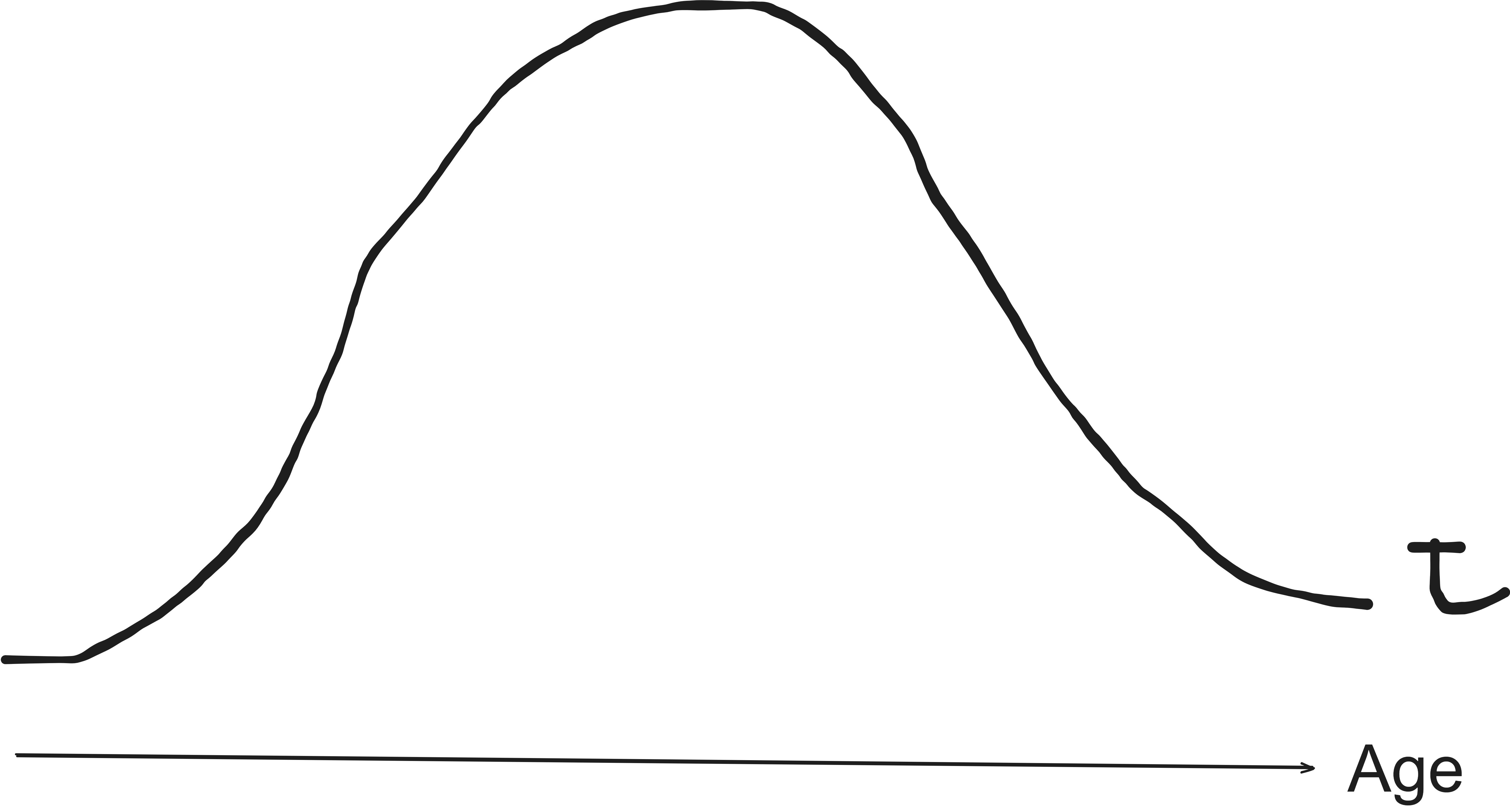 Age Distribution at Time t - Image by Author
[1] Churn is the act of a customer deciding to stop using a service, voluntarily
Time t is when you developed the model. Now, imagine that the age distribution of the user base you are studying shifts to something like the following after a year:
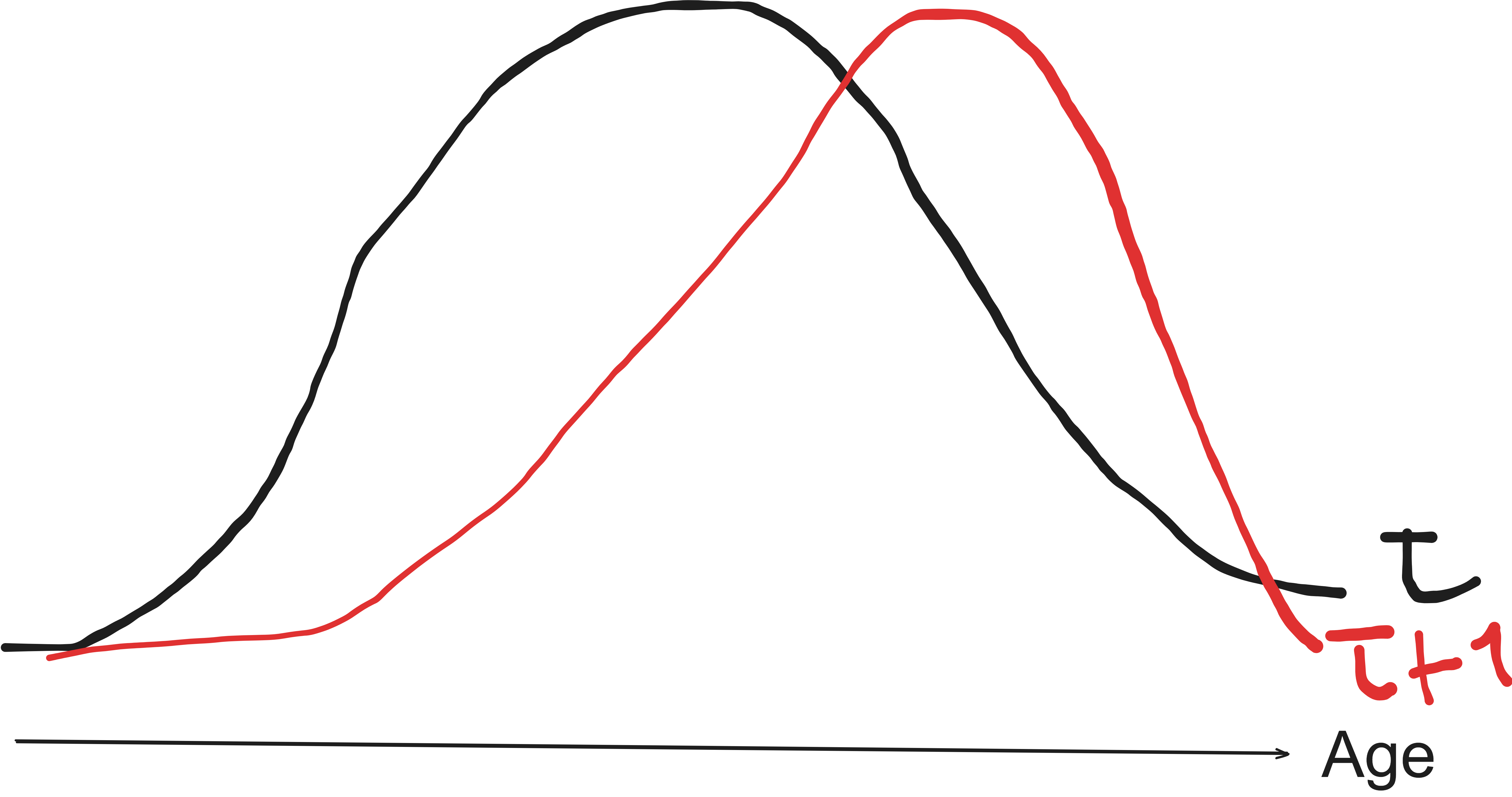 Age Distribution at Time t vs. t+1— Image by Author
The user base is now much older than it was at time t. This inherently leads to worse performance by your algorithm. Your model is accustomed to a certain data distribution that no longer reflects current reality. If the shift is too large, you might end up predicting on examples for which you had a very small sample size during training.
This effect gets even worse if you use models that are highly dependent on feature distribution (for example, tree-based models use distribution sample size to make their cutoff on the branches).
Now, consider models that have hundreds of features where every feature will suffer from distribution shift - the impact on your models is enormous.
Catching data distribution shift is relatively easy:
- Store the parameters of the distribution at the time of training: mean, median, standard deviation, IQR, kurtosis, etc.
- Compare these values for the new data you are predicting on. The more these values deviate from each other, the greater the impact.
- Don't forget that you need to compare central tendency and spread measures simultaneously. Two distributions can have the same mean or median but completely different shape.
Monitoring tools such as MLFlow or Azure Machine Learning Studio will help you keep track of your features' data distribution. Using these tools, it's quite normal to automatically retrain models with triggers based on certain distribution shifts.
Edge Cases
Another common situation that affects machine learning models in production is the issue of edge cases. For example, let's imagine that you are forecasting sales for a specific product. Ideally, you would like the world to remain static, with the factors affecting the sales of your product staying constant.
However, edge cases may suddenly arise and undermine your entire model. An abnormally low or high value in your sales can break your predictions. This happened during the COVID-19 pandemic, where edge cases started to become the norm, rendering most machine learning models useless.
Although this is a very obvious edge case situation, sometimes edge cases are trickier to spot. Typically, it requires a deep understanding of the underlying phenomena we are working with. Nevertheless, there are a couple of actions you can take:
- Apart from checking a distribution, monitor obvious outliers in your variables. This is what we normally call uni-dimensional edge-cases.
- Also, look at a combination of variables and features that may be edge case when looked together. This is what we normally call multidimensional edge cases.
However, looking at outliers shouldn't be the only way to spot edge cases. The "difficult" edge cases to identify are normally not outliers and need to be understood with the help of business users who understand the context of the underlying data.
Feedback Loops
In certain scenarios, your model acts on features of other models or even on itself, as in the case of time-series models.
Typically, if you have model outputs that work as features, this will produce some level of feedback loop. Checking the output values of your models and keeping track of their distribution should be enough to understand the likelihood of producing a feedback loop.
Particularly, it's important to measure explainability metrics such as SHAP values to understand if the influence of features generated by models is changing over time. Ideally, you should try to avoid involving any feature that is produced or can be influenced by the output of a machine learning model. If you can't avoid this due to certain business or technical decisions, then monitoring becomes absolutely critical.
Missing-as-a-Feature
In model development pipelines, we typically perform a step related to missing value imputation, enabling your model to deal with non-existent information. During model development, it is common practice to examine the number of missing values in your features and address them only if the proportion of missing data in a column falls below a specified threshold, discarding the feature if it's over that value.
A common problem arises when you put your model into production and one of the features starts receiving more missing values than expected. What will happen? You will start to predict based mainly on missing information (and your imputation method)!
This is a pattern commonly called "missing-as-a-feature " Essentially, you are just using your imputation method as values for the features in your predictions.
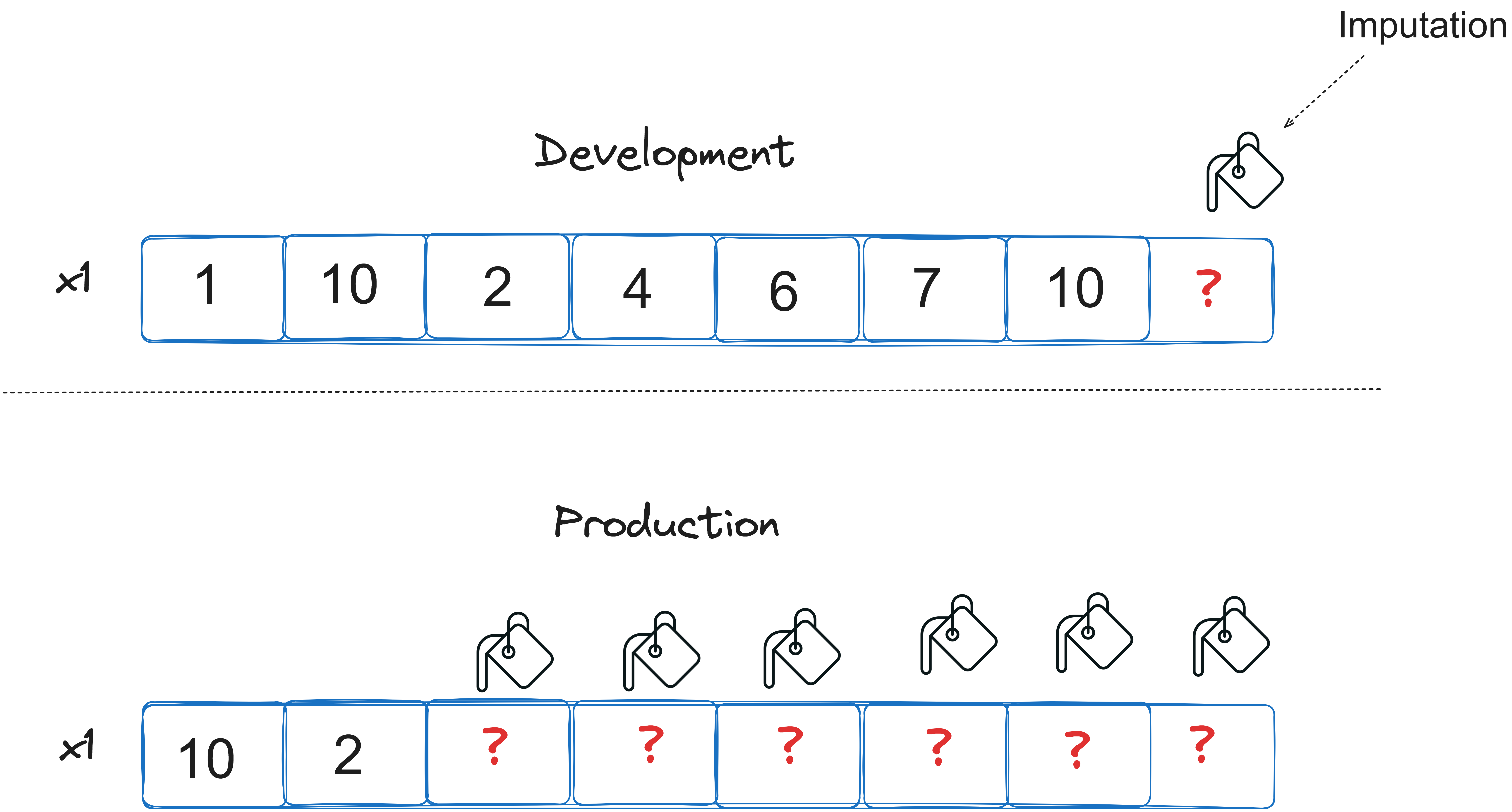 Missing as a Feature Example - Image by Author
Notice that tracking distribution is not enough to spot missing-as-feature scenarios. You need to explicitly monitor the % of missing values going into your model before the imputation step in your pipeline.
That's it! Thank you for taking the time to read this post. Model drift is a recent area where a lot of research is actively being developed - namely, how to use automatic triggers to retrain your model, or understand if you should train a new model from scratch.
There are many tools available that will help you manage your post-production models more effectively. The following is not an exhaustive list but contains some of the most well-known frameworks that you can experiment with:
See you on the next post!
Feel free to visit me on my youtube channel, Udemy profile, or substack:
Register Now to Continue Reading
Unlock Towards Data Science with a Free Account
All articles on Towards Data Science are available to registered users. Create a free account today to access this article and thousands more.
Register for freeSign in to your account
 Written By
See all from Ivo Bernardo
Data ScienceMachine LearningMlflowMlops
Share This Article
Towards Data Science is a community publication. Submit your insights to reach our global audience and earn through the TDS Author Payment Program.
Write for TDS
Related Articles
Artificial Intelligence
Exploring NODE: A Neural Decision Tree architecture for tabular data
Nakul Upadhya
July 4, 20237 min read
Deep Learning
A High-Level Look at What's Been Done
Hien Vo, M.S.
October 5, 20214 min read
Data Science
Partitioning combinatorial problems using binary representation
Salil Jain
August 4, 20204 min read
Programming
Now that you've learned about tuples in Python, I'll walk through an example that shows why they're useful.
Murtaza Ali
February 2, 20223 min read
Machine Learning
Shortly Explaining the Algorithms Behind Machine Learning
Niklas Lang
October 4, 202212 min read
Programming
My personal experience attending a coding bootcam
Marco Santos
August 21, 202110 min read
Machine Learning
The past two years has been surreal to say the least for most of us. These days you look around and regardless of which part of the world...
Tan Kah Ming
November 16, 20216 min read
Programming
Save your Python app's performance by efficiently loading query
Mike Huls
April 18, 20248 min read
Deep Learning
This post will show you how to transform a time series Transformer architecture diagram into PyTorch code step by step.
Kasper Groes Albin Ludvigsen
May 12, 202211 min read
Your home for data science and AI. The world's leading publication for data science, data analytics, data engineering, machine learning, and artificial intelligence professionals.
Subscribe to Our NewsletterWrite For TDS•About•Advertise•Privacy Policy•Terms of Use
© Insight Media Group, LLC 2026•The New Stack•roadmap.sh•Creator Network
Recommended Articles
Close