保留正文与补采附件。源页面当前未重新核验;具体限制见交付清单。
 We value your privacy
We use cookies to enhance your browsing experience, serve personalised ads or content, and analyse our traffic. By clicking "Accept All", you consent to our use of cookies.
Customise Reject All Accept All
Customise Consent Preferences
 We use cookies to help you navigate efficiently and perform certain functions. You will find detailed information about all cookies under each consent category below.
The cookies that are categorised as "Necessary" are stored on your browser as they are essential for enabling the basic functionalities of the site. ... Show more
NecessaryAlways Active
Necessary cookies are required to enable the basic features of this site, such as providing secure log-in or adjusting your consent preferences. These cookies do not store any personally identifiable data.
-
Cookie
BCTempID
-
Duration
10 minutes
-
Description
No description available.
-
Cookie
__cf_bm
-
Duration
1 hour
-
Description
This cookie, set by Cloudflare, is used to support Cloudflare Bot Management.
-
Cookie
AWSALBCORS
-
Duration
7 days
-
Description
Amazon Web Services set this cookie for load balancing.
-
Cookie
_cfuvid
-
Duration
session
-
Description
Cloudflare sets this cookie to track users across sessions to optimize user experience by maintaining session consistency and providing personalized services
-
Cookie
li_gc
-
Duration
6 months
-
Description
Linkedin set this cookie for storing visitor's consent regarding using cookies for non-essential purposes.
-
Cookie
__hssrc
-
Duration
session
-
Description
This cookie is set by Hubspot whenever it changes the session cookie. The __hssrc cookie set to 1 indicates that the user has restarted the browser, and if the cookie does not exist, it is assumed to be a new session.
-
Cookie
__hssc
-
Duration
1 hour
-
Description
HubSpot sets this cookie to keep track of sessions and to determine if HubSpot should increment the session number and timestamps in the __hstc cookie.
-
Cookie
wpEmojiSettingsSupports
-
Duration
session
-
Description
WordPress sets this cookie when a user interacts with emojis on a WordPress site. It helps determine if the user's browser can display emojis properly.
-
Cookie
BCSessionID
-
Duration
1 year 1 month 4 days
-
Description
Blueconic sets this cookie as a unique identifier for the BlueConic profile.
-
Cookie
_octo
-
Duration
1 year
-
Description
No description available.
-
Cookie
logged_in
-
Duration
1 year
-
Description
No description available.
-
Cookie
__Secure-YEC
-
Duration
past
-
Description
YouTube sets this cookie to stores the user's video player preferences using embedded YouTube video
-
Cookie
__eoi
-
Duration
6 months
-
Description
Description is currently not available.
-
Cookie
AWSALBTGCORS
-
Duration
7 days
-
Description
No description available.
-
Cookie
login-status-p
-
Duration
past
-
Description
Description is currently not available.
-
Cookie
AWSALBTG
-
Duration
7 days
-
Description
No description available.
-
Cookie
csrf_token
-
Duration
session
-
Description
No description available.
-
Cookie
token_v2
-
Duration
1 day
-
Description
Description is currently not available.
-
Cookie
D
-
Duration
1 year
-
Description
Description is currently not available.
-
Cookie
PHPSESSID
-
Duration
session
-
Description
This cookie is native to PHP applications. The cookie stores and identifies a user's unique session ID to manage user sessions on the website. The cookie is a session cookie and will be deleted when all the browser windows are closed.
-
Cookie
VISITOR_PRIVACY_METADATA
-
Duration
6 months
-
Description
YouTube sets this cookie to store the user's cookie consent state for the current domain.
-
Cookie
cookietest
-
Duration
session
-
Description
The cookietest cookie is typically used to determine whether the user's browser accepts cookies, essential for website functionality and user experience.
-
Cookie
__Host-airtable-session
-
Duration
1 year
-
Description
This cookie is used to enable us to integrate the services of Airtable.
-
Cookie
__Host-airtable-session.sig
-
Duration
1 year
-
Description
This cookie is used to enable us to integrate the services of Airtable.
-
Cookie
m
-
Duration
1 year 1 month 4 days
-
Description
Stripe sets this cookie for fraud prevention purposes. It identifies the device used to access the website, allowing the website to be formatted accordingly.
-
Cookie
BIGipServer*
-
Duration
session
-
Description
Marketo sets this cookie to collect information about the user's online activity and build a profile about their interests to provide advertisements relevant to the user.
-
Cookie
__cfruid
-
Duration
session
-
Description
Cloudflare sets this cookie to identify trusted web traffic.
-
Cookie
_GRECAPTCHA
-
Duration
6 months
-
Description
Google Recaptcha service sets this cookie to identify bots to protect the website against malicious spam attacks.
-
Cookie
__Secure-YNID
-
Duration
6 months
-
Description
Google cookie used to protect user security and prevent fraud, especially during the login process.
-
Cookie
cookieyes-consent
-
Duration
1 year
-
Description
CookieYes sets this cookie to remember users' consent preferences so that their preferences are respected on subsequent visits to this site. It does not collect or store any personal information about the site visitors.
Functional
Functional cookies help perform certain functionalities like sharing the content of the website on social media platforms, collecting feedback, and other third-party features.
-
Cookie
lidc
-
Duration
1 day
-
Description
LinkedIn sets the lidc cookie to facilitate data center selection.
-
Cookie
brw
-
Duration
1 year
-
Description
No description available.
-
Cookie
brwConsent
-
Duration
5 minutes
-
Description
Description is currently not available.
-
Cookie
WMF-Uniq
-
Duration
1 year
-
Description
Description is currently not available.
-
Cookie
loom_anon_comment
-
Duration
1 year
-
Description
No description available.
-
Cookie
loom_referral_video
-
Duration
session
-
Description
Description is currently not available.
-
Cookie
VISITOR_INFO1_LIVE
-
Duration
6 months
-
Description
A cookie set by YouTube to measure bandwidth that determines whether the user gets the new or old player interface.
-
Cookie
yt-remote-connected-devices
-
Duration
Never Expires
-
Description
YouTube sets this cookie to store the user's video preferences using embedded YouTube videos.
-
Cookie
ytidb::LAST_RESULT_ENTRY_KEY
-
Duration
Never Expires
-
Description
The cookie ytidb::LAST_RESULT_ENTRY_KEY is used by YouTube to store the last search result entry that was clicked by the user. This information is used to improve the user experience by providing more relevant search results in the future.
-
Cookie
yt-remote-device-id
-
Duration
Never Expires
-
Description
YouTube sets this cookie to store the user's video preferences using embedded YouTube videos.
-
Cookie
yt-remote-session-name
-
Duration
session
-
Description
The yt-remote-session-name cookie is used by YouTube to store the user's video player preferences using embedded YouTube video.
-
Cookie
yt-remote-fast-check-period
-
Duration
session
-
Description
The yt-remote-fast-check-period cookie is used by YouTube to store the user's video player preferences for embedded YouTube videos.
-
Cookie
yt-remote-session-app
-
Duration
session
-
Description
The yt-remote-session-app cookie is used by YouTube to store user preferences and information about the interface of the embedded YouTube video player.
-
Cookie
yt-remote-cast-available
-
Duration
session
-
Description
The yt-remote-cast-available cookie is used to store the user's preferences regarding whether casting is available on their YouTube video player.
-
Cookie
yt-remote-cast-installed
-
Duration
session
-
Description
The yt-remote-cast-installed cookie is used to store the user's video player preferences using embedded YouTube video.
-
Cookie
cp_session
-
Duration
3 months
-
Description
Codepen sets this cookie for Help systems found in the website.
-
Cookie
loid
-
Duration
1 year 1 month 4 days
-
Description
This cookie is set by the Reddit. The cookie enables the sharing of content from the website onto the social media platform.
Analytics
Analytical cookies are used to understand how visitors interact with the website. These cookies help provide information on metrics such as the number of visitors, bounce rate, traffic source, etc.
-
Cookie
__hstc
-
Duration
6 months
-
Description
Hubspot set this main cookie for tracking visitors. It contains the domain, initial timestamp (first visit), last timestamp (last visit), current timestamp (this visit), and session number (increments for each subsequent session).
-
Cookie
hubspotutk
-
Duration
6 months
-
Description
HubSpot sets this cookie to keep track of the visitors to the website. This cookie is passed to HubSpot on form submission and used when deduplicating contacts.
-
Cookie
_ga
-
Duration
1 year 1 month 4 days
-
Description
Google Analytics sets this cookie to calculate visitor, session and campaign data and track site usage for the site's analytics report. The cookie stores information anonymously and assigns a randomly generated number to recognise unique visitors.
-
Cookie
ga*
-
Duration
1 year 1 month 4 days
-
Description
Google Analytics sets this cookie to store and count page views.
-
Cookie
__Host-psifi.analyticsTrace
-
Duration
6 hours
-
Description
Description is currently not available.
-
Cookie
__Host-psifi.analyticsTraceV2
-
Duration
6 hours
-
Description
Description is currently not available.
-
Cookie
_gh_sess
-
Duration
session
-
Description
GitHub sets this cookie for temporary application and framework state between pages like what step the user is on in a multiple step form.
-
Cookie
YSC
-
Duration
session
-
Description
YSC cookie is set by Youtube and is used to track the views of embedded videos on Youtube pages.
-
Cookie
ajs_anonymous_id
-
Duration
1 year
-
Description
This cookie is set by Segment to count the number of people who visit a certain site by tracking if they have visited before.
-
Cookie
vuid
-
Duration
1 year 1 month 4 days
-
Description
Vimeo installs this cookie to collect tracking information by setting a unique ID to embed videos on the website.
Performance
Performance cookies are used to understand and analyse the key performance indexes of the website which helps in delivering a better user experience for the visitors.
-
Cookie
AWSALB
-
Duration
7 days
-
Description
AWSALB is an application load balancer cookie set by Amazon Web Services to map the session to the target.
-
Cookie
acq
-
Duration
past
-
Description
Description is currently not available.
-
Cookie
acq.sig
-
Duration
past
-
Description
Description is currently not available.
-
Cookie
ptc
-
Duration
2 years
-
Description
No description available.
Advertisement
Advertisement cookies are used to provide visitors with customised advertisements based on the pages you visited previously and to analyse the effectiveness of the ad campaigns.
-
Cookie
muc_ads
-
Duration
1 year 1 month 4 days
-
Description
Twitter sets this cookie to collect user behaviour and interaction data to optimize the website.
-
Cookie
guest_id_marketing
-
Duration
1 year 1 month 4 days
-
Description
Twitter sets this cookie to identify and track the website visitor.
-
Cookie
guest_id_ads
-
Duration
1 year 1 month 4 days
-
Description
Twitter sets this cookie to identify and track the website visitor.
-
Cookie
personalization_id
-
Duration
1 year 1 month 4 days
-
Description
Twitter sets this cookie to integrate and share features for social media and also store information about how the user uses the website, for tracking and targeting.
-
Cookie
guest_id
-
Duration
1 year 1 month 4 days
-
Description
Twitter sets this cookie to identify and track the website visitor. It registers if a user is signed in to the Twitter platform and collects information about ad preferences.
-
Cookie
bcookie
-
Duration
1 year
-
Description
LinkedIn sets this cookie from LinkedIn share buttons and ad tags to recognize browser IDs.
-
Cookie
__Secure-ROLLOUT_TOKEN
-
Duration
6 months
-
Description
YouTube sets this cookie to manage feature rollout and experimentation. It helps Google control which new features or interface changes are shown to users as part of testing and staged rollouts, ensuring consistent experience for a given user during an experiment.
-
Cookie
yt.innertube::nextId
-
Duration
Never Expires
-
Description
YouTube sets this cookie to register a unique ID to store data on what videos from YouTube the user has seen.
-
Cookie
yt.innertube::requests
-
Duration
Never Expires
-
Description
YouTube sets this cookie to register a unique ID to store data on what videos from YouTube the user has seen.
-
Cookie
session_tracker
-
Duration
session
-
Description
This cookie is set by the Reddit. This cookie is used to identify trusted web traffic. It also helps in adverstising on the website.
-
Cookie
edgebucket
-
Duration
session
-
Description
Reddit sets this cookie to save the information about a log-on Reddit user, for the purpose of advertisement recommendations and updating the content.
-
Cookie
did
-
Duration
1 year
-
Description
Arbor sets this cookie to show targeted ads to site visitors.This cookie expires after 2 months or 1 year.
Uncategorised
Other uncategorised cookies are those that are being analysed and have not been classified into a category as yet.
No cookies to display.
Reject All Save My Preferences Accept All
Toggle SearchToggle Mobile Navigation
Publish AI, ML & data-science insights to a global community of data professionals.
Sign inSubmit an Article
LatestEditor's PicksNewsletterShipAI
Write For TDS
LinkedInXToggle Search
Machine Learning
Topic Modelling in Business Intelligence: FASTopic and BERTopic in Code
A comparison of two cutting-edge dynamic topic models solving consumer complaints classification exercise
Petr Koráb
January 22, 202511 min read
Topic Modelling in Business Intelligence: FASTopic and BERTopic in Code
 Source: Freepic, Image by rawpixel.com
Customer reviews about products and services provide valuable information about customer satisfaction. They provide insight into what should be improved across the whole product development. Dynamic topic models in business intelligence can identify key product qualities and other satisfaction factors, cluster them into categories, and evaluate how business decisions materialized in customer satisfaction over time. This is highly valuable information not only for product managers.
This article will compare two of the latest topic models to classify customer complaints data. BERTopic by Maarten Grootendorst (2022) and the recent FASTopic by Xiaobao Wu et al. (2024) presented at last year's NeurIPS, are the current leading models for topic analytics of customer data. For these models, we'll explore in Python code:
- how to effectively preprocess data
- how to train a Bigram topic model for customer complaint analysis
- how to model topic activity over time.
Learn this step by step with the interactive Machine Learning roadmap.
1. Customer complaints data in companies
Complaints data are generated by interaction with customers and typically recorded in ERP systems. There are many channels where customers can raise a concern about a product or service. Here are just a few examples:
- Email : email communication is stored for the BI team, e.g., in the SQL database.
- After-purchase survey : feedback sent to customers after product purchase. Companies either send the emails themselves or use a price comparison website (e.g., Billiger in Germany) where customers order the product.
- Phone transcriptions : after prior consent from a customer, some companies record the phone communication with customers, which is then available for the BI team.
- Google reviews: customers leave comments and reviews on products and services worldwide. Google enables authorized users to export the data not only for text mining purposes.
- Review platforms: independent review platforms **** (such as Trustpilot) offer customers a place to provide feedback to brands and companies. This data is available through various APIs.
- Social media conversations : Instagram, X, and Facebook are full of product or brand-related comments. The simplest way is to use an official API to collect the data. For Instagram and Facebook, go to the developers' portal to receive an API key. X works the same way.
2. Example data
As example data, we'll use the Amazon Dog Food Reviews dataset from Hugging Face , released under the Apache-2.0 license. The subset for topic modeling only contains 3693 customer reviews collected over 02/01/2016: 31/12/2020. Here is what the data looks like:
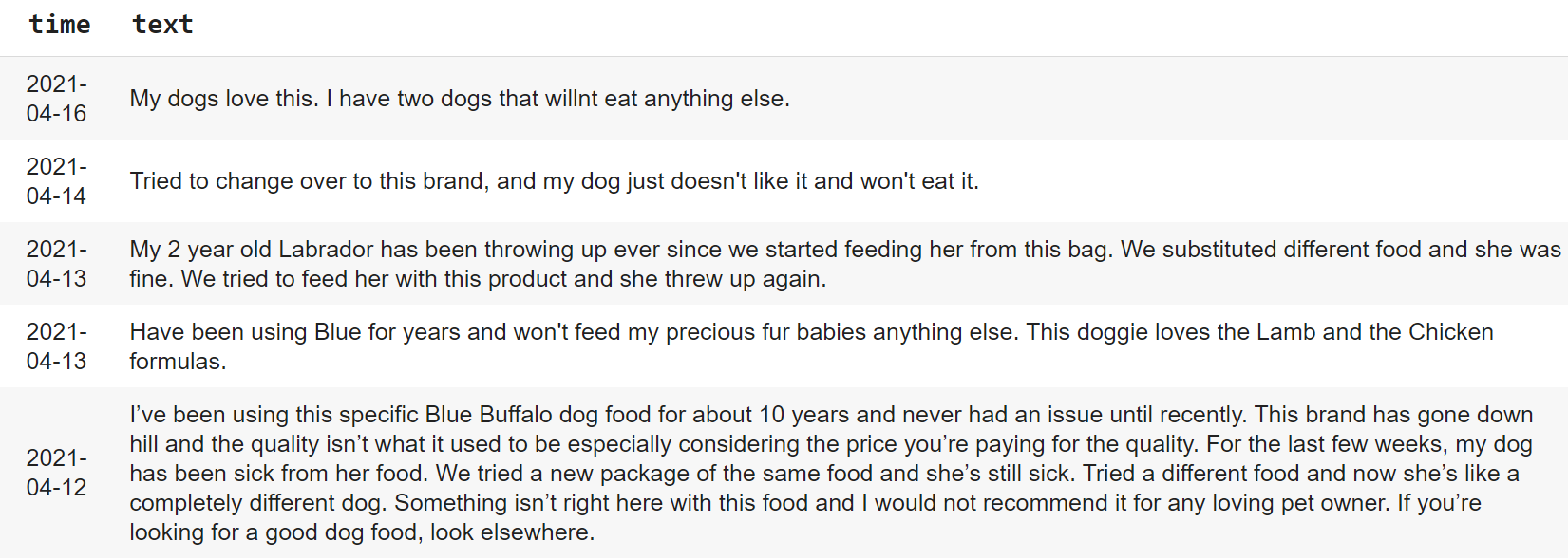 Image 1. Amazon dog food reviews dataset
 Image 2. General preprocessing steps for (customer feedback) topic modeling. Image by author
3. Data preprocessing
Processing data systematically in the right order keeps the essential information and does not add a new bias. Let's go along these steps:
- #1: Numbers: digits are typically the characters to remove in the first step.
- #2: Emoticons: product reviews are typically full of them. For topic modeling in customer reviews, emojis don't have much significance.
- #3: Stopwords: apart from standard stopwords, it is common to remove an extended stopwords list for one or more languages.
- #4: Punctuation: general language has a myriad of special characters and punctuation, which should be cleaned in this step.
- #5: Additional stopwords: depending on the use case, some additional words are also useful to remove. With the Amazon dog food reviews, these are "dog", "food", "blue", "buffalo", "ha", "month" , and "ago".
"Delivery" and "deliveries", "box" and "Boxes", or "Price" and "prices" share the same word root, but without lemmatization, topic models would model them as separate factors. That's why product reviews should always be lemmatized in the last step of preprocessing.
- #6: Lemmatization: groups words into a single form (the lemma), keeping the word root information and semantics.
Text preprocessing is model-specific:
- FASTopic works with clean data on input; some cleaning (stopwords) can be done during the training. The simplest and most effective way is to use the Washer: The no-code app for text data cleaning offering a no-code way of processing data for text mining projects.
- BERTopic: the documentation recommends that " r emoving stop words as a preprocessing step is not advised as the transformer-based embedding models that we use need the full context to create accurate embeddings". It uses transformers based on real text, not clean text without stopwords, lemmas, or tokens. For this reason, cleaning operations should be included in the model training.
 Source: Freepic, Image by macrovector
4. Topic modeling with top-notch models
Let's now check how the satisfaction factors are distributed across the topics. The questions we ask here are:
- What were the key problems and qualities customers reported on the product?
- How has product satisfaction changed over time?
The BERTopic and FASTopic papers describe the model architectures in detail. Also, my TDS tutorial on topic modeling explains topic classification with BERTopic on a political speech dataset.
4.1. FASTopic
Import the libraries and the data (complete code and the requirements are here). Then, create a list of clean reviews:
python
import pandas as pd
from fastopic import FASTopic
from sklearn.feature_extraction.text import CountVectorizer
from topmost.preprocessing import Preprocessing

# create a list of reviews
docs = data['clean_text'].tolist()
In FASTopic, bigram generation is not directly implemented. To solve this, we will make a bigram preprocessing class. The model works with bigrams as with individual tokens, so we join the words in bigrams with underscores.
python
# custom preprocessing class with bigram generation
class NgramPreprocessing:
    def __init__(self, ngram_range=(1, 1),
                       vocab_size=10000,
                       stopwords='English'):

        self.ngram_range = ngram_range
        self.preprocessing = Preprocessing(vocab_size=vocab_size,
                                           stopwords=stopwords)

        # use a custom analyzer to join bigrams with "_"
        self.vectorizer = CountVectorizer(ngram_range=self.ngram_range,
                                          max_features=vocab_size,
                                          analyzer=self._custom_analyzer)

        # custom analyzer function to join bigrams with underscores
    def _custom_analyzer(self, doc):
        # tokenize the document and create bigrams
        tokens = CountVectorizer(ngram_range=self.ngram_range).build_analyzer()(doc)

        # replace spaces in bigrams with "_"
        return [token.replace(" ", "_") for token in tokens]

    def preprocess(self,
                   docs,
                   pretrained_WE=False):

        parsed_docs = self.preprocessing.preprocess(docs,
                      pretrained_WE=pretrained_WE)["train_texts"]
        train_bow = self.vectorizer.fit_transform(parsed_docs).toarray()
        rst = {
            "train_bow": train_bow,
            "train_texts": parsed_docs,
            "vocab": self.vectorizer.get_feature_names_out()
        }
        return rst

# initialize preprocessing with bigrams
ngram_preprocessing = NgramPreprocessing(ngram_range=(2, 2))
Let's train the model for eight topics and display the top 20 bigrams for each topic in a data frame. We train on single tokens, then remove the underscores generating the bigrams.
python
# model training
model = FASTopic(8, ngram_preprocessing, num_top_words=10000)

# fit model to documents
topic_top_words, doc_topic_dist = model.fit_transform(docs)

# retrieve 20 bigrams for each topic
import pandas as pd

max_bigrams = 20

# Retrieve the bigrams for each topic and select only the word columns
topic_0 = pd.DataFrame(model.get_topic(0, max_bigrams), columns=["Topic_0_word", "Topic_0_prob"])[["Topic_0_word"]]
topic_1 = pd.DataFrame(model.get_topic(1, max_bigrams), columns=["Topic_1_word", "Topic_1_prob"])[["Topic_1_word"]]
topic_2 = pd.DataFrame(model.get_topic(2, max_bigrams), columns=["Topic_2_word", "Topic_2_prob"])[["Topic_2_word"]]
topic_3 = pd.DataFrame(model.get_topic(3, max_bigrams), columns=["Topic_3_word", "Topic_3_prob"])[["Topic_3_word"]]
topic_4 = pd.DataFrame(model.get_topic(4, max_bigrams), columns=["Topic_4_word", "Topic_4_prob"])[["Topic_4_word"]]
topic_5 = pd.DataFrame(model.get_topic(5, max_bigrams), columns=["Topic_5_word", "Topic_5_prob"])[["Topic_5_word"]]
topic_6 = pd.DataFrame(model.get_topic(6, max_bigrams), columns=["Topic_6_word", "Topic_6_prob"])[["Topic_6_word"]]
topic_7 = pd.DataFrame(model.get_topic(7, max_bigrams), columns=["Topic_7_word", "Topic_7_prob"])[["Topic_7_word"]]

# concatenate the dataframes
topics_df = pd.concat([topic_0,topic_1, topic_2, topic_3, topic_4,topic_5,topic_6,topic_7], axis=1)

# remove underscores from bigrams
topics_df = topics_df.applymap(lambda x: x.replace('_', ' ') if isinstance(x, str) else x)
We've modeled the customer satisfaction factors with a dog food product in eight distinct topics. Here are the manually annotated topic names:
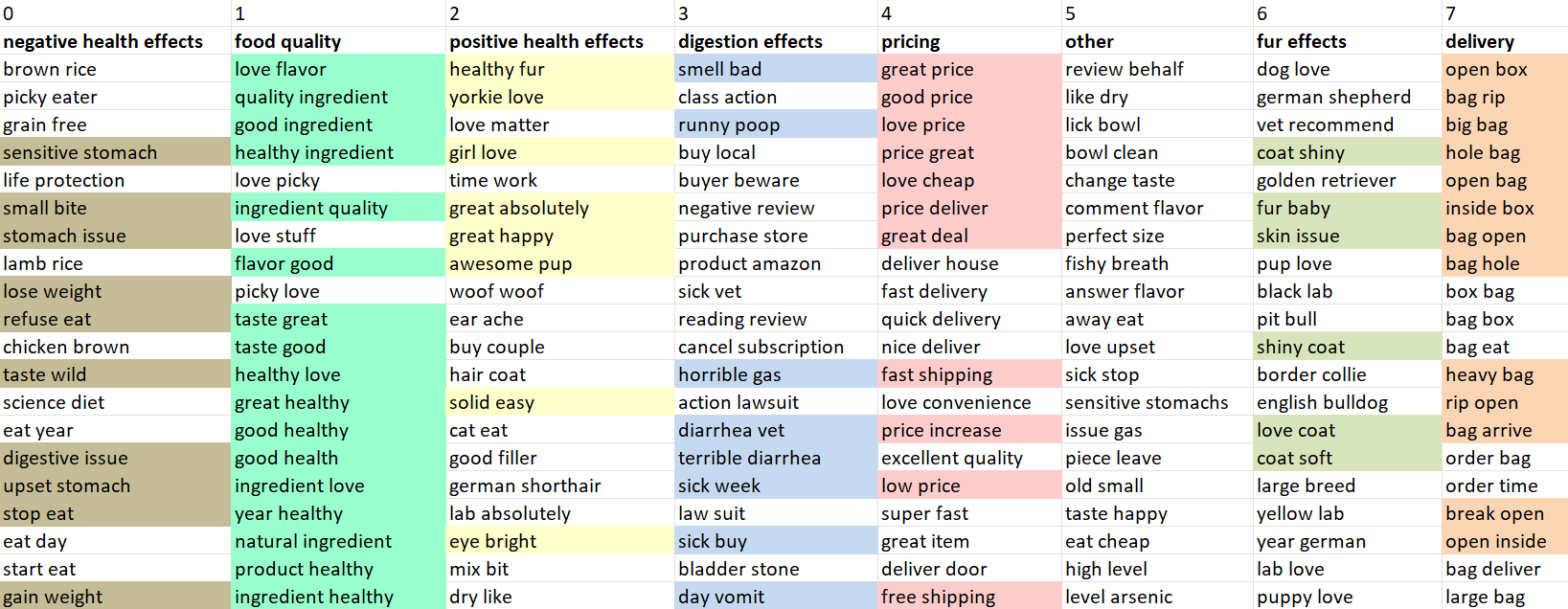 Image 3: Satisfaction factors modeling with FASTopic. Image by author
FASTopic returns relatively distinct topics, sorting the comments of the customers:
- 0: Negative health effects, "sensitive stomach", "small bite", "stomach issue", "lose weight", "refuse eat", "taste wild", "digestive issue", "upset stomach", "stop eat", "gain weight"
- 1: Food quality, "love flavor", "quality ingredient", "good ingredient", "healthy ingredient", "ingredient quality", "flavor good", "taste great", "healthy love", "great healthy", "good healthy", "good health", ...
- 2: Positive health effects, "healthy fur", "awesome pup", "eye bright"
- 3: Digestion effects, "smell bad", "runny poop", "horrible gas", "diarrhea vet", "terrible diarrhea," "sick week", "sick buy", "day vomit"
- 4: Pricing, "great price", "good price", "love price", "price great", "love cheap", "price deliver", "great deal", "price increase", "free shipping", ...
- 5: Other, other factors.
- 6: Fur effects, "coat shiny", "fur baby", "skin issue", "shiny coat", "love coat", "coat soft"
- 7: Delivery, "open box", "bag rip", "big bag", "hole bag", "open bag", "inside box", "bag open", "bag hole", "heavy bag", "rip open", ...
It is also useful to check the weight of these categories in the data. The full code is here.
We've modeled the customer satisfaction factors with a dog food product. But why is it beneficial for companies? Dynamic topic models offer a straightforward way of monitoring customer satisfaction over time. They indicate product-related problems and help take the right measures. Once the business decisions are taken into action, topic models check if they have an effect over time.
To do so, let's model topic activity over time at a quarterly frequency.
python
import plotly.graph_objects as go

# convert date column to datetime
data['time'] = pd.to_datetime(data['time'])

# format date column to quarterly periods
data['date_quarterly'] = data['time'].dt.to_period('Q').astype(str)

periods = data['date_quarterly'].tolist()

# calculate topic activity over time
act = model.topic_activity_over_time(periods)

# visualize topic activity
fig = model.visualize_topic_activity(top_n=8, topic_activity=act, time_slices=periods)

# update legend to display only the topic number
fig.data = sorted(fig.data, key=lambda trace: trace.name)

for trace in fig.data:
    trace.name = trace.name[0]

# update the layout
fig.update_layout(
    width=1200,
    height=600,
    title='',
    legend_title_text='Topic',
    xaxis_tickangle=45         # set x-axis labels to 45-degree angle
)

# show the figure
fig.show()
The delivery problems in topic 7 peaked in Q3 2018. Customers complained about open and rip boxes much more often, but these problems were fixed in early 2019 (see the picture below).
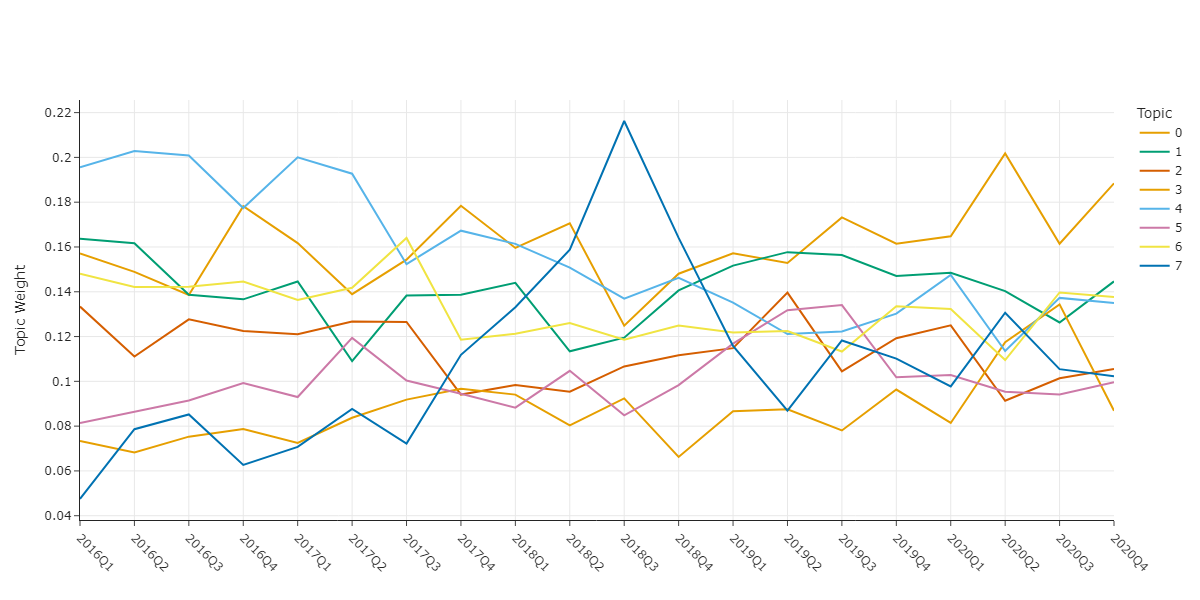 Image 4: Topic activity over time, FASTopic. Image by author.
4.2. BERTopic
BERTopic implements bigrams with vectorizer_model, which also works as a data processing pipeline. The code and the requirements are here.
python
from bertopic import BERTopic
from umap import UMAP
from sklearn.feature_extraction.text import CountVectorizer
from nltk.corpus import stopwords
import nltk
from nltk import word_tokenize
from nltk.stem import WordNetLemmatizer
import pandas as pd
import re

nltk.download('stopwords')

# create a list of speeches
docs = data['text'].tolist()
We train on raw data and clean it with the vectorizer. During the training, the vectorizer cleans data from numbers and stopwords, returning lemmatized tokens for the bigram model.
python
# create stopwords list
standard_stopwords = list(stopwords.words('english'))

# extended list of English stopwords
stopwords_extended = [ "0o",  ..]

# additional tokens to remove
additional_stopwords = ['blue','buffalo','dog','food','ha','month','ago']

# combine standard, extended stopwords, and additional tokens
full_stopwords = standard_stopwords
                 + additional_stopwords
                 + stopwords_extended

# define tokenizer retrurning lemmatized text without numbers
class LemmaTokenizer:
    def __init__(self):
        self.wnl = WordNetLemmatizer()
    def __call__(self, doc):
        doc = re.sub(r'd+', '', doc)  # clean numbers
        return [self.wnl.lemmatize(t) for t in word_tokenize(doc)] # lemmatize

# vectorizer makes data processing and generates bigrams
vectorizer_model = CountVectorizer(tokenizer=LemmaTokenizer(),
                                  ngram_range=(2, 2),
                                  stop_words=full_stopwords)

# set-up model
model = BERTopic(n_gram_range=(2,2), # returns bigrams
                nr_topics=9,         # generate 9 topics, leave -1 for outliers
                top_n_words=20,      # return top 20 bigrams
                min_topic_size=20,   # topics contains at least 20 tokens
                vectorizer_model=vectorizer_model,
                umap_model = UMAP(random_state=1))  # setting seed topics reproduce

# fit model to data
topics, probabilities = model.fit_transform(docs)
Next, let's prepare a dataframe with tokens from the model.
python
import pandas as pd

# retrieve bigrams for each topic and select only the word columns
topic_0 = pd.DataFrame(model.get_topic(0), columns=["Topic_0_word", "Topic_0_prob"])[["Topic_0_word"]]
topic_1 = pd.DataFrame(model.get_topic(1), columns=["Topic_1_word", "Topic_1_prob"])[["Topic_1_word"]]
topic_2 = pd.DataFrame(model.get_topic(2), columns=["Topic_2_word", "Topic_2_prob"])[["Topic_2_word"]]
topic_3 = pd.DataFrame(model.get_topic(3), columns=["Topic_3_word", "Topic_3_prob"])[["Topic_3_word"]]
topic_4 = pd.DataFrame(model.get_topic(4), columns=["Topic_4_word", "Topic_4_prob"])[["Topic_4_word"]]
topic_5 = pd.DataFrame(model.get_topic(5), columns=["Topic_5_word", "Topic_5_prob"])[["Topic_5_word"]]
topic_6 = pd.DataFrame(model.get_topic(6), columns=["Topic_6_word", "Topic_6_prob"])[["Topic_6_word"]]
topic_7 = pd.DataFrame(model.get_topic(7), columns=["Topic_7_word", "Topic_7_prob"])[["Topic_7_word"]]

# concatenate the dataframes
topics_df = pd.concat([topic_0, topic_1, topic_2, topic_3, topic_4,
                       topic_5, topic_6,topic_7], axis=1)
The annotated topics show similar categorization to FASTopic. The differences are categorizing Spanish tokens into a separate topic (T7) and filling T1 and T5 with adjectives of positive meaning. Delivery problems in T4 are identical to FASTopic's classification.
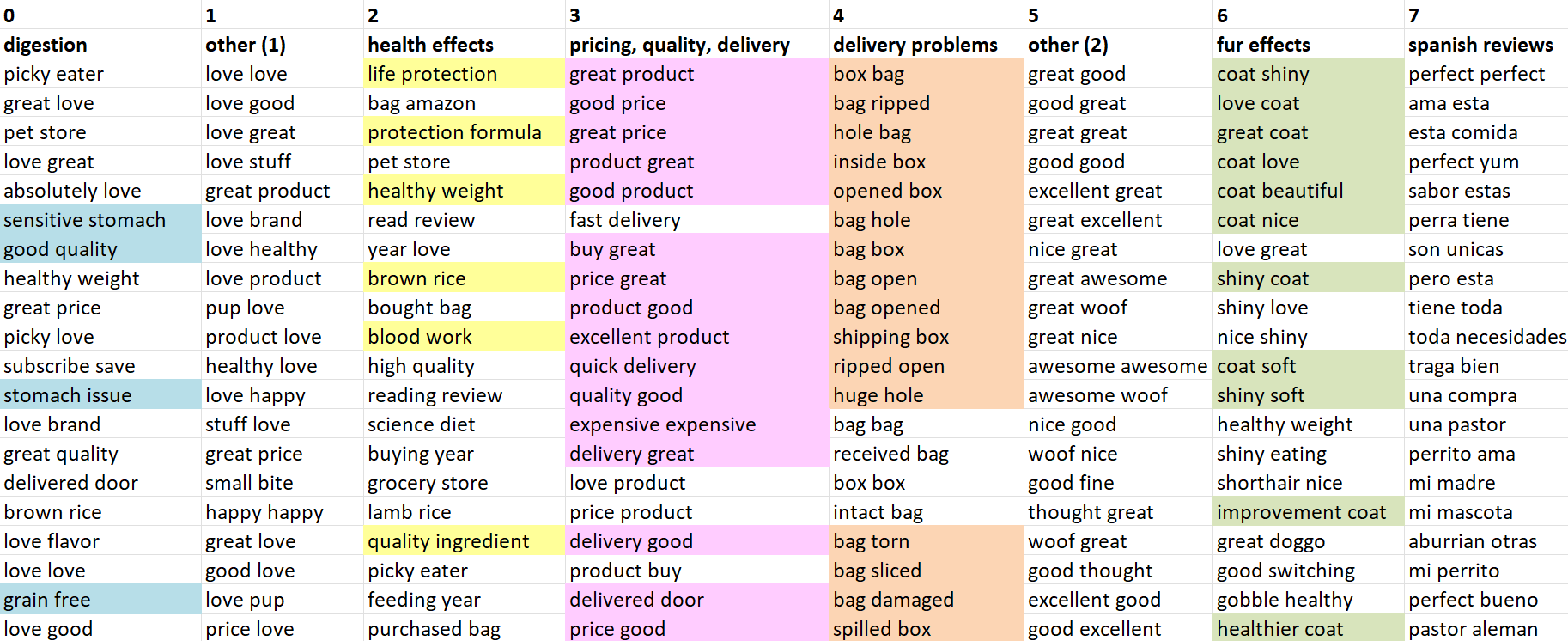 Image 5: Satisfaction factors modeling with BERTopic. Image by author
Again, let's focus on topic activity over time, which gives dynamic topic models additional value for BI. BERTopic uses token frequencies (not topic weights as FASTopic) for topic activity analysis.
python
# topic activity over time
import plotly.graph_objects as go

# create timestamps
data['time'] = pd.to_datetime(data['time'])
timestamps = data['time'].to_list()

# generate topics over time, 20 bins correspond to Q frequency
topics_over_time = model.topics_over_time(docs, timestamps, nr_bins=20)

# filter out topic -1 containing outliers
topics_over_time_filtered = topics_over_time[topics_over_time['Topic'] != -1]

# visualize the filtered topics over time
fig = model.visualize_topics_over_time(topics_over_time_filtered)

# update legend to display only the topic number
fig.data = sorted(fig.data, key=lambda trace: trace.name)

for trace in fig.data:
    trace.name = trace.name[0]

# update the layout
fig.update_layout(
    width=1200,
    height=600,
    title='',
    legend_title_text='Topic',
    xaxis_tickangle=45           # set x-axis labels to 45-degree angle
)

# show the figure
fig.show()
Most topics are stable over time, except T4, which categorizes delivery problems. As with FASTopic, BERTopic shows that customers' negative complaints about damaged boxes rose in mid-2018.
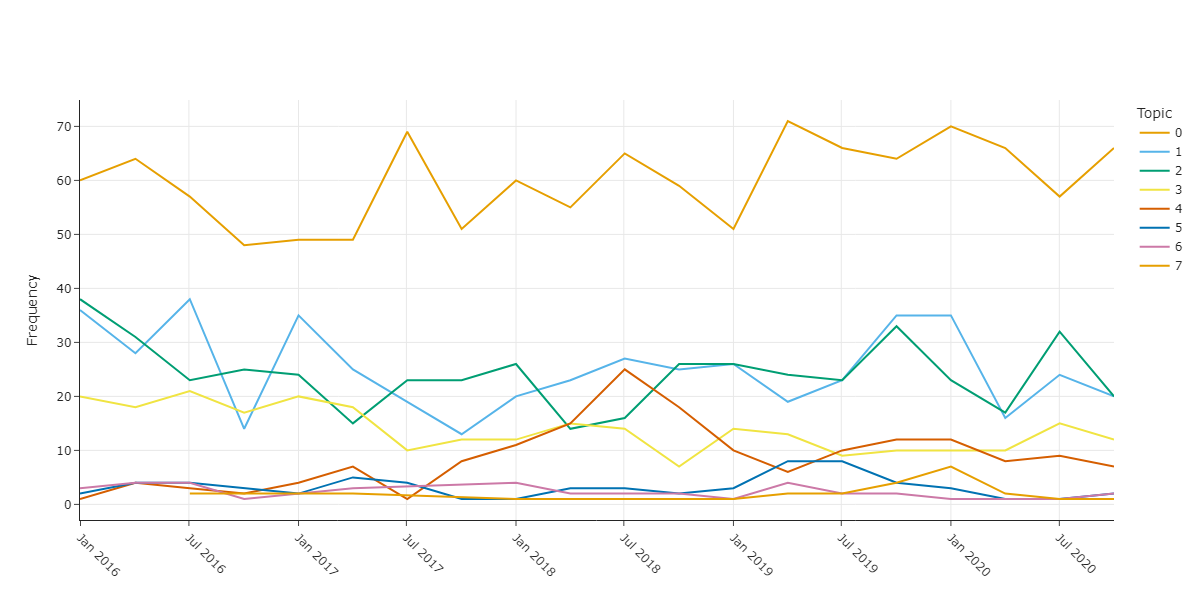 Image 6: Topic activity over time, BERTopic. Image by author.
Summary
Both models indicated delivery problems in mid-2018, which vanished in early 2019. With a topic model API monitoring customer comments on various channels, these problems can be fixed before they have a harmful effect on the brand.
The right data processing is essential for topic models to make sense in the applied world. Cleaning text in the right order minimizes the bias of each cleaning operation. Numbers and emoticons are typically removed first, followed by stopwords. Punctuation is cleaned afterward so that stopwords don't break up into two tokens ("we've" -> "we" + 've"). Additional tokens are removed in the next step in the clean data before lemmatization, which unifies tokens with the same semantics.
FASTopic deserves much better documentation, which now provides only basic information. Especially because its (1) simplicity of use and (2) stability in training on small datasets makes it a top-notch alternative to BERTopic. It is mainly practical for small companies like e-shops that typically don't collect large text datasets and seek simple and efficient solutions. Data and full codes for this tutorial here.
If you enjoy my work, you can invite me for coffee and support my writing. You can also subscribe to my email list to get notified about my new articles. Thanks!
References
[1] Grootendorst (2022). Bertopic: Neural Topic Modeling With A Class-Based TF-IDF Procedure. Computer Science.
[2] Wu, X, Nguyen, T., Ce Zhang, D., Yang Wang, W., Luu, A. T. (2024). FASTopic: A Fast, Adaptive, Stable, and Transferable Topic Modeling Paradigm. arXiv preprint: 2405.17978.
Register Now to Continue Reading
Unlock Towards Data Science with a Free Account
All articles on Towards Data Science are available to registered users. Create a free account today to access this article and thousands more.
Register for freeSign in to your account
 Written By
See all from Petr Koráb
BertopicMachine LearningNLPText MiningTopic Modelling
Share This Article
Towards Data Science is a community publication. Submit your insights to reach our global audience and earn through the TDS Author Payment Program.
Write for TDS
Related Articles
Deep Learning
Exploring Parameter Efficient Finetuning (PEFT): Intuitively Understanding Finetuning Using LoRA
Mariano Kamp
August 25, 202315 min read
Machine Learning
Why Changing Our Language Enables More Responsible AI
Ayodele Odubela
June 8, 20214 min read
Deep Learning
In this article, I want to take an in-depth look at regularization.
Akash Shastri
October 24, 20205 min read
Machine Learning
How to easily create and deploy ML Models with SQL
Christianlauer
June 23, 20214 min read
Machine Learning
A side-by-side CNN implementation and comparison
Mike Cvet
March 8, 20249 min read
Machine Learning
Using the High-Level Data Classification Algorithm to leverage topological characteristics of the data
Tiago Toledo Jr.
October 26, 20216 min read
Machine Learning
Form groups of similar observations based on distance
Rukshan Pramoditha
March 30, 20217 min read
Artificial Intelligence
Time Series are Everywhere - Make sure you know how to Handle them
Dario Radečić
January 11, 20206 min read
Artificial Intelligence
Why regularization is not about changing the model, but about choosing better coefficients
Angela and Kezhan Shi
December 13, 20259 min read
Your home for data science and AI. The world's leading publication for data science, data analytics, data engineering, machine learning, and artificial intelligence professionals.
Subscribe to Our NewsletterWrite For TDS•About•Advertise•Privacy Policy•Terms of Use
© Insight Media Group, LLC 2026•The New Stack•roadmap.sh•Creator Network
Recommended Articles
Close