保留正文与补采附件。源页面当前未重新核验;具体限制见交付清单。
 We value your privacy
We use cookies to enhance your browsing experience, serve personalised ads or content, and analyse our traffic. By clicking "Accept All", you consent to our use of cookies.
Customise Reject All Accept All
Customise Consent Preferences
 We use cookies to help you navigate efficiently and perform certain functions. You will find detailed information about all cookies under each consent category below.
The cookies that are categorised as "Necessary" are stored on your browser as they are essential for enabling the basic functionalities of the site. ... Show more
NecessaryAlways Active
Necessary cookies are required to enable the basic features of this site, such as providing secure log-in or adjusting your consent preferences. These cookies do not store any personally identifiable data.
-
Cookie
BCTempID
-
Duration
10 minutes
-
Description
No description available.
-
Cookie
__cf_bm
-
Duration
1 hour
-
Description
This cookie, set by Cloudflare, is used to support Cloudflare Bot Management.
-
Cookie
AWSALBCORS
-
Duration
7 days
-
Description
Amazon Web Services set this cookie for load balancing.
-
Cookie
_cfuvid
-
Duration
session
-
Description
Cloudflare sets this cookie to track users across sessions to optimize user experience by maintaining session consistency and providing personalized services
-
Cookie
li_gc
-
Duration
6 months
-
Description
Linkedin set this cookie for storing visitor's consent regarding using cookies for non-essential purposes.
-
Cookie
__hssrc
-
Duration
session
-
Description
This cookie is set by Hubspot whenever it changes the session cookie. The __hssrc cookie set to 1 indicates that the user has restarted the browser, and if the cookie does not exist, it is assumed to be a new session.
-
Cookie
__hssc
-
Duration
1 hour
-
Description
HubSpot sets this cookie to keep track of sessions and to determine if HubSpot should increment the session number and timestamps in the __hstc cookie.
-
Cookie
wpEmojiSettingsSupports
-
Duration
session
-
Description
WordPress sets this cookie when a user interacts with emojis on a WordPress site. It helps determine if the user's browser can display emojis properly.
-
Cookie
BCSessionID
-
Duration
1 year 1 month 4 days
-
Description
Blueconic sets this cookie as a unique identifier for the BlueConic profile.
-
Cookie
_octo
-
Duration
1 year
-
Description
No description available.
-
Cookie
logged_in
-
Duration
1 year
-
Description
No description available.
-
Cookie
__Secure-YEC
-
Duration
past
-
Description
YouTube sets this cookie to stores the user's video player preferences using embedded YouTube video
-
Cookie
__eoi
-
Duration
6 months
-
Description
Description is currently not available.
-
Cookie
AWSALBTGCORS
-
Duration
7 days
-
Description
No description available.
-
Cookie
login-status-p
-
Duration
past
-
Description
Description is currently not available.
-
Cookie
AWSALBTG
-
Duration
7 days
-
Description
No description available.
-
Cookie
csrf_token
-
Duration
session
-
Description
No description available.
-
Cookie
token_v2
-
Duration
1 day
-
Description
Description is currently not available.
-
Cookie
D
-
Duration
1 year
-
Description
Description is currently not available.
-
Cookie
PHPSESSID
-
Duration
session
-
Description
This cookie is native to PHP applications. The cookie stores and identifies a user's unique session ID to manage user sessions on the website. The cookie is a session cookie and will be deleted when all the browser windows are closed.
-
Cookie
VISITOR_PRIVACY_METADATA
-
Duration
6 months
-
Description
YouTube sets this cookie to store the user's cookie consent state for the current domain.
-
Cookie
cookietest
-
Duration
session
-
Description
The cookietest cookie is typically used to determine whether the user's browser accepts cookies, essential for website functionality and user experience.
-
Cookie
__Host-airtable-session
-
Duration
1 year
-
Description
This cookie is used to enable us to integrate the services of Airtable.
-
Cookie
__Host-airtable-session.sig
-
Duration
1 year
-
Description
This cookie is used to enable us to integrate the services of Airtable.
-
Cookie
m
-
Duration
1 year 1 month 4 days
-
Description
Stripe sets this cookie for fraud prevention purposes. It identifies the device used to access the website, allowing the website to be formatted accordingly.
-
Cookie
BIGipServer*
-
Duration
session
-
Description
Marketo sets this cookie to collect information about the user's online activity and build a profile about their interests to provide advertisements relevant to the user.
-
Cookie
__cfruid
-
Duration
session
-
Description
Cloudflare sets this cookie to identify trusted web traffic.
-
Cookie
_GRECAPTCHA
-
Duration
6 months
-
Description
Google Recaptcha service sets this cookie to identify bots to protect the website against malicious spam attacks.
-
Cookie
__Secure-YNID
-
Duration
6 months
-
Description
Google cookie used to protect user security and prevent fraud, especially during the login process.
-
Cookie
cookieyes-consent
-
Duration
1 year
-
Description
CookieYes sets this cookie to remember users' consent preferences so that their preferences are respected on subsequent visits to this site. It does not collect or store any personal information about the site visitors.
Functional
Functional cookies help perform certain functionalities like sharing the content of the website on social media platforms, collecting feedback, and other third-party features.
-
Cookie
lidc
-
Duration
1 day
-
Description
LinkedIn sets the lidc cookie to facilitate data center selection.
-
Cookie
brw
-
Duration
1 year
-
Description
No description available.
-
Cookie
brwConsent
-
Duration
5 minutes
-
Description
Description is currently not available.
-
Cookie
WMF-Uniq
-
Duration
1 year
-
Description
Description is currently not available.
-
Cookie
loom_anon_comment
-
Duration
1 year
-
Description
No description available.
-
Cookie
loom_referral_video
-
Duration
session
-
Description
Description is currently not available.
-
Cookie
VISITOR_INFO1_LIVE
-
Duration
6 months
-
Description
A cookie set by YouTube to measure bandwidth that determines whether the user gets the new or old player interface.
-
Cookie
yt-remote-connected-devices
-
Duration
Never Expires
-
Description
YouTube sets this cookie to store the user's video preferences using embedded YouTube videos.
-
Cookie
ytidb::LAST_RESULT_ENTRY_KEY
-
Duration
Never Expires
-
Description
The cookie ytidb::LAST_RESULT_ENTRY_KEY is used by YouTube to store the last search result entry that was clicked by the user. This information is used to improve the user experience by providing more relevant search results in the future.
-
Cookie
yt-remote-device-id
-
Duration
Never Expires
-
Description
YouTube sets this cookie to store the user's video preferences using embedded YouTube videos.
-
Cookie
yt-remote-session-name
-
Duration
session
-
Description
The yt-remote-session-name cookie is used by YouTube to store the user's video player preferences using embedded YouTube video.
-
Cookie
yt-remote-fast-check-period
-
Duration
session
-
Description
The yt-remote-fast-check-period cookie is used by YouTube to store the user's video player preferences for embedded YouTube videos.
-
Cookie
yt-remote-session-app
-
Duration
session
-
Description
The yt-remote-session-app cookie is used by YouTube to store user preferences and information about the interface of the embedded YouTube video player.
-
Cookie
yt-remote-cast-available
-
Duration
session
-
Description
The yt-remote-cast-available cookie is used to store the user's preferences regarding whether casting is available on their YouTube video player.
-
Cookie
yt-remote-cast-installed
-
Duration
session
-
Description
The yt-remote-cast-installed cookie is used to store the user's video player preferences using embedded YouTube video.
-
Cookie
cp_session
-
Duration
3 months
-
Description
Codepen sets this cookie for Help systems found in the website.
-
Cookie
loid
-
Duration
1 year 1 month 4 days
-
Description
This cookie is set by the Reddit. The cookie enables the sharing of content from the website onto the social media platform.
Analytics
Analytical cookies are used to understand how visitors interact with the website. These cookies help provide information on metrics such as the number of visitors, bounce rate, traffic source, etc.
-
Cookie
__hstc
-
Duration
6 months
-
Description
Hubspot set this main cookie for tracking visitors. It contains the domain, initial timestamp (first visit), last timestamp (last visit), current timestamp (this visit), and session number (increments for each subsequent session).
-
Cookie
hubspotutk
-
Duration
6 months
-
Description
HubSpot sets this cookie to keep track of the visitors to the website. This cookie is passed to HubSpot on form submission and used when deduplicating contacts.
-
Cookie
_ga
-
Duration
1 year 1 month 4 days
-
Description
Google Analytics sets this cookie to calculate visitor, session and campaign data and track site usage for the site's analytics report. The cookie stores information anonymously and assigns a randomly generated number to recognise unique visitors.
-
Cookie
ga*
-
Duration
1 year 1 month 4 days
-
Description
Google Analytics sets this cookie to store and count page views.
-
Cookie
__Host-psifi.analyticsTrace
-
Duration
6 hours
-
Description
Description is currently not available.
-
Cookie
__Host-psifi.analyticsTraceV2
-
Duration
6 hours
-
Description
Description is currently not available.
-
Cookie
_gh_sess
-
Duration
session
-
Description
GitHub sets this cookie for temporary application and framework state between pages like what step the user is on in a multiple step form.
-
Cookie
YSC
-
Duration
session
-
Description
YSC cookie is set by Youtube and is used to track the views of embedded videos on Youtube pages.
-
Cookie
ajs_anonymous_id
-
Duration
1 year
-
Description
This cookie is set by Segment to count the number of people who visit a certain site by tracking if they have visited before.
-
Cookie
vuid
-
Duration
1 year 1 month 4 days
-
Description
Vimeo installs this cookie to collect tracking information by setting a unique ID to embed videos on the website.
Performance
Performance cookies are used to understand and analyse the key performance indexes of the website which helps in delivering a better user experience for the visitors.
-
Cookie
AWSALB
-
Duration
7 days
-
Description
AWSALB is an application load balancer cookie set by Amazon Web Services to map the session to the target.
-
Cookie
acq
-
Duration
past
-
Description
Description is currently not available.
-
Cookie
acq.sig
-
Duration
past
-
Description
Description is currently not available.
-
Cookie
ptc
-
Duration
2 years
-
Description
No description available.
Advertisement
Advertisement cookies are used to provide visitors with customised advertisements based on the pages you visited previously and to analyse the effectiveness of the ad campaigns.
-
Cookie
muc_ads
-
Duration
1 year 1 month 4 days
-
Description
Twitter sets this cookie to collect user behaviour and interaction data to optimize the website.
-
Cookie
guest_id_marketing
-
Duration
1 year 1 month 4 days
-
Description
Twitter sets this cookie to identify and track the website visitor.
-
Cookie
guest_id_ads
-
Duration
1 year 1 month 4 days
-
Description
Twitter sets this cookie to identify and track the website visitor.
-
Cookie
personalization_id
-
Duration
1 year 1 month 4 days
-
Description
Twitter sets this cookie to integrate and share features for social media and also store information about how the user uses the website, for tracking and targeting.
-
Cookie
guest_id
-
Duration
1 year 1 month 4 days
-
Description
Twitter sets this cookie to identify and track the website visitor. It registers if a user is signed in to the Twitter platform and collects information about ad preferences.
-
Cookie
bcookie
-
Duration
1 year
-
Description
LinkedIn sets this cookie from LinkedIn share buttons and ad tags to recognize browser IDs.
-
Cookie
__Secure-ROLLOUT_TOKEN
-
Duration
6 months
-
Description
YouTube sets this cookie to manage feature rollout and experimentation. It helps Google control which new features or interface changes are shown to users as part of testing and staged rollouts, ensuring consistent experience for a given user during an experiment.
-
Cookie
yt.innertube::nextId
-
Duration
Never Expires
-
Description
YouTube sets this cookie to register a unique ID to store data on what videos from YouTube the user has seen.
-
Cookie
yt.innertube::requests
-
Duration
Never Expires
-
Description
YouTube sets this cookie to register a unique ID to store data on what videos from YouTube the user has seen.
-
Cookie
session_tracker
-
Duration
session
-
Description
This cookie is set by the Reddit. This cookie is used to identify trusted web traffic. It also helps in adverstising on the website.
-
Cookie
edgebucket
-
Duration
session
-
Description
Reddit sets this cookie to save the information about a log-on Reddit user, for the purpose of advertisement recommendations and updating the content.
-
Cookie
did
-
Duration
1 year
-
Description
Arbor sets this cookie to show targeted ads to site visitors.This cookie expires after 2 months or 1 year.
Uncategorised
Other uncategorised cookies are those that are being analysed and have not been classified into a category as yet.
No cookies to display.
Reject All Save My Preferences Accept All
Toggle SearchToggle Mobile Navigation
Publish AI, ML & data-science insights to a global community of data professionals.
Sign inSubmit an Article
LatestEditor's PicksNewsletterShipAI
Write For TDS
LinkedInXToggle Search
Artificial Intelligence
Generative AI Myths, Busted: An Engineer’s Quick Guide
A super simple and quick guide to how generative AI works, the myths around it, and why it won’t replace engineers anytime soon.
Amy Ma
September 23, 202510 min read
 I wrote this article initially for my team, as a number of our engineers felt uneasy utilizing AI in their daily job. They asked some large and reasonable questions: Where do these models originate? Any concern on data breaches? And the hardest one (took me a bit of time to figure it out myself) - am I making AI replace me by using it? As a team member who is actually quite passionate about AI, I get those worries.
That's why I've put together this short, handy manual:to debunk some myths and provide a helpful playbook for engineers to utilize AI. To me, success for AI isn't measured by how many fancy tools it can spit out. That’s not the point. The point is: does it actually make us more productive? How effectively does it make humans work smarter and even lazier? And since engineers are among the most important consumers of this technology, I believe it's worth clearing things up.
So ... What is Generative AI, and What is an LLM?
When people discuss tools like ChatGPT, Claude, or Amazon Q, what they’re really referring to is a language model. This is the core technology that powers much of generative AI. It’s trained to understand written language and respond by generating new text. When these models are scaled up to include billions, or even trillions, of parameters, they become what we call Large Language Models , or LLMs. LLMs are just one kind of generative AI, specifically designed to work with text and code.
Let’s start with the basics.
Learn this step by step with the interactive AI Engineer roadmap.
Tokens, not just words
In language models, the smallest unit of understanding isn’t always a full word, it’s a token. Think of tokens like LEGO bricks: small pieces that come together to build bigger structures. A token might be a complete word (like “castle”), part of a word (“cast”), or even just a single letter or character. For example:
The sentence “I love programming” might be split into tokens:[I] [love] [pro] [gramming].
This process is called tokenization. It’s how a model learns those materials to build its vocabulary. These vocabularies can be huge: GPT-4’s has around 100,000 tokens. Claude’s is even larger.
How Language Models Learn (differently)
There are two main learning approaches for language models:
- Masked models : These models learn by hiding a word and trying to predict what should go in the blank..
“Tony Stark is also known as ___ Man.”
The model learns to fill in the blank. It figures out that “Tony Stark” provides the strongest clue, while “is” and “also” don’t a add much value.
- Autoregressive models : These models predict the next word , one word at a time.
Start with: “Elsa walked into the castle…”
The model continues: “…and the doors slammed shut behind her.”
In this way it builds the story, word by word.
Both of these approaches give the model a superpower: the ability to generate text. A model that can generate open-ended outputs is called generative, hence the term generative AI.
What Does “Open-Ended Output” Mean?
Back to our Marvel example:
“Tony Stark is also known as ___ Man.”
Most people (and most models) would say “Iron.” But a model could also come up with “Powerful,” “Funny,” or even “Family.”
That’s open-ended output: the model isn’t tied to just one “correct” answer. It makes predictions based on probabilities. Sometimes it nails it. Other times? Not so much. This is why AI can feel both magical and unpredictable.
The big leap: from LM to LLM
Scaling up turns a language model into a large language model. It is similar to studying the whole dictionary to score high on the GRE. Given more data and more parameters, the model can capture more nuanced patterns. Parameters are similar to knobs on a soundboard — the more knobs you have, the more complicated the music gets. GPT-4, for example, has been estimated to have 1.76 trillion parameters.
Obviously, that requires enormous quantities of data. And we can't label data forever. The thing that changed everything was self-supervised learning. Instead of relying on humans to label every sentence, the model is able to learn by itself by covering up words and predicting them back out. It's like taking fill-in-the-blanks questions at superhuman speed.
And that's why LLMs shine with code: programming languages are a trainer's ideal domain. Code is highly formal, syntactically rigorous, and avoids the messy vagaries of natural language. The same action in Python will behave in the same manner each and every time, as opposed to the English sentence, which can hold multiple different meanings depending upon tone, culture, or situation. That precision is what makes the model not need trillions of lines of code in order to "get it." Even with smaller data sets of code, the patterns are consistent enough that the model can generalize well and produce surprisingly robust results.
Not only LLMs
Let it be noted before we go further that an LLM is just one type of generative AI. It just happens that it's the most common and most widely used today, but not the whole story.
Current models are typicallyLMMs (Large Multimodal Models). They don't just work with text. They also comprehend and generate through images, audio, or even video. That's why you see models that can read a block of code, describe an image, and then translate it to plain English, in one go.
In the past several years, there has also been another term in the conversation:foundation models. They are very large models trained on general-purpose data with broad scope. Think of them as the "ground floor" or "vanilla flavor in ice cream world". Once trained, they can subsequently be fine-tuned or stretched to apply to more specialized tasks , like creating software documentation, powering a company chatbot, or reviewing contracts. "Foundation" is the term used to describe them in opposition to the smaller, specialty models developed above them.
···
Common Myths (If you don’t care about definitions and details)
Myth 1: “AI understands like we do.”
Fact: AI doesn’t “understand” in the human sense, it predicts (with probabilities). With previous text (the context) it makes an educated guess about what comes next. Good predictions can simulate understanding, but under the hood probabilities all the way down. Nevertheless, some experiments are intriguing. One blog showed how different models seem to play “personalities.” OpenAI’s O3 turned out to be a master of deception in a diplomacy game, while Claude Opus 4 just wanted everyone to get along.
Myth 2: “AI just copies training data.”
Fact: It doesn't store training examples about like a clipboard. It stores patterns into weights (numerical dials of the model) that it tweaks during training. When you query it, the model doesn't copy-paste but instead creates new sequences. That being said, data privacy remains an issue. If private data was used for training, it can still pop out indirectly, or be read by humans during reinforcement.
Myth 3: “Prompts are hacks.”
Fact: Prompts aren't hacks, they're steering wheels. A prompt sets up context so the model knows which tokens to weight more heavily. If you still remember our previous example:
“Tony Stark is also known as ___ Man.”
Here, "Tony Stark" carries the greatest weight, and capitalized "Man" helps the model to zero in on "Iron." The filler words ("is also known as") weigh relatively less. An effective prompt does the same: it highlights the important cues so the model can reach a correct inference. That is no hack but a guidance.
Myth 4: “AI always gives the same answer.”
Fact: Nope. Generative AI relies on probabilities, not preprogrammed scripts. That means that the same question will have different answers depending on randomness, temperature settings, or even slight difference in your prompt. Every now and then that's fantastic (brainstorming), and sometimes it's confusing and frustrating (inconsistent answers).
Myth 5: “Bigger models are always better.”
Fact: Size helps, but it’s not everything. That's to say, big is not always better. An enormous model such as GPT-4 may be amazing, but a smaller specialized model may outdo it on a specific task. Agility and specialization can sometimes beat force..
Myth 6: “AI can replace engineers.”
Fact: Generative AI is a fantastic programming assistant, thanks to its disposition towards systematic, rule-governed programming languages. But it still doesn't qualify it as a lead engineer. Rather, it's akin to a speedy intern, who are wonderful at creating rough drafts, boilerplate, and even great snippets, but in need of review and oversight.
In short, Generative AI will not replace engineers, but it will change what engineering is. The skill set will be different. Instead of spending most of their time typing out every line of code, engineers are able to focus more on system architecture, design, and project oversight. Generative AI can write functions but cannot weigh trade-offs, understand business goals, or manage complexity at scale. That's where there needs to be a human at the helm.
Myth 7: “AI is just too dumb when it makes things up.”
Fact: What make AI seems to be very stupid is usually a hallucination. Remember when we told you that a model gives open-ended responses based on probabilities? That's where it begins. If the model doesn't have context, or if the fact you're asking about is an unusual one, it still has to fill in the blank and make you happy. So it anticipates something that sounds good, though it may be mistaken.
Another common reason is the context window. A model has only a chance to "see" a number of tokens at once like a short-term memory buffer. If your question depends on information outside of that window, it simply gets lost. The model then guesses and fills in the blank with it, and it could be completely off.
Hallucinations do not mean the AI is malfunctioning, they're a consequence of a system designed to generate freely and never follow a script.
···
Practical Playbook: Working with AI as a Software Engineer
Think of AI as a (human) team member. Tell it what you need in plain language. Don't mind grammar, and don't try to be funny. Be direct and keep going. Ask as many "stupid" questions as you want along the way. The loop is simple: ask, review (results), refine (requests), repeat.
1) Context first
Tell the model who this is for, what the goal is, and what constraints matter.
Mini prompt Example :
markup
You are helping our payments team. Goal: add idempotency to the charge endpoint.Constraints: Python 3.11, FastAPI, Postgres, existing retry logic.Output: explain first, then give code in ```python``` fences.
2) Declare the task
Define steps or acceptance criteria clearly, so "done" is well-defined.
Mini prompt Example :
markup
Make a step list for the refactor. Include pre-checks, code changes, tests, and a final rollout check.Mark each step with [owner], [est], and [risk].
3) Constrain the output
Ask for a shape so you don't get a wall of text.
Mini prompt Example :
markup
# Example 1Return JSON with keys: rationale, risks, code, tests. No extra prose.# Example 2Generate a SQL query inside sql … fences.
4) Inspect and iterate
Treat the first draft as a sketch. Point to the piece that is wrong. Ask for a correction. Loop again.
5) Keep a living log file
Ask the model to save each large step and change into a file so you can reuse context later.
Mini prompt Example:
markup
Start or update a file named AI_LOG.md.Append a dated entry with sections: Context, Decision, Commands, Snippets, Open Questions.Only add new content. Keep older entries.
6) Work within the context window
Models only "see" a brief snippet of recent text. Compress chat history when the thread grows too long.
A. Do it with a prompt. You can use the following compression prompt and paste it when the chat is heavy:
markup
Summarize all prior messages into a compact brief I can reuse.Format:- Facts we agreed on- Constraints and conventions- Decisions and their reasons- Open questions- Next actionsKeep it under 300 tokens. Preserve file names, APIs, and versions exactly.
B. Use the tool when available. Some of the services that employ AI also have built-in tools to help. For example, Amazon Q has a /compact command, which condenses the chat history into a shorter one. It even warns you when your conversation is getting close to the limit and suggests compacting. (Related AWS Documentation)
C. Re-seed the next turn. Paste the brief back in after compaction as the new context. Then your next request.
···
Wrapping Up
Generative AI is not out to replace engineers, but it's revolutionizing what engineering is. Properly leveraged, it's less of a competitor and more of an assistant to help speed up the drudge so that we (engineers) can focus on design, systems, and the hard decisions. The engineers that'll thrive will be those who can guide it, push back on it, and make it a team player. Because, ultimately, even Iron Man had to fly the suit.
···
Enjoyed this? Read more posts from me on TDS — or subscribe to my newsletter for more. Thank you!
Register Now to Continue Reading
Unlock Towards Data Science with a Free Account
All articles on Towards Data Science are available to registered users. Create a free account today to access this article and thousands more.
Register for freeSign in to your account
 Written By
See all from Amy Ma
Generative Ailarge language modelLlmPrompt EngineeringSoftwar Engineering
Share This Article
Towards Data Science is a community publication. Submit your insights to reach our global audience and earn through the TDS Author Payment Program.
Write for TDS
Related Articles
Artificial Intelligence
Should human obsolescence be our goal?
Stephanie Kirmer
March 3, 202510 min read
Artificial Intelligence
Learn how GA work by applying it to the feature optimization process
Javier Martínez Ojeda
May 29, 20228 min read
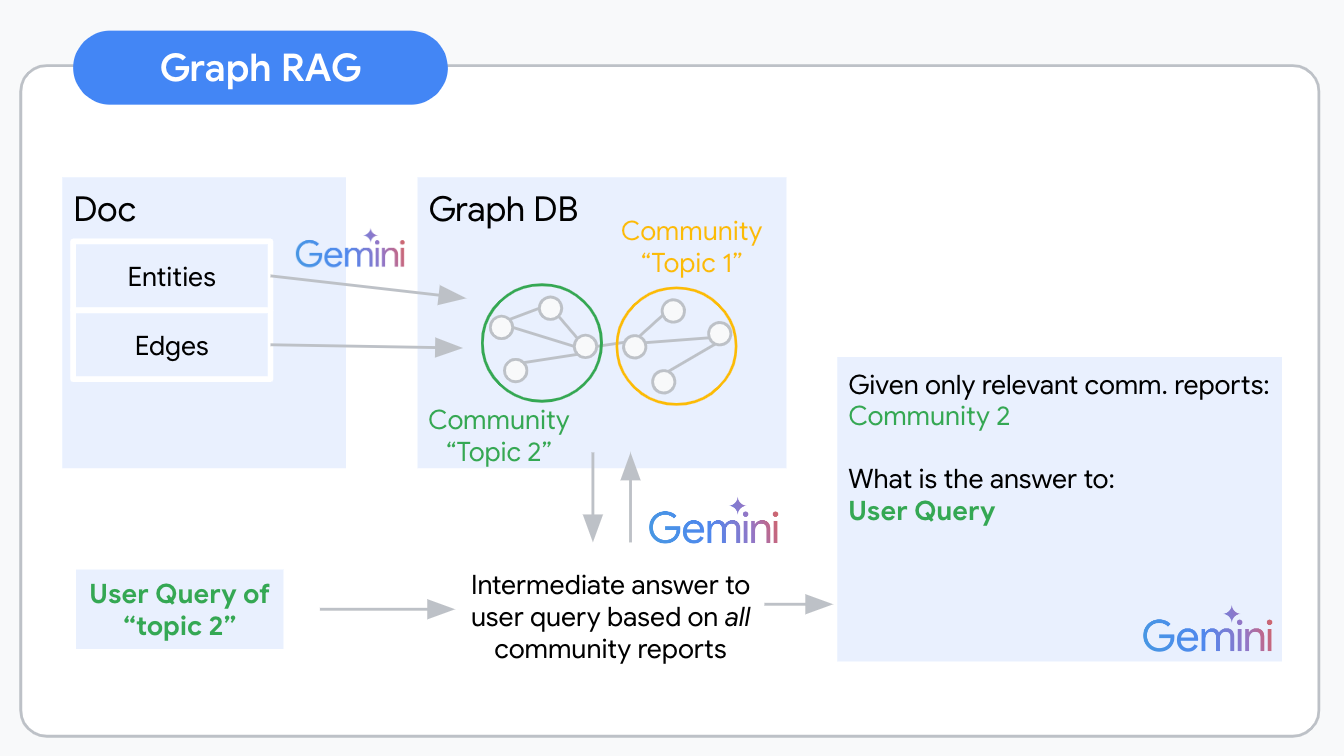
Graph RAG answers the big questions where text embeddings won't help you.
Jakob Pörschmann
August 22, 20249 min read
Artificial Intelligence
From Zero to Hero using only Python & Ollama (no GPU, no APIKEY)
Mauro Di Pietro
March 26, 20259 min read
Artificial Intelligence
My Experience of Working Remotely
Kurtis Pykes
December 10, 20205 min read
Artificial Intelligence
Make them more useful.
Soner Yıldırım
March 22, 20214 min read
Deep Learning
Deploy a text-to-image web app with just one command
Heiko Hotz
January 3, 20238 min read
Artificial Intelligence
It is important to make AI accessible to everyone for the sake of social and economic stability.
Parul Pandey
April 20, 20199 min read
Artificial Intelligence
An example that will make you like R better
Soner Yıldırım
March 25, 20213 min read
Your home for data science and AI. The world's leading publication for data science, data analytics, data engineering, machine learning, and artificial intelligence professionals.
Subscribe to Our NewsletterWrite For TDS•About•Advertise•Privacy Policy•Terms of Use
© Insight Media Group, LLC 2026•The New Stack•roadmap.sh•Creator Network
Recommended Articles
Close