保留正文与补采附件。源页面当前未重新核验;具体限制见交付清单。
 We value your privacy
We use cookies to enhance your browsing experience, serve personalised ads or content, and analyse our traffic. By clicking "Accept All", you consent to our use of cookies.
Customise Reject All Accept All
Customise Consent Preferences
 We use cookies to help you navigate efficiently and perform certain functions. You will find detailed information about all cookies under each consent category below.
The cookies that are categorised as "Necessary" are stored on your browser as they are essential for enabling the basic functionalities of the site. ... Show more
NecessaryAlways Active
Necessary cookies are required to enable the basic features of this site, such as providing secure log-in or adjusting your consent preferences. These cookies do not store any personally identifiable data.
-
Cookie
BCTempID
-
Duration
10 minutes
-
Description
No description available.
-
Cookie
__cf_bm
-
Duration
1 hour
-
Description
This cookie, set by Cloudflare, is used to support Cloudflare Bot Management.
-
Cookie
AWSALBCORS
-
Duration
7 days
-
Description
Amazon Web Services set this cookie for load balancing.
-
Cookie
_cfuvid
-
Duration
session
-
Description
Cloudflare sets this cookie to track users across sessions to optimize user experience by maintaining session consistency and providing personalized services
-
Cookie
li_gc
-
Duration
6 months
-
Description
Linkedin set this cookie for storing visitor's consent regarding using cookies for non-essential purposes.
-
Cookie
__hssrc
-
Duration
session
-
Description
This cookie is set by Hubspot whenever it changes the session cookie. The __hssrc cookie set to 1 indicates that the user has restarted the browser, and if the cookie does not exist, it is assumed to be a new session.
-
Cookie
__hssc
-
Duration
1 hour
-
Description
HubSpot sets this cookie to keep track of sessions and to determine if HubSpot should increment the session number and timestamps in the __hstc cookie.
-
Cookie
wpEmojiSettingsSupports
-
Duration
session
-
Description
WordPress sets this cookie when a user interacts with emojis on a WordPress site. It helps determine if the user's browser can display emojis properly.
-
Cookie
BCSessionID
-
Duration
1 year 1 month 4 days
-
Description
Blueconic sets this cookie as a unique identifier for the BlueConic profile.
-
Cookie
_octo
-
Duration
1 year
-
Description
No description available.
-
Cookie
logged_in
-
Duration
1 year
-
Description
No description available.
-
Cookie
__Secure-YEC
-
Duration
past
-
Description
YouTube sets this cookie to stores the user's video player preferences using embedded YouTube video
-
Cookie
__eoi
-
Duration
6 months
-
Description
Description is currently not available.
-
Cookie
AWSALBTGCORS
-
Duration
7 days
-
Description
No description available.
-
Cookie
login-status-p
-
Duration
past
-
Description
Description is currently not available.
-
Cookie
AWSALBTG
-
Duration
7 days
-
Description
No description available.
-
Cookie
csrf_token
-
Duration
session
-
Description
No description available.
-
Cookie
token_v2
-
Duration
1 day
-
Description
Description is currently not available.
-
Cookie
D
-
Duration
1 year
-
Description
Description is currently not available.
-
Cookie
PHPSESSID
-
Duration
session
-
Description
This cookie is native to PHP applications. The cookie stores and identifies a user's unique session ID to manage user sessions on the website. The cookie is a session cookie and will be deleted when all the browser windows are closed.
-
Cookie
VISITOR_PRIVACY_METADATA
-
Duration
6 months
-
Description
YouTube sets this cookie to store the user's cookie consent state for the current domain.
-
Cookie
cookietest
-
Duration
session
-
Description
The cookietest cookie is typically used to determine whether the user's browser accepts cookies, essential for website functionality and user experience.
-
Cookie
__Host-airtable-session
-
Duration
1 year
-
Description
This cookie is used to enable us to integrate the services of Airtable.
-
Cookie
__Host-airtable-session.sig
-
Duration
1 year
-
Description
This cookie is used to enable us to integrate the services of Airtable.
-
Cookie
m
-
Duration
1 year 1 month 4 days
-
Description
Stripe sets this cookie for fraud prevention purposes. It identifies the device used to access the website, allowing the website to be formatted accordingly.
-
Cookie
BIGipServer*
-
Duration
session
-
Description
Marketo sets this cookie to collect information about the user's online activity and build a profile about their interests to provide advertisements relevant to the user.
-
Cookie
__cfruid
-
Duration
session
-
Description
Cloudflare sets this cookie to identify trusted web traffic.
-
Cookie
_GRECAPTCHA
-
Duration
6 months
-
Description
Google Recaptcha service sets this cookie to identify bots to protect the website against malicious spam attacks.
-
Cookie
__Secure-YNID
-
Duration
6 months
-
Description
Google cookie used to protect user security and prevent fraud, especially during the login process.
-
Cookie
cookieyes-consent
-
Duration
1 year
-
Description
CookieYes sets this cookie to remember users' consent preferences so that their preferences are respected on subsequent visits to this site. It does not collect or store any personal information about the site visitors.
Functional
Functional cookies help perform certain functionalities like sharing the content of the website on social media platforms, collecting feedback, and other third-party features.
-
Cookie
lidc
-
Duration
1 day
-
Description
LinkedIn sets the lidc cookie to facilitate data center selection.
-
Cookie
brw
-
Duration
1 year
-
Description
No description available.
-
Cookie
brwConsent
-
Duration
5 minutes
-
Description
Description is currently not available.
-
Cookie
WMF-Uniq
-
Duration
1 year
-
Description
Description is currently not available.
-
Cookie
loom_anon_comment
-
Duration
1 year
-
Description
No description available.
-
Cookie
loom_referral_video
-
Duration
session
-
Description
Description is currently not available.
-
Cookie
VISITOR_INFO1_LIVE
-
Duration
6 months
-
Description
A cookie set by YouTube to measure bandwidth that determines whether the user gets the new or old player interface.
-
Cookie
yt-remote-connected-devices
-
Duration
Never Expires
-
Description
YouTube sets this cookie to store the user's video preferences using embedded YouTube videos.
-
Cookie
ytidb::LAST_RESULT_ENTRY_KEY
-
Duration
Never Expires
-
Description
The cookie ytidb::LAST_RESULT_ENTRY_KEY is used by YouTube to store the last search result entry that was clicked by the user. This information is used to improve the user experience by providing more relevant search results in the future.
-
Cookie
yt-remote-device-id
-
Duration
Never Expires
-
Description
YouTube sets this cookie to store the user's video preferences using embedded YouTube videos.
-
Cookie
yt-remote-session-name
-
Duration
session
-
Description
The yt-remote-session-name cookie is used by YouTube to store the user's video player preferences using embedded YouTube video.
-
Cookie
yt-remote-fast-check-period
-
Duration
session
-
Description
The yt-remote-fast-check-period cookie is used by YouTube to store the user's video player preferences for embedded YouTube videos.
-
Cookie
yt-remote-session-app
-
Duration
session
-
Description
The yt-remote-session-app cookie is used by YouTube to store user preferences and information about the interface of the embedded YouTube video player.
-
Cookie
yt-remote-cast-available
-
Duration
session
-
Description
The yt-remote-cast-available cookie is used to store the user's preferences regarding whether casting is available on their YouTube video player.
-
Cookie
yt-remote-cast-installed
-
Duration
session
-
Description
The yt-remote-cast-installed cookie is used to store the user's video player preferences using embedded YouTube video.
-
Cookie
cp_session
-
Duration
3 months
-
Description
Codepen sets this cookie for Help systems found in the website.
-
Cookie
loid
-
Duration
1 year 1 month 4 days
-
Description
This cookie is set by the Reddit. The cookie enables the sharing of content from the website onto the social media platform.
Analytics
Analytical cookies are used to understand how visitors interact with the website. These cookies help provide information on metrics such as the number of visitors, bounce rate, traffic source, etc.
-
Cookie
__hstc
-
Duration
6 months
-
Description
Hubspot set this main cookie for tracking visitors. It contains the domain, initial timestamp (first visit), last timestamp (last visit), current timestamp (this visit), and session number (increments for each subsequent session).
-
Cookie
hubspotutk
-
Duration
6 months
-
Description
HubSpot sets this cookie to keep track of the visitors to the website. This cookie is passed to HubSpot on form submission and used when deduplicating contacts.
-
Cookie
_ga
-
Duration
1 year 1 month 4 days
-
Description
Google Analytics sets this cookie to calculate visitor, session and campaign data and track site usage for the site's analytics report. The cookie stores information anonymously and assigns a randomly generated number to recognise unique visitors.
-
Cookie
ga*
-
Duration
1 year 1 month 4 days
-
Description
Google Analytics sets this cookie to store and count page views.
-
Cookie
__Host-psifi.analyticsTrace
-
Duration
6 hours
-
Description
Description is currently not available.
-
Cookie
__Host-psifi.analyticsTraceV2
-
Duration
6 hours
-
Description
Description is currently not available.
-
Cookie
_gh_sess
-
Duration
session
-
Description
GitHub sets this cookie for temporary application and framework state between pages like what step the user is on in a multiple step form.
-
Cookie
YSC
-
Duration
session
-
Description
YSC cookie is set by Youtube and is used to track the views of embedded videos on Youtube pages.
-
Cookie
ajs_anonymous_id
-
Duration
1 year
-
Description
This cookie is set by Segment to count the number of people who visit a certain site by tracking if they have visited before.
-
Cookie
vuid
-
Duration
1 year 1 month 4 days
-
Description
Vimeo installs this cookie to collect tracking information by setting a unique ID to embed videos on the website.
Performance
Performance cookies are used to understand and analyse the key performance indexes of the website which helps in delivering a better user experience for the visitors.
-
Cookie
AWSALB
-
Duration
7 days
-
Description
AWSALB is an application load balancer cookie set by Amazon Web Services to map the session to the target.
-
Cookie
acq
-
Duration
past
-
Description
Description is currently not available.
-
Cookie
acq.sig
-
Duration
past
-
Description
Description is currently not available.
-
Cookie
ptc
-
Duration
2 years
-
Description
No description available.
Advertisement
Advertisement cookies are used to provide visitors with customised advertisements based on the pages you visited previously and to analyse the effectiveness of the ad campaigns.
-
Cookie
muc_ads
-
Duration
1 year 1 month 4 days
-
Description
Twitter sets this cookie to collect user behaviour and interaction data to optimize the website.
-
Cookie
guest_id_marketing
-
Duration
1 year 1 month 4 days
-
Description
Twitter sets this cookie to identify and track the website visitor.
-
Cookie
guest_id_ads
-
Duration
1 year 1 month 4 days
-
Description
Twitter sets this cookie to identify and track the website visitor.
-
Cookie
personalization_id
-
Duration
1 year 1 month 4 days
-
Description
Twitter sets this cookie to integrate and share features for social media and also store information about how the user uses the website, for tracking and targeting.
-
Cookie
guest_id
-
Duration
1 year 1 month 4 days
-
Description
Twitter sets this cookie to identify and track the website visitor. It registers if a user is signed in to the Twitter platform and collects information about ad preferences.
-
Cookie
bcookie
-
Duration
1 year
-
Description
LinkedIn sets this cookie from LinkedIn share buttons and ad tags to recognize browser IDs.
-
Cookie
__Secure-ROLLOUT_TOKEN
-
Duration
6 months
-
Description
YouTube sets this cookie to manage feature rollout and experimentation. It helps Google control which new features or interface changes are shown to users as part of testing and staged rollouts, ensuring consistent experience for a given user during an experiment.
-
Cookie
yt.innertube::nextId
-
Duration
Never Expires
-
Description
YouTube sets this cookie to register a unique ID to store data on what videos from YouTube the user has seen.
-
Cookie
yt.innertube::requests
-
Duration
Never Expires
-
Description
YouTube sets this cookie to register a unique ID to store data on what videos from YouTube the user has seen.
-
Cookie
session_tracker
-
Duration
session
-
Description
This cookie is set by the Reddit. This cookie is used to identify trusted web traffic. It also helps in adverstising on the website.
-
Cookie
edgebucket
-
Duration
session
-
Description
Reddit sets this cookie to save the information about a log-on Reddit user, for the purpose of advertisement recommendations and updating the content.
-
Cookie
did
-
Duration
1 year
-
Description
Arbor sets this cookie to show targeted ads to site visitors.This cookie expires after 2 months or 1 year.
Uncategorised
Other uncategorised cookies are those that are being analysed and have not been classified into a category as yet.
No cookies to display.
Reject All Save My Preferences Accept All
Toggle SearchToggle Mobile Navigation
Publish AI, ML & data-science insights to a global community of data professionals.
Sign inSubmit an Article
LatestEditor's PicksNewsletterShipAI
Write For TDS
LinkedInXToggle Search
Artificial Intelligence
The Smarter Way of Using AI in Programming
avoid the outdated methods of integrating AI into your coding workflow by going beyond ChatGPT
Hesam Sheikh
August 29, 20247 min read
 AI-generated by Leonardo.ai
_Stuck behind a paywall?Read for Free! _
Since ChatGPT's launch in 2022, developers have split into two camps: those who ban AI in coding and those who embrace it. **** Many programmers, especially the more seasoned ones, not only don't use AI-generated code but also prohibit their teams from doing so. Their argument against using AI for programming is understandable, "AI-generated code is unreliable."
Now even if you don't approve of this anti-AI-code stance, you must have faced challenges, hurdles, or hiccups when using AI for programming. The key is to find strategies to use AI to your advantage the right way.
Many of us are using a simple, but outdated AI strategy that was only good two years ago. We are cutting a tree down with kitchen knives.
I will begin this article with two major issues when we talk about AI for developers, and I will propose four reliable AI solutions that will separate you from the average programmer when it comes to using LLMs, no matter what kind of developer you are.
Learn this step by step with the interactive AI Engineer, AI and Data Scientist and Computer Science roadmaps.
Table of Contents
· the wrong way you may be using AI... ∘ you're not using the right interface ∘ you have unrealistic expectations of AI · Cursor: AI-first IDE · Micro Agent: Code + Test Case · SWE-agent: AI against Github Issues · AI Commits: git commit -m · Let's Connect! · Further Reads
the wrong way you may be using AI...
... can be divided in two:
 Image created by GPT-4o.
you're not using the right interface
When ChatGPT was released, for months, the mainstream method of working with AI was to go to the website and chat with gpt-3.5 in the browser. The AI scenery was simple.
You wanted ChatGPT to write docstrings and comment on your function?
- You would copy that piece of code from your IDE,
- give it to ChatGPT, while writing a lazy prompt, like"add comments",
- it would spit back a new code,
- then, you would make sure it didn't make the code faulty,
- and if everything was fine, you would paste the new code into your IDE.
Many are still using AI to code the same way. I'm seeing this in students, programmers, and especially beginners. As the AI landscape has changed in the last two years, our methods for using AI have not adjusted. We haven't caught up to its full potential.
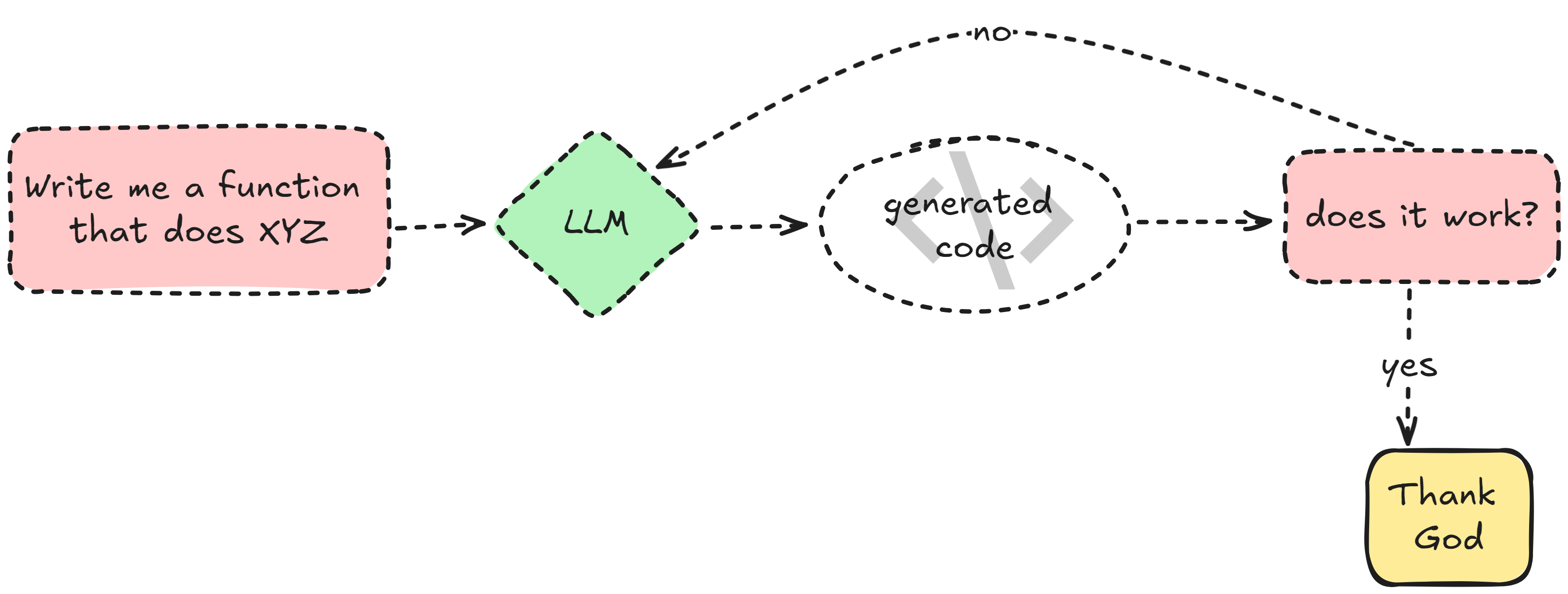 Diagram By Author.
you have unrealistic expectations of AI
The second pitfall of using AI is how we tend to use it. Typically we would ask the LLM to code something, we test if it works, and if it doesn't, we go back and forth manually to fix the issue. If we're lucky, we don't fall into an endless loop of hallucinations when we try to have the LLM understand what's wrong with the code and it doesn't.
We know it doesn't work, but for a lack of a better solution, we push and push it. It's easy to get frustrated this way.
Having said this, I will share four tools that can boost your programming productivity with AI.
Cursor: AI-first IDE
🔎 Best For: Absolutely Everyone
When I was first suggested to use Cursor, I didn't really know what it was. It was only after some testing that I figured it was a game-changer. Cursor is an AI-first IDE, well... it's actually VScode, but on steroids.
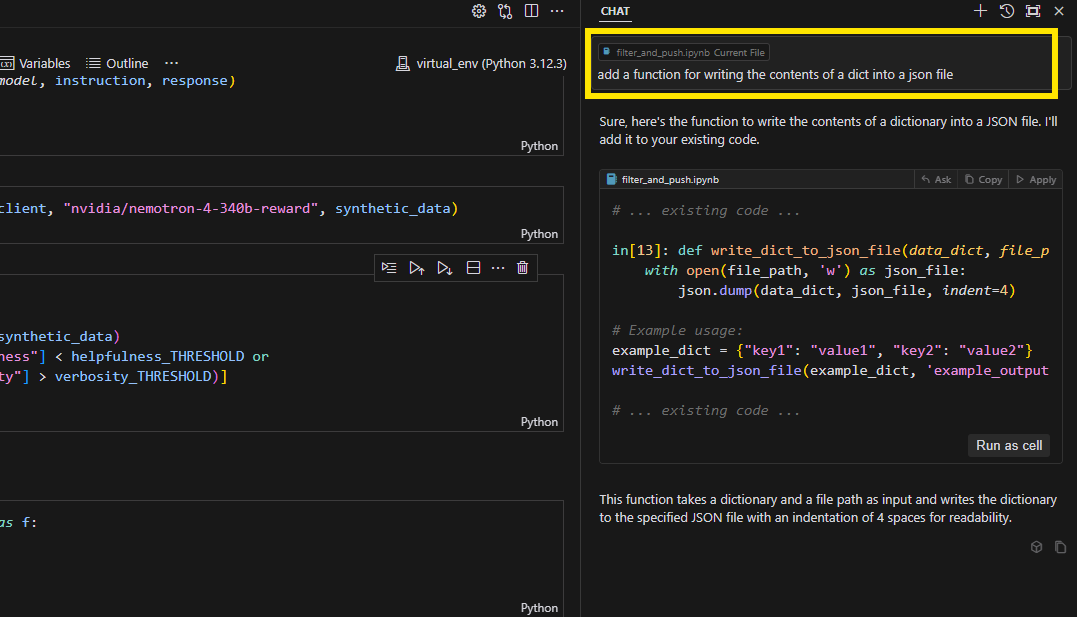 Screenshot of the Cursor IDE. By Author.
Cursor allows you to use your chatbot API to use AI as an assistant in writing code. Some of the features that can practically uplift your coding workflow that I love about Cursor:
- Ctrl K: the primary feature, allowing you to select multiple lines, and prompt the chatbot about it. You can use this feature to have the LLM write you complete functions from scratch, to add documentation, or to modify parts of the code. It's slick, easy to use, and it shows you parts of the code that are modified so you get to see the before/after.
- Tab: a powerful auto-complete feature that helps you write one line or a full function.
- Chat: you can talk with your AI about your full codebase. On top of that, you can provide context by providing documentation files, images, or webpage URLs (Ask the Web feature).
Tweet not found
The embedded tweet could not be found…
The good thing about Cursor is that it is VScode with extra AI features, meaning, it's not a whole new IDE that you need to get comfortable with. So if you are already working with VScode, the transition will be effortless.
You can provide your API of the model of your choice, GPT-4, GPT-4o, Claude 3.5 Sonnet, and the built-in free cursor-small. I have seen many people praise the Cursor + Sonnet 3.5 combo. Claude 3.5 Sonnet is a very smart model in coding, and you can get fantastic results once you plug it into Cursor.
Cursor is a big improvement over copy-pasting code back and forth from the ChatGPT website (honestly, at this point this looks somewhat unprofessional).
Micro Agent: Code + Test Case
🔎 Best For: Reliable Code Generation
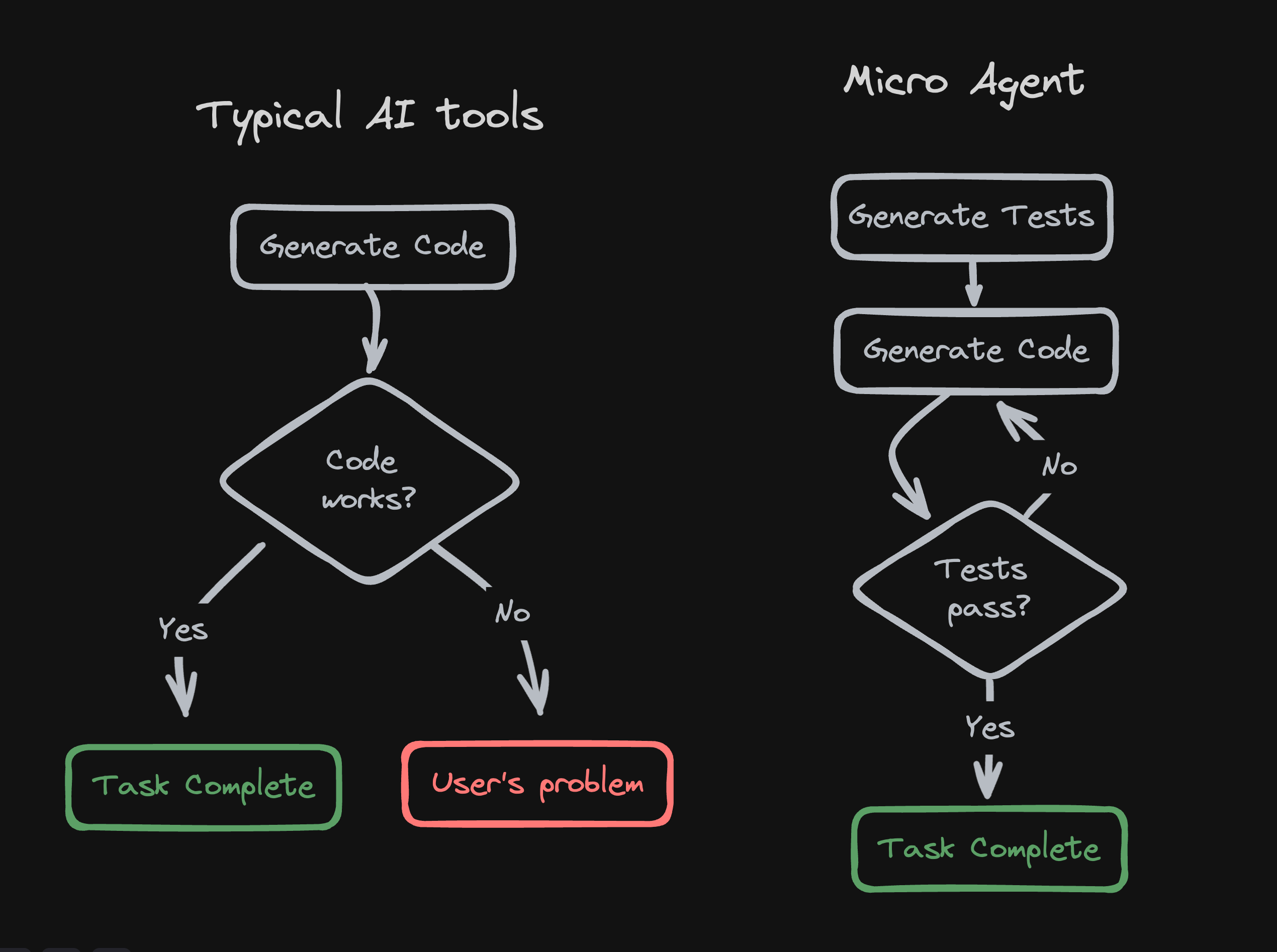 Source: micro-agent (under MIT License)
When it comes to generating code with AI, every tool is unreliable. As mentioned earlier, LLMs tend to fall into painful loops of hallucination.
Micro Agent is honest and reliable in what it promises. Instead of generating full chunks of code to be tested and reviewed by the user, Micro Agent starts by creating test cases for your prompt. It will then iteratively write code that passes the generated test cases.
The idea is that LLMs are better at generating test cases for a problem than creating code to solve it. I haven't found much research to support this idea, but it's trivial that a tested code is more reliable than not, which is what Micro Agent achieves.
If you want to create functions that are not super-complex, but at the same time are tricky to get right, Micro Agent generates code that is more tested and grounded than out-of-the-box LLM output.
Make sure to check out their blog and GitHub page.
SWE-agent: AI against Github Issues
🔎 Best For: GitHub Geeks
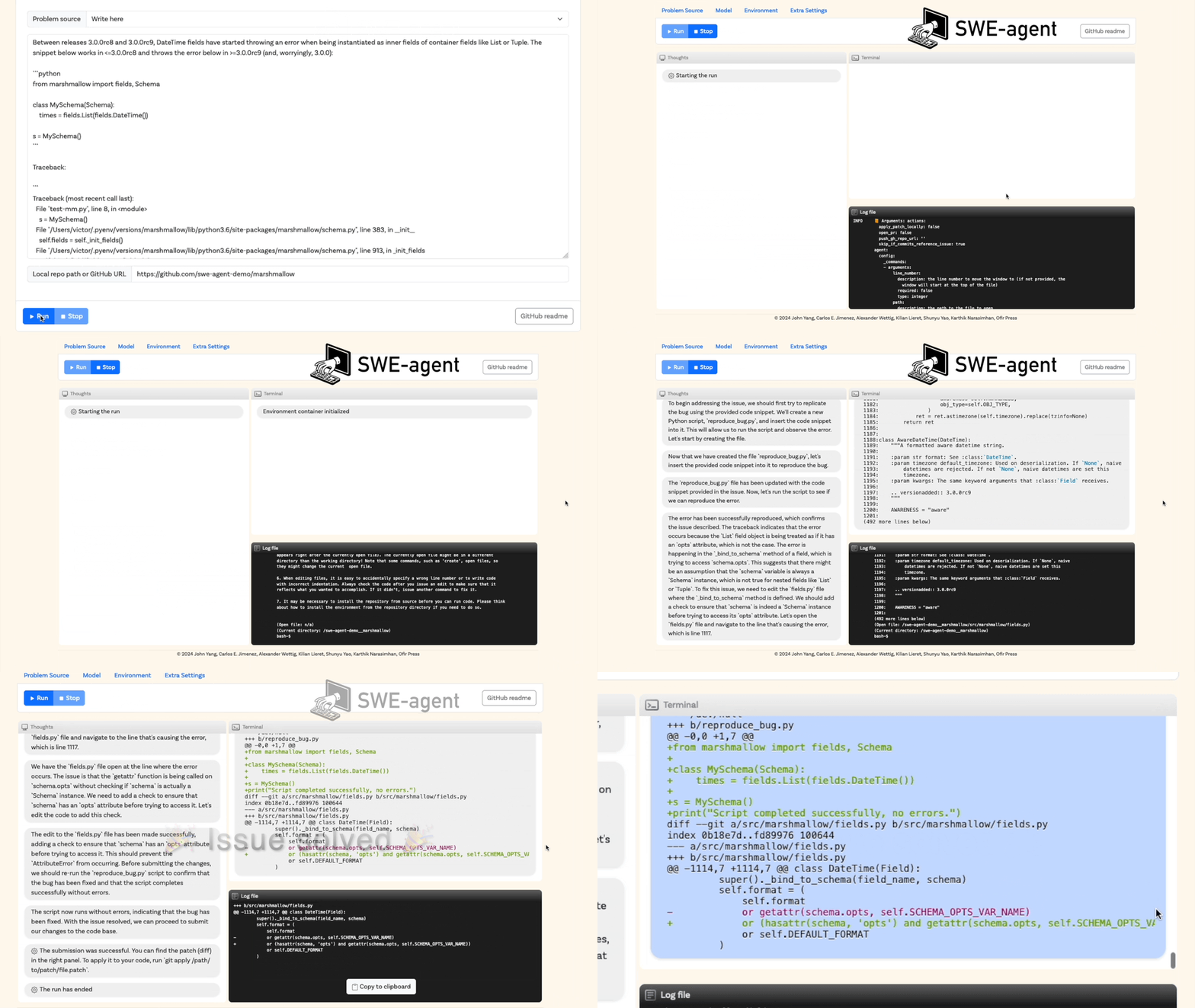 Source: SWE-agent (under MIT License)
On the list of Agentic tools that actually work, sits SWE-agent, developed by the Princeton Language and Intelligence. SWE-agent is specialized in resolving real-world GitHub repository issues and then submitting a pull request for review.
It's a lifesaver for big repositories, organizations, or even small-scale projects. The reason it works well is the particular tools created by the developers that focus on reviewing codebases, identifying the issue, and then making the necessary changes.
SWE-agent is an open-source project with already 13.1K stars on GitHub.
AI Commits: git commit -m
🔎 Best For: Those Who Commit
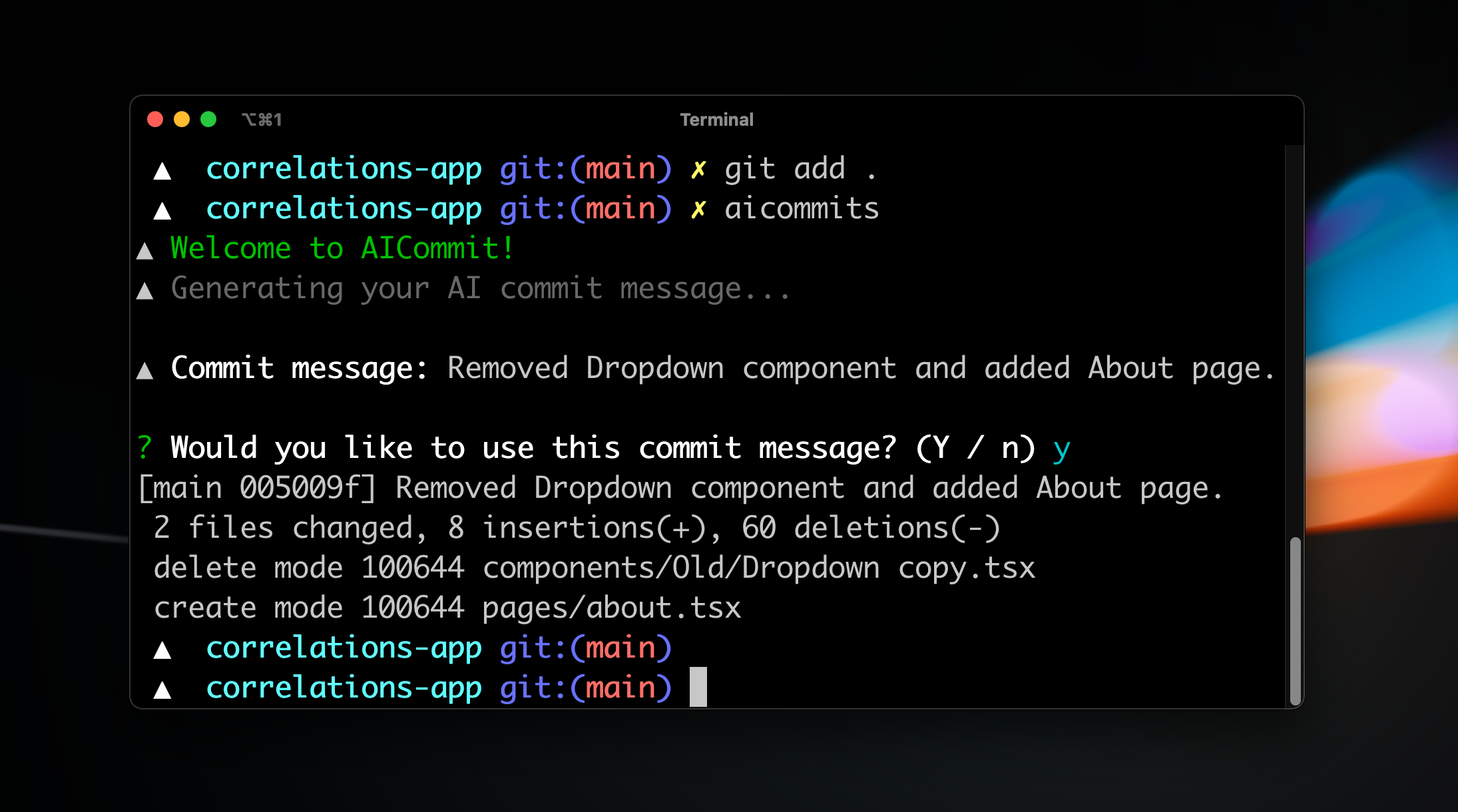 Source: aicommits (under MIT License)
If you have a hard time coming up with the right commit messages, you are not alone. There must be a better way to write meaningful commit messages than adding dates or simply including "minor changes", right?
Tweet not found
The embedded tweet could not be found…
AI Commits is a simple solution to this problem. It is easy to install and easy to use. Based on your git diff , aicommits returns an AI-generated commit message. It uses gpt-3.5, which is a great choice as it is cheap and the task is not heavyweight too.
At the end of the day, what matters is that you use tools that help you in productivity and achieving your goal. AI landscape is changing shapes fast, and the right tools change with it as well. If you want to get all the necessary updates on AI and its new technologies, I have written an article on how you could do this for only a few minutes a day.
We cannot get rid of AI hallucinations or its limitations. But we can take measures to mitigate it. Simple, manual interactions with AI, such as using ChatGPT for generating code or comments, can be frustrating and inefficient. By choosing the right tools, you can avoid the common pitfalls and be more confident in your practice.
Thank you for reading through the article! I have tried my best to provide an accurate article, however, please share your opinions and suggestions if you think any modifications are required.
Let's Connect!
Subscribe for FREE to be notified of new articles! You can also find me on LinkedIn and Twitter .
Further Reads
If you have reached so far, you might also find these articles interesting:
A Comprehensive Guide to Collaborative AI Agents in Practice
Learn Anything with AI and the Feynman Technique
Register Now to Continue Reading
Unlock Towards Data Science with a Free Account
All articles on Towards Data Science are available to registered users. Create a free account today to access this article and thousands more.
Register for freeSign in to your account
 Written By
See all from Hesam Sheikh
Artificial IntelligenceData ScienceLarge Language ModelsProgrammingTechnology
Share This Article
Towards Data Science is a community publication. Submit your insights to reach our global audience and earn through the TDS Author Payment Program.
Write for TDS
Related Articles
Artificial Intelligence
Coding the inner workings with just Python and NumPy
Marvin Lanhenke
December 22, 20215 min read
Machine Learning
A step-by-step tutorial of using genetic algorithms for optimization tasks.
Farzad Nobar
September 26, 202412 min read
Large Language Models
Learn how to greatly improve the performance of your LLM application
Eivind Kjosbakken
October 29, 20257 min read
Artificial Intelligence
A Python library for machine learning visualizations.
Soner Yıldırım
September 10, 20205 min read
Machine Learning
Find and predict who will donate to a charity with this classification model!
Victor Roman
February 20, 201918 min read
Artificial Intelligence
Alternative job possibilities for data scientists
Vicky Yu
February 13, 20214 min read
Machine Learning
Language knows no boundaries!
Vanessa Wong
August 3, 20216 min read
Artificial Intelligence
The best statistical thinking model.
Eleonora Laurenza
February 8, 202112 min read
Data Science
Fix inflated forecasts with Python. Learn the mathematical method that transforms projections into trustworthy estimates.
Sayali Rajeev Kulkarni
February 7, 20257 min read
Your home for data science and AI. The world's leading publication for data science, data analytics, data engineering, machine learning, and artificial intelligence professionals.
Subscribe to Our NewsletterWrite For TDS•About•Advertise•Privacy Policy•Terms of Use
© Insight Media Group, LLC 2026•The New Stack•roadmap.sh•Creator Network
Recommended Articles
Close