{
"source_file": "0930",
"source_platform": "Medium",
"author": "Alexander Davis",
"title_listed": "Are Your ML Experiments a Mess? Here's the Fix",
"keywords": "",
"domain": "机器学习",
"content_type": "深度技术解析",
"is_paid_flag": "否",
"url": "https://towardsdatascience.com/your-ml-experiments-are-a-mess-heres-the-fix/",
"publish_date": "2026-07-21",
"corpus_stage": "",
"notes": "",
"id": "630d1c3d535e",
"collected_at": "2026-10-02T01:54:58",
"title": "Are Your ML Experiments a Mess? Here’s the Fix | Towards Data Science",
"body_markdown": "\nWe value your privacy\nWe use cookies to enhance your browsing experience, serve personalised ads or content, and analyse our traffic. By clicking \"Accept All\", you consent to our use of cookies.\nCustomise Reject All Accept All\nCustomise Consent Preferences \nWe use cookies to help you navigate efficiently and perform certain functions. You will find detailed information about all cookies under each consent category below.\nThe cookies that are categorised as \"Necessary\" are stored on your browser as they are essential for enabling the basic functionalities of the site. ... Show more\nNecessaryAlways Active\nNecessary cookies are required to enable the basic features of this site, such as providing secure log-in or adjusting your consent preferences. These cookies do not store any personally identifiable data.\n * Cookie\nBCTempID\n * Duration\n10 minutes\n * Description\nNo description available.\n\n\n * Cookie\n__cf_bm\n * Duration\n1 hour\n * Description\nThis cookie, set by Cloudflare, is used to support Cloudflare Bot Management. \n\n\n * Cookie\nAWSALBCORS\n * Duration\n7 days\n * Description\nAmazon Web Services set this cookie for load balancing.\n\n\n * Cookie\n_cfuvid\n * Duration\nsession\n * Description\nCloudflare sets this cookie to track users across sessions to optimize user experience by maintaining session consistency and providing personalized services\n\n\n * Cookie\nli_gc\n * Duration\n6 months\n * Description\nLinkedin set this cookie for storing visitor's consent regarding using cookies for non-essential purposes.\n\n\n * Cookie\n__hssrc\n * Duration\nsession\n * Description\nThis cookie is set by Hubspot whenever it changes the session cookie. The __hssrc cookie set to 1 indicates that the user has restarted the browser, and if the cookie does not exist, it is assumed to be a new session.\n\n\n * Cookie\n__hssc\n * Duration\n1 hour\n * Description\nHubSpot sets this cookie to keep track of sessions and to determine if HubSpot should increment the session number and timestamps in the __hstc cookie.\n\n\n * Cookie\nwpEmojiSettingsSupports\n * Duration\nsession\n * Description\nWordPress sets this cookie when a user interacts with emojis on a WordPress site. It helps determine if the user's browser can display emojis properly.\n\n\n * Cookie\nBCSessionID\n * Duration\n1 year 1 month 4 days\n * Description\nBlueconic sets this cookie as a unique identifier for the BlueConic profile.\n\n\n * Cookie\n_octo\n * Duration\n1 year\n * Description\nNo description available.\n\n\n * Cookie\nlogged_in\n * Duration\n1 year\n * Description\nNo description available.\n\n\n * Cookie\n__Secure-YEC\n * Duration\npast\n * Description\nYouTube sets this cookie to stores the user's video player preferences using embedded YouTube video\n\n\n * Cookie\n__eoi\n * Duration\n6 months\n * Description\nDescription is currently not available.\n\n\n * Cookie\nAWSALBTGCORS\n * Duration\n7 days\n * Description\nNo description available.\n\n\n * Cookie\nlogin-status-p\n * Duration\npast\n * Description\nDescription is currently not available.\n\n\n * Cookie\nAWSALBTG\n * Duration\n7 days\n * Description\nNo description available.\n\n\n * Cookie\ncsrf_token\n * Duration\nsession\n * Description\nNo description available.\n\n\n * Cookie\ntoken_v2\n * Duration\n1 day\n * Description\nDescription is currently not available.\n\n\n * Cookie\nD\n * Duration\n1 year\n * Description\nDescription is currently not available.\n\n\n * Cookie\nPHPSESSID\n * Duration\nsession\n * Description\nThis cookie is native to PHP applications. The cookie stores and identifies a user's unique session ID to manage user sessions on the website. The cookie is a session cookie and will be deleted when all the browser windows are closed.\n\n\n * Cookie\nVISITOR_PRIVACY_METADATA\n * Duration\n6 months\n * Description\nYouTube sets this cookie to store the user's cookie consent state for the current domain. \n\n\n * Cookie\ncookietest\n * Duration\nsession\n * Description\nThe cookietest cookie is typically used to determine whether the user's browser accepts cookies, essential for website functionality and user experience.\n\n\n * Cookie\n__Host-airtable-session\n * Duration\n1 year\n * Description\nThis cookie is used to enable us to integrate the services of Airtable.\n\n\n * Cookie\n__Host-airtable-session.sig\n * Duration\n1 year\n * Description\nThis cookie is used to enable us to integrate the services of Airtable.\n\n\n * Cookie\nm\n * Duration\n1 year 1 month 4 days\n * Description\nStripe sets this cookie for fraud prevention purposes. It identifies the device used to access the website, allowing the website to be formatted accordingly.\n\n\n * Cookie\nBIGipServer*\n * Duration\nsession\n * Description\nMarketo sets this cookie to collect information about the user's online activity and build a profile about their interests to provide advertisements relevant to the user. \n\n\n * Cookie\n__cfruid\n * Duration\nsession\n * Description\nCloudflare sets this cookie to identify trusted web traffic.\n\n\n * Cookie\n_GRECAPTCHA\n * Duration\n6 months\n * Description\nGoogle Recaptcha service sets this cookie to identify bots to protect the website against malicious spam attacks.\n\n\n * Cookie\n__Secure-YNID\n * Duration\n6 months\n * Description\nGoogle cookie used to protect user security and prevent fraud, especially during the login process.\n\n\n * Cookie\ncookieyes-consent\n * Duration\n1 year\n * Description\nCookieYes sets this cookie to remember users' consent preferences so that their preferences are respected on subsequent visits to this site. It does not collect or store any personal information about the site visitors.\n\n\nFunctional\nFunctional cookies help perform certain functionalities like sharing the content of the website on social media platforms, collecting feedback, and other third-party features.\n * Cookie\nlidc\n * Duration\n1 day\n * Description\nLinkedIn sets the lidc cookie to facilitate data center selection.\n\n\n * Cookie\nbrw\n * Duration\n1 year\n * Description\nNo description available.\n\n\n * Cookie\nbrwConsent\n * Duration\n5 minutes\n * Description\nDescription is currently not available.\n\n\n * Cookie\nWMF-Uniq\n * Duration\n1 year\n * Description\nDescription is currently not available.\n\n\n * Cookie\nloom_anon_comment\n * Duration\n1 year\n * Description\nNo description available.\n\n\n * Cookie\nloom_referral_video\n * Duration\nsession\n * Description\nDescription is currently not available.\n\n\n * Cookie\nVISITOR_INFO1_LIVE\n * Duration\n6 months\n * Description\nA cookie set by YouTube to measure bandwidth that determines whether the user gets the new or old player interface.\n\n\n * Cookie\nyt-remote-connected-devices\n * Duration\nNever Expires\n * Description\nYouTube sets this cookie to store the user's video preferences using embedded YouTube videos.\n\n\n * Cookie\nytidb::LAST_RESULT_ENTRY_KEY\n * Duration\nNever Expires\n * Description\nThe cookie ytidb::LAST_RESULT_ENTRY_KEY is used by YouTube to store the last search result entry that was clicked by the user. This information is used to improve the user experience by providing more relevant search results in the future.\n\n\n * Cookie\nyt-remote-device-id\n * Duration\nNever Expires\n * Description\nYouTube sets this cookie to store the user's video preferences using embedded YouTube videos.\n\n\n * Cookie\nyt-remote-session-name\n * Duration\nsession\n * Description\nThe yt-remote-session-name cookie is used by YouTube to store the user's video player preferences using embedded YouTube video.\n\n\n * Cookie\nyt-remote-fast-check-period\n * Duration\nsession\n * Description\nThe yt-remote-fast-check-period cookie is used by YouTube to store the user's video player preferences for embedded YouTube videos.\n\n\n * Cookie\nyt-remote-session-app\n * Duration\nsession\n * Description\nThe yt-remote-session-app cookie is used by YouTube to store user preferences and information about the interface of the embedded YouTube video player.\n\n\n * Cookie\nyt-remote-cast-available\n * Duration\nsession\n * Description\nThe yt-remote-cast-available cookie is used to store the user's preferences regarding whether casting is available on their YouTube video player.\n\n\n * Cookie\nyt-remote-cast-installed\n * Duration\nsession\n * Description\nThe yt-remote-cast-installed cookie is used to store the user's video player preferences using embedded YouTube video.\n\n\n * Cookie\ncp_session\n * Duration\n3 months\n * Description\nCodepen sets this cookie for Help systems found in the website.\n\n\n * Cookie\nloid\n * Duration\n1 year 1 month 4 days\n * Description\nThis cookie is set by the Reddit. The cookie enables the sharing of content from the website onto the social media platform.\n\n\nAnalytics\nAnalytical cookies are used to understand how visitors interact with the website. These cookies help provide information on metrics such as the number of visitors, bounce rate, traffic source, etc.\n * Cookie\n__hstc\n * Duration\n6 months\n * Description\nHubspot set this main cookie for tracking visitors. It contains the domain, initial timestamp (first visit), last timestamp (last visit), current timestamp (this visit), and session number (increments for each subsequent session).\n\n\n * Cookie\nhubspotutk\n * Duration\n6 months\n * Description\nHubSpot sets this cookie to keep track of the visitors to the website. This cookie is passed to HubSpot on form submission and used when deduplicating contacts.\n\n\n * Cookie\n_ga\n * Duration\n1 year 1 month 4 days\n * Description\nGoogle Analytics sets this cookie to calculate visitor, session and campaign data and track site usage for the site's analytics report. The cookie stores information anonymously and assigns a randomly generated number to recognise unique visitors.\n\n\n * Cookie\n_ga_*\n * Duration\n1 year 1 month 4 days\n * Description\nGoogle Analytics sets this cookie to store and count page views.\n\n\n * Cookie\n__Host-psifi.analyticsTrace\n * Duration\n6 hours\n * Description\nDescription is currently not available.\n\n\n * Cookie\n__Host-psifi.analyticsTraceV2\n * Duration\n6 hours\n * Description\nDescription is currently not available.\n\n\n * Cookie\n_gh_sess\n * Duration\nsession\n * Description\nGitHub sets this cookie for temporary application and framework state between pages like what step the user is on in a multiple step form.\n\n\n * Cookie\nYSC\n * Duration\nsession\n * Description\nYSC cookie is set by Youtube and is used to track the views of embedded videos on Youtube pages.\n\n\n * Cookie\najs_anonymous_id\n * Duration\n1 year\n * Description\nThis cookie is set by Segment to count the number of people who visit a certain site by tracking if they have visited before.\n\n\n * Cookie\nvuid\n * Duration\n1 year 1 month 4 days\n * Description\nVimeo installs this cookie to collect tracking information by setting a unique ID to embed videos on the website. \n\n\nPerformance\nPerformance cookies are used to understand and analyse the key performance indexes of the website which helps in delivering a better user experience for the visitors.\n * Cookie\nAWSALB\n * Duration\n7 days\n * Description\nAWSALB is an application load balancer cookie set by Amazon Web Services to map the session to the target.\n\n\n * Cookie\nacq\n * Duration\npast\n * Description\nDescription is currently not available.\n\n\n * Cookie\nacq.sig\n * Duration\npast\n * Description\nDescription is currently not available.\n\n\n * Cookie\nptc\n * Duration\n2 years\n * Description\nNo description available.\n\n\nAdvertisement\nAdvertisement cookies are used to provide visitors with customised advertisements based on the pages you visited previously and to analyse the effectiveness of the ad campaigns.\n * Cookie\nmuc_ads\n * Duration\n1 year 1 month 4 days\n * Description\nTwitter sets this cookie to collect user behaviour and interaction data to optimize the website.\n\n\n * Cookie\nguest_id_marketing\n * Duration\n1 year 1 month 4 days\n * Description\nTwitter sets this cookie to identify and track the website visitor.\n\n\n * Cookie\nguest_id_ads\n * Duration\n1 year 1 month 4 days\n * Description\nTwitter sets this cookie to identify and track the website visitor.\n\n\n * Cookie\npersonalization_id\n * Duration\n1 year 1 month 4 days\n * Description\nTwitter sets this cookie to integrate and share features for social media and also store information about how the user uses the website, for tracking and targeting.\n\n\n * Cookie\nguest_id\n * Duration\n1 year 1 month 4 days\n * Description\nTwitter sets this cookie to identify and track the website visitor. It registers if a user is signed in to the Twitter platform and collects information about ad preferences.\n\n\n * Cookie\nbcookie\n * Duration\n1 year\n * Description\nLinkedIn sets this cookie from LinkedIn share buttons and ad tags to recognize browser IDs.\n\n\n * Cookie\n__Secure-ROLLOUT_TOKEN\n * Duration\n6 months\n * Description\nYouTube sets this cookie to manage feature rollout and experimentation. It helps Google control which new features or interface changes are shown to users as part of testing and staged rollouts, ensuring consistent experience for a given user during an experiment.\n\n\n * Cookie\nyt.innertube::nextId\n * Duration\nNever Expires\n * Description\nYouTube sets this cookie to register a unique ID to store data on what videos from YouTube the user has seen.\n\n\n * Cookie\nyt.innertube::requests\n * Duration\nNever Expires\n * Description\nYouTube sets this cookie to register a unique ID to store data on what videos from YouTube the user has seen.\n\n\n * Cookie\nsession_tracker\n * Duration\nsession\n * Description\nThis cookie is set by the Reddit. This cookie is used to identify trusted web traffic. It also helps in adverstising on the website.\n\n\n * Cookie\nedgebucket\n * Duration\nsession\n * Description\nReddit sets this cookie to save the information about a log-on Reddit user, for the purpose of advertisement recommendations and updating the content.\n\n\n * Cookie\ndid\n * Duration\n1 year\n * Description\nArbor sets this cookie to show targeted ads to site visitors.This cookie expires after 2 months or 1 year.\n\n\nUncategorised\nOther uncategorised cookies are those that are being analysed and have not been classified into a category as yet.\nNo cookies to display.\nReject All Save My Preferences Accept All\nToggle Search[](https://towardsdatascience.com/)Toggle Mobile Navigation\n[](https://towardsdatascience.com/)\nPublish AI, ML & data-science insights to a global community of data professionals.\nSign in[Submit an Article](https://write.insightmediagroup.io)\n[Latest](https://towardsdatascience.com/latest/)[Editor's Picks](https://towardsdatascience.com/tag/editors-pick/)[Newsletter](https://towardsdatascience.com/tag/the-variable/)[ShipAI](https://towardsdatascience.com/shipai/)\n* * *\n[Write For TDS](https://towardsdatascience.com/submissions/)\n[LinkedIn](https://www.linkedin.com/company/towards-data-science/)[X](https://x.com/TDataScience)Toggle Search\n[Machine Learning](https://towardsdatascience.com/category/artificial-intelligence/machine-learning/)\n# Are Your ML Experiments a Mess? Here’s the Fix\nA hands-on guide to tracking experiments, logging models, and reproducing results with ML Flow.\n[Alex Davis](https://towardsdatascience.com/author/adavis08/)\nJuly 21, 20267 min read\n\n[Photo](https://unsplash.com/photos/turned-on-monitoring-screen-qwtCeJ5cLYs) by Stephen Dawson via Unsplash\nImagine you are building a new model. You get decent baseline results with a simple model, but try to improve performance with more advanced models. During development, your PM acquires some additional data that could prove useful, and can now revert to a simpler model. After extensive hyperparameter tuning, you consult your team and they advise you to optimize for a different performance metric. After you finally deliver a model, your stakeholder changes the direction of the project, requiring a complete overhaul.\nThis is a common situation for data scientists, especially those with cross-collaborative teams, stakeholders, and changing priorities. Model development can quickly become a wild goose chase of figuring out requirements, data sources, performance metrics, etc. Through all of this chaos, it is critical that teams are able to not only keep track of all phases of model development, but are also able to reproduce results quickly. **You need to model governance.**\n## Model Governance\nModel governance refers to the framework by which a team maintains controls around its use of models, including experiment tracking, version control, reproducibility, etc. It is a critical capability that many teams do not consider until their models are already in production. It is important to have a process to effectively track development efforts, models in production, and data leveraged so that organizations can ensure quality, compliance, and monitor machine learning integration.\nLearn this step by step with the interactive [Machine Learning](https://roadmap.sh/machine-learning) roadmap.\n\nImage by Author\nTo ensure that the right models are in production, we need a way to manage various models and versions, track performance metrics, and reproduce results. This is where ML Flow comes in. **ML Flow is an open-source ML Ops platform that allows flexible model development, deployment, and management by streamlining logging and tracking of models, metrics, and more.**\nThis article will give an introduction into how to install ML Flow, create experiments, log models and more.\n···\n## ML Flow Tutorial\n### Model Development\nFor our model, we will construct a basic linear regression model. This is a model to predict the annual salary of data professionals using inputs that include job title, company size, etc.\n_See data here:_[_https://www.kaggle.com/datasets/ruchi798/data-science-job-salaries_](https://www.kaggle.com/datasets/ruchi798/data-science-job-salaries) _(CC0: Public Domain). I slightly modified the data to reduce the number of options for certain features. Please note that this is a very poor model. We are using it only to demonstrate ML Flow._\npython\n\n```\n#define independent and dependent features\nX = salary_data.drop(columns = 'salary_in_usd')\ny = salary_data['salary_in_usd']\n\n#split between training and testing sets\nX_train, X_test, y_train, y_test = train_test_split(\n X, y, random_state = 104, test_size = 0.2, shuffle = True)\n\n#define parameters separately to log\nparams = {\"fit_intercept\": True,\n \"positive\": False}\n\n#fit linear regression model\nregr = linear_model.LinearRegression(**params)\nregr.fit(X_train, y_train)\n\n#make predictions\ny_pred = regr.predict(X_test)\n```\n\nNote that we define the model parameters separately. This will be important when we incorporate ML Flow.\n### Logging Model with ML Flow\nTo start using ML Flow, you can navigate to the terminal and pip install it as a module. Next, run the server command to host a local server on your machine and leverage the ML Flow user interface.\npowershell\n\n```\npip install mlflow\n```\n\npowershell\n\n```\nmlflow server --host 127.0.0.1 --port 8080\n```\n\nNow that we have ML Flow installed and our local server running, we can log our model. **Before logging a model, we need to start a new ‘experiment’.** Think of this as a project, a bin where we will log and store all related models, metrics, data. etc. In the code below, we start a new experiment titled “Logging Example”.\n**An experiment consists of runs, which contain the model used, its parameters, metrics, artifacts, and anything else that you choose to log.** As you log more runs, we can track our progress and compare the performance of the various models developed.\nUsing the code below, we:\n 1. Start the experiment\n 2. Start a run titled “salary_baseline_regression”\n 3. Log the adjusted R2 as a metric\n 4. Log the model’s parameters\n 5. Set a tag for the model\n 6. Log the actual model\n\n\npython\n\n```\nimport mlflow\nfrom mlflow.models import infer_signature\n\n#set tracking uri\nmlflow.set_tracking_uri(uri = \"http://127.0.0.1:8080\")\n\n#create a new MLflow Experiment\nmlflow.set_experiment(\"Logging Example\")\n\n#start an MLflow run\nwith mlflow.start_run(run_name = \"salary_baseline_regression\") as run:\n\n # Log the loss metric\n mlflow.log_metric(\"Adjusted R2\", r2_score(y_test, y_pred))\n \n #log the hyperparameters\n mlflow.log_params(params)\n\n #set a tag that we can use to remind ourselves what this run was for\n mlflow.set_tag(\"Model Type\", \"Baseline\")\n\n #log the model\n model_info = mlflow.sklearn.log_model(\n sk_model = regr,\n artifact_path = 'model',\n signature = infer_signature(X_train, regr.predict(X_train)),\n input_example = X_train,\n registered_model_name = \"salary_baseline_regression\")\n```\n\n**After running, you can navigate to the ML Flow UI using the following link:**[**http://localhost:8080/**](http://localhost:8080/)\n### Navigating ML Flow UI\nThe ML Flow UI will open on the ‘Experiments’ tab. Here, we can see the experiment we created, the run for our baseline model, the model used, as well as metrics and parameters we logged.\n_Note that the metrics and parameters may not be displayed at first. You can add them to the table using the ‘Columns’ drop down._\n\nImage by Author\nNext, click on the run name to navigate to the run view. This brings us to the overview tab where we can clearly see everything we have logged (model, R2 metric, model parameters).\n\nImage by Author\nNext, click on the model name or navigate to the model view. Here we can view our model, add descriptions and/or tags, and keep track of it’s versions. The version number will increase every time we create a run using this model.\nThe tags and descriptions are helpful for overall documentation and to tag models in development vs. under review vs. in production.\n\nImage by Author\nSo far, we’ve seen how to create experiments and runs, as well as log models, metrics, parameters, etc. These are the very basics of ML Flow. Now let’s explore more options to automate some of the process and make best use out of ML Flow.\n### Advanced Logging Options\nThere are likely many metrics we would like to track, which will vary depending on the model and approach. Adding and removing metrics every time we change our approach can be laborious. However, **we can feed ML Flow our test data and results to automate the logging of metrics and streamline our process.**\nFirst, let’s save a copy of our test data and the results of our model.\npython\n\n```\n#merge salaries and predictions for mlfow\neval_data = X_test.copy()\neval_data[\"salary\"] = y_test\n```\n\nNext, we give ML Flow our data and tell it what our target variable is (salary). Now we can add a few things to our ML Flow process:\n 1. Log our data to keep track of model inputs\n 2. Use mlflow.evaluate() to automate logging the model metrics\n\n\nWe can also log ‘artifacts’, which can be many things. During development and evaluation, it may be helpful to develop visualizations that reflect model performance. We can log those as well using mlflow.log_artifact().\npython\n\n```\n#set tracking uri\nmlflow.set_tracking_uri(uri = \"http://127.0.0.1:8080\")\n\n#create an instance of a PandasDataset\ndataset = mlflow.data.from_pandas(\n eval_data, source = 'kaggle', name = \"ds_salaries\", targets = \"salary\")\n\n#create a new MLflow Experiment\nmlflow.set_experiment(\"Salary Prediction\")\n\n#start an MLflow run\nwith mlflow.start_run(run_name = \"salary_baseline_regression\") as run:\n\n #log the dataset\n mlflow.log_input(dataset, context = \"training\")\n \n #log the hyperparameters\n mlflow.log_params(params)\n\n #log pngs\n mlflow.log_artifact('Result.png')\n\n #set a tag that we can use to remind ourselves what this run was for\n mlflow.set_tag(\"Model Type\", \"Baseline\")\n\n #log the model\n model_info = mlflow.sklearn.log_model(\n sk_model = regr,\n artifact_path = 'model',\n signature = infer_signature(X_train, regr.predict(X_train)),\n input_example = X_train,\n registered_model_name = \"salary_baseline_regression\")\n model_uri = mlflow.get_artifact_uri(\"model\")\n\n #create the model uri and evalute the model\n result = mlflow.evaluate(model = model_uri, data = dataset, model_type = \"regressor\", evaluators=[\"default\"])\n```\n\nNow, if we navigate back to the ML Flow UI and click on the run, we can see that there are several metrics we are tracking. \n\nImage by Author\nAnd if we want to evaluate multiple models in a run, we can compare their performance side-by-side using the automated visualizations below.\n\nImage by Author\nTo view the visualizations you logged, navigate to the artifacts view.\n\nImage by Author\nLastly, we can now view our our data inputs and their types. It is best to log datasets as we drop or add new features, sources, etc.\n\nImage by Author\n### Recalling ML Flow Models\n**To reproduce a model that we have logged, we can easily recall models from ML Flow using the model name and version.** This can also be used to retrain models that are currently in production.\npython\n\n```\nmodel_name = \"salary_baseline_regression\"\nmodel_version = \"latest\"\n\n# Load the model from the Model Registry\nmodel_uri = f\"models:/{model_name}/{model_version}\"\nmodel = mlflow.sklearn.load_model(model_uri)\n```\n\n### Databricks Integration\nIf you are (like me) a fan of Databricks, ML Flow is fully integrated within the platform. No need to run ML Flow locally, as Databricks integrates the ML Flow UI within their 'Experiments' view. It also includes additional features like tracking for generative AI applications, agents, and integrates AutoML for model optimization. See full documentation here: \n···\n## Conclusion\nIn conclusion, model governance is a must-have capability for any organization to ensure quality and compliance. Tracking and monitoring tools like ML Flow offer solutions to streamline model governance processes and fully manage model development and deployment.\n···\n_I hope you have enjoyed my article! Please feel free to comment, ask questions, or request other topics._\n_Connect with me on LinkedIn:_[_https://www.linkedin.com/in/alexdavis2020/_](https://www.linkedin.com/in/alexdavis2020/)\n## Register Now to Continue Reading\n### Unlock Towards Data Science with a Free Account\nAll articles on Towards Data Science are available to registered users. Create a free account today to access this article and thousands more.\nRegister for freeSign in to your account\n* * *\n\nWritten By\n## [Alex Davis](https://towardsdatascience.com/author/adavis08/)\n[See all from Alex Davis](https://towardsdatascience.com/author/adavis08/)\n[Data Science](https://towardsdatascience.com/tag/data-science/)[ML Flow](https://towardsdatascience.com/tag/ml-flow/)[Mlops](https://towardsdatascience.com/tag/mlops/)[Model Development](https://towardsdatascience.com/tag/model-development/)[Model Governance](https://towardsdatascience.com/tag/model-governance/)\nShare This Article\n * [](https://www.facebook.com/sharer/sharer.php?u=https%3A%2F%2Ftowardsdatascience.com%2Fyour-ml-experiments-are-a-mess-heres-the-fix%2F&title=Are%20Your%20ML%20Experiments%20a%20Mess%3F%20Here%E2%80%99s%20the%20Fix)\n * [](https://www.linkedin.com/shareArticle?mini=true&url=https%3A%2F%2Ftowardsdatascience.com%2Fyour-ml-experiments-are-a-mess-heres-the-fix%2F&title=Are%20Your%20ML%20Experiments%20a%20Mess%3F%20Here%E2%80%99s%20the%20Fix)\n * [](https://x.com/share?url=https%3A%2F%2Ftowardsdatascience.com%2Fyour-ml-experiments-are-a-mess-heres-the-fix%2F&text=Are%20Your%20ML%20Experiments%20a%20Mess%3F%20Here%E2%80%99s%20the%20Fix)\n\n\nTowards Data Science is a community publication. Submit your insights to reach our global audience and earn through the TDS Author Payment Program.\n[Write for TDS](https://towardsdatascience.com/submissions/)\n## Related Articles\n * [](https://towardsdatascience.com/3-bitter-lessons-i-wish-i-knew-earlier-as-a-big-data-engineer-e2956bcc7b29/)\n## [3 Bitter Lessons I Wish I Knew Earlier As a Big Data Engineer](https://towardsdatascience.com/3-bitter-lessons-i-wish-i-knew-earlier-as-a-big-data-engineer-e2956bcc7b29/)\n[Data Science](https://towardsdatascience.com/category/data-science/)\nThe Dos and Don'ts of data engineering\n[Nam Nguyen](https://towardsdatascience.com/author/namnguyenwrite/)\nAugust 6, 20216 min read\n * [](https://towardsdatascience.com/multithreading-multiprocessing-python-180d0975ab29/)\n## [Multi-threading and Multi-processing in Python](https://towardsdatascience.com/multithreading-multiprocessing-python-180d0975ab29/)\n[Machine Learning](https://towardsdatascience.com/category/artificial-intelligence/machine-learning/)\nA deep dive into multi-threading and multi-processing with Python and how they are related to concurrency and parallelism\n[Giorgos Myrianthous](https://towardsdatascience.com/author/gmyrianthous/)\nJanuary 21, 202210 min read\n * [](https://towardsdatascience.com/why-hire-an-ai-consultant-50e155e17b39/)\n## [How to Hire an AI Consultant](https://towardsdatascience.com/why-hire-an-ai-consultant-50e155e17b39/)\n[Artificial Intelligence](https://towardsdatascience.com/category/artificial-intelligence/)\nSo, you know you need some machine learning/AI development. Why not just do it yourself? Well, the short answer is that specialists have...\n[Daniel Shapiro, PhD](https://towardsdatascience.com/author/lemaysolutions/)\nJune 27, 201711 min read\n * [](https://towardsdatascience.com/predicting-apple-stock-prices-with-neural-networks-4aefdf10afd0/)\n## [Predicting Apple Stock Prices with Neural Networks](https://towardsdatascience.com/predicting-apple-stock-prices-with-neural-networks-4aefdf10afd0/)\n[Artificial Intelligence](https://towardsdatascience.com/category/artificial-intelligence/)\nHow to use recurrent neural networks to predict stock prices.\n[Soner Yıldırım](https://towardsdatascience.com/author/sonery/)\nJuly 9, 20207 min read\n * [](https://towardsdatascience.com/dimensionality-reduction-for-linearly-inseparable-data-5030f0dc0f5e/)\n## [Dimensionality Reduction for Linearly Inseparable Data](https://towardsdatascience.com/dimensionality-reduction-for-linearly-inseparable-data-5030f0dc0f5e/)\n[Data Science](https://towardsdatascience.com/category/data-science/)\nNon-linear dimensionality reduction using kernel PCA\n[Rukshan Pramoditha](https://towardsdatascience.com/author/rukshanpramoditha/)\nDecember 20, 20226 min read\n * [](https://towardsdatascience.com/an-attempt-to-fine-tune-facial-recognition-eigenfaces-a6baa8fc0e62/)\n## [An attempt to fine-tune facial recognition - Eigenfaces](https://towardsdatascience.com/an-attempt-to-fine-tune-facial-recognition-eigenfaces-a6baa8fc0e62/)\n[Deep Learning](https://towardsdatascience.com/category/artificial-intelligence/deep-learning/)\nI translated a scientific paper into python to check whether it can help in reducing space and time consumption\n[Prashant Mudgal](https://towardsdatascience.com/author/prashantmdgl9/)\nDecember 29, 202010 min read\n * [](https://towardsdatascience.com/recreating-an-ml-masters-degree-with-online-courses-8f90a7088cf8/)\n## [Recreating an ML Master's degree with Online Courses](https://towardsdatascience.com/recreating-an-ml-masters-degree-with-online-courses-8f90a7088cf8/)\n[Deep Learning](https://towardsdatascience.com/category/artificial-intelligence/deep-learning/)\nUse online courses to create your curriculum\n[Pascal Janetzky](https://towardsdatascience.com/author/pascaljanetzky/)\nJune 14, 20217 min read\n * [](https://towardsdatascience.com/reinforcement-learning-part-3-monte-carlo-methods-7ce2828a1fdb/)\n## [Reinforcement Learning, Part 3: Monte Carlo Methods](https://towardsdatascience.com/reinforcement-learning-part-3-monte-carlo-methods-7ce2828a1fdb/)\n[Machine Learning](https://towardsdatascience.com/category/artificial-intelligence/machine-learning/)\nFrom casinos to AI: unveiling the power of Monte Carlo methods in complex environments\n[Slava Efimov](https://towardsdatascience.com/author/slavahead/)\nMay 23, 202413 min read\n * [](https://towardsdatascience.com/7-must-know-data-wrangling-operations-with-python-pandas-849438a90d15/)\n## [7 Must-Know Data Wrangling Operations with Python Pandas](https://towardsdatascience.com/7-must-know-data-wrangling-operations-with-python-pandas-849438a90d15/)\n[Artificial Intelligence](https://towardsdatascience.com/category/artificial-intelligence/)\nA comprehensive practical guide\n[Soner Yıldırım](https://towardsdatascience.com/author/sonery/)\nMarch 9, 20215 min read\n\n\n * [YouTube](https://www.youtube.com/c/TowardsDataScience)\n * [X](https://x.com/TDataScience)\n * [LinkedIn](https://www.linkedin.com/company/towards-data-science/)\n * [Threads](https://www.threads.net/@towardsdatascience)\n * [Bluesky](https://bsky.app/profile/towardsdatascience.com)\n\n\n[](https://towardsdatascience.com/)\nYour home for data science and AI. The world's leading publication for data science, data analytics, data engineering, machine learning, and artificial intelligence professionals.\nSubscribe to Our Newsletter[Write For TDS](https://towardsdatascience.com/submissions/)•[About](https://towardsdatascience.com/about-towards-data-science-d691af11cc2f/)•[Advertise](https://contact.towardsdatascience.com/advertise-with-towards-data-science)•[Privacy Policy](https://towardsdatascience.com/privacy-policy/)•[Terms of Use](https://towardsdatascience.com/website-terms-of-use/)\n© Insight Media Group, LLC 2026•[The New Stack](https://thenewstack.io)•[roadmap.sh](https://roadmap.sh)•[Creator Network](https://insightmediagroup.io/creator-network)\n#### Recommended Articles \nClose\n * [  How Relevance Models Foreshadowed Transformers for NLP ](https://towardsdatascience.com/how-relevance-models-foreshadowed-transformers-for-nlp/ \"How Relevance Models Foreshadowed Transformers for NLP\")\n * [  Javascript Fatigue: HTMX Is All You Need to Build ChatGPT — Part 1 ](https://towardsdatascience.com/javascript-fatigue-you-dont-need-js-to-build-chatgpt/ \"Javascript Fatigue: HTMX Is All You Need to Build ChatGPT — Part 1\")\n * [  The Subset Sum Problem Solved in Linear Time for Dense Enough Inputs ](https://towardsdatascience.com/subset-sum-problem-solved-in-linear-time-for-dense-enough-inputs/ \"The Subset Sum Problem Solved in Linear Time for Dense Enough Inputs\")\n * [  Does Your Company Have a Data Strategy? ](https://towardsdatascience.com/does-your-company-have-a-data-strategy-e8944dbec4ae/ \"Does Your Company Have a Data Strategy?\")\n\n\n",
"metadata": {
"title": "Are Your ML Experiments a Mess? Here’s the Fix | Towards Data Science",
"description": "A hands-on guide to tracking experiments, logging models, and reproducing results with ML Flow.",
"keywords": null,
"author": "Alex Davis",
"og:locale": "en_US",
"og:type": "article",
"og:title": "Are Your ML Experiments a Mess? Here’s the Fix",
"og:description": "A hands-on guide to tracking experiments, logging models, and reproducing results with ML Flow.",
"og:url": "https://towardsdatascience.com/your-ml-experiments-are-a-mess-heres-the-fix/",
"og:site_name": "Towards Data Science",
"og:image": "https://assets.insightmediagroup.io/media/wp-content/uploads/2026/07/photo-1526628953301-3e589a6a8b74.jpg",
"og:image:width": "1612",
"og:image:height": "1160",
"og:image:type": "image/jpeg",
"twitter:card": "summary_large_image",
"twitter:site": "@TDataScience",
"twitter:creator": "@TDataScience",
"twitter:label1": "Written by",
"twitter:data1": "Alex Davis",
"twitter:label2": "Est. reading time",
"twitter:data2": "7 min read",
"article:published_time": "2026-07-21T06:00:06.000Z",
"article:modified_time": "2026-07-21T06:00:06.000Z",
"article:author": "https://towardsdatascience.com/author/adavis08/"
},
"paywall": {
"listed_paid": false,
"detected": false,
"marker": "",
"public_only": false,
"policy": "付费/会员内容只保留页面公开可见部分,不绕过付费墙"
},
"crawl": {
"success": true,
"status_code": 202,
"error": ""
},
"code_blocks": [
{
"language": "txt",
"file": "attachments/630d1c3d535e/code/block_000.txt",
"chars": 532
},
{
"language": "txt",
"file": "attachments/630d1c3d535e/code/block_001.txt",
"chars": 19
},
{
"language": "txt",
"file": "attachments/630d1c3d535e/code/block_002.txt",
"chars": 43
},
{
"language": "txt",
"file": "attachments/630d1c3d535e/code/block_003.txt",
"chars": 855
},
{
"language": "txt",
"file": "attachments/630d1c3d535e/code/block_004.txt",
"chars": 97
},
{
"language": "txt",
"file": "attachments/630d1c3d535e/code/block_005.txt",
"chars": 1200
},
{
"language": "txt",
"file": "attachments/630d1c3d535e/code/block_006.txt",
"chars": 206
}
],
"images": [
{
"status": "http_404",
"url": "https://h030.towardsdatascience.com/rest/v2/contentStores/d7d3a4ab-7caf-4383-bbd2-fbf7fb4f1787/items/607686/image?etag=1782161464448&width=500&height=500",
"src": "https://h030.towardsdatascience.com/rest/v2/contentStores/d7d3a4ab-7caf-4383-bbd2-fbf7fb4f1787/items/607686/image?etag=1782161464448&width=500&height=500",
"alt": "",
"downloaded": false,
"discovery": "saved_markdown",
"retried_at": "2026-10-20T17:42:57Z"
},
{
"status": "http_404",
"url": "https://h030.towardsdatascience.com/rest/v2/contentStores/d7d3a4ab-7caf-4383-bbd2-fbf7fb4f1787/items/607639/image?etag=1781250125848&width=500&height=500",
"src": "https://h030.towardsdatascience.com/rest/v2/contentStores/d7d3a4ab-7caf-4383-bbd2-fbf7fb4f1787/items/607639/image?etag=1781250125848&width=500&height=500",
"alt": "",
"downloaded": false,
"discovery": "saved_markdown",
"retried_at": "2026-10-20T17:42:57Z"
},
{
"status": "http_404",
"url": "https://h030.towardsdatascience.com/rest/v2/contentStores/d7d3a4ab-7caf-4383-bbd2-fbf7fb4f1787/items/607930/image?etag=1782124566054&width=500&height=500",
"src": "https://h030.towardsdatascience.com/rest/v2/contentStores/d7d3a4ab-7caf-4383-bbd2-fbf7fb4f1787/items/607930/image?etag=1782124566054&width=500&height=500",
"alt": "",
"downloaded": false,
"discovery": "saved_markdown",
"retried_at": "2026-10-20T17:42:57Z"
},
{
"status": "http_404",
"url": "https://h030.towardsdatascience.com/rest/v2/contentStores/d7d3a4ab-7caf-4383-bbd2-fbf7fb4f1787/items/3660/image?etag=1780176246070&width=500&height=500",
"src": "https://h030.towardsdatascience.com/rest/v2/contentStores/d7d3a4ab-7caf-4383-bbd2-fbf7fb4f1787/items/3660/image?etag=1780176246070&width=500&height=500",
"alt": "",
"downloaded": false,
"discovery": "saved_markdown",
"retried_at": "2026-10-20T17:42:57Z"
}
],
"audio": [],
"videos": [
{
"url": "https://www.youtube.com/c/TowardsDataScience",
"kind": "channel_reference",
"status": "reference_only"
}
],
"links": [
{
"type": "internal",
"href": "https://towardsdatascience.com/"
},
{
"type": "internal",
"href": "https://towardsdatascience.com/latest/"
},
{
"type": "internal",
"href": "https://towardsdatascience.com/tag/editors-pick/"
},
{
"type": "internal",
"href": "https://towardsdatascience.com/tag/the-variable/"
},
{
"type": "internal",
"href": "https://towardsdatascience.com/shipai/"
},
{
"type": "internal",
"href": "https://towardsdatascience.com/submissions/"
},
{
"type": "internal",
"href": "https://towardsdatascience.com/category/artificial-intelligence/machine-learning/"
},
{
"type": "internal",
"href": "https://towardsdatascience.com/author/adavis08/"
},
{
"type": "internal",
"href": "https://towardsdatascience.com/tag/data-science/"
},
{
"type": "internal",
"href": "https://towardsdatascience.com/tag/ml-flow/"
},
{
"type": "internal",
"href": "https://towardsdatascience.com/tag/mlops/"
},
{
"type": "internal",
"href": "https://towardsdatascience.com/tag/model-development/"
},
{
"type": "internal",
"href": "https://towardsdatascience.com/tag/model-governance/"
},
{
"type": "internal",
"href": "https://towardsdatascience.com/3-bitter-lessons-i-wish-i-knew-earlier-as-a-big-data-engineer-e2956bcc7b29/"
},
{
"type": "internal",
"href": "https://towardsdatascience.com/category/data-science/"
},
{
"type": "internal",
"href": "https://towardsdatascience.com/author/namnguyenwrite/"
},
{
"type": "internal",
"href": "https://towardsdatascience.com/multithreading-multiprocessing-python-180d0975ab29/"
},
{
"type": "internal",
"href": "https://towardsdatascience.com/author/gmyrianthous/"
},
{
"type": "internal",
"href": "https://towardsdatascience.com/why-hire-an-ai-consultant-50e155e17b39/"
},
{
"type": "internal",
"href": "https://towardsdatascience.com/category/artificial-intelligence/"
},
{
"type": "external",
"href": "https://write.insightmediagroup.io"
},
{
"type": "external",
"href": "https://www.linkedin.com/company/towards-data-science/"
},
{
"type": "external",
"href": "https://x.com/TDataScience"
},
{
"type": "external",
"href": "https://unsplash.com/photos/turned-on-monitoring-screen-qwtCeJ5cLYs"
},
{
"type": "external",
"href": "https://roadmap.sh/machine-learning"
},
{
"type": "external",
"href": "https://www.kaggle.com/datasets/ruchi798/data-science-job-salaries"
},
{
"type": "external",
"href": "http://localhost:8080/"
},
{
"type": "external",
"href": "https://docs.databricks.com/aws/en/mlflow/"
},
{
"type": "external",
"href": "https://www.linkedin.com/in/alexdavis2020/"
},
{
"type": "external",
"href": "https://www.facebook.com/sharer/sharer.php?title=Are+Your+ML+Experiments+a+Mess%3F+Here%E2%80%99s+the+Fix&u=https%3A%2F%2Ftowardsdatascience.com%2Fyour-ml-experiments-are-a-mess-heres-the-fix%2F"
},
{
"type": "external",
"href": "https://www.linkedin.com/shareArticle?mini=true&title=Are+Your+ML+Experiments+a+Mess%3F+Here%E2%80%99s+the+Fix&url=https%3A%2F%2Ftowardsdatascience.com%2Fyour-ml-experiments-are-a-mess-heres-the-fix%2F"
},
{
"type": "external",
"href": "https://x.com/share?text=Are+Your+ML+Experiments+a+Mess%3F+Here%E2%80%99s+the+Fix&url=https%3A%2F%2Ftowardsdatascience.com%2Fyour-ml-experiments-are-a-mess-heres-the-fix%2F"
},
{
"type": "external",
"href": "https://www.youtube.com/c/TowardsDataScience"
},
{
"type": "external",
"href": "https://www.threads.net/@towardsdatascience"
},
{
"type": "external",
"href": "https://bsky.app/profile/towardsdatascience.com"
},
{
"type": "external",
"href": "https://thenewstack.io"
},
{
"type": "external",
"href": "https://roadmap.sh"
},
{
"type": "external",
"href": "https://insightmediagroup.io/creator-network"
}
],
"repair_version": 2,
"repaired_at": "2026-10-20T17:25:31Z",
"source_url": "https://towardsdatascience.com/your-ml-experiments-are-a-mess-heres-the-fix/",
"delivery_status": "unverified",
"discovery_status": "http_403",
"missing_reason": "源页面未重新核验:http_403;已按保留正文补采图片",
"repair_error": "",
"actual_video_files": [],
"expected_saved_body_images": 4,
"image_discovery": "saved_markdown",
"source_body_markdown": "\nWe value your privacy\nWe use cookies to enhance your browsing experience, serve personalised ads or content, and analyse our traffic. By clicking \"Accept All\", you consent to our use of cookies.\nCustomise Reject All Accept All\nCustomise Consent Preferences \nWe use cookies to help you navigate efficiently and perform certain functions. You will find detailed information about all cookies under each consent category below.\nThe cookies that are categorised as \"Necessary\" are stored on your browser as they are essential for enabling the basic functionalities of the site. ... Show more\nNecessaryAlways Active\nNecessary cookies are required to enable the basic features of this site, such as providing secure log-in or adjusting your consent preferences. These cookies do not store any personally identifiable data.\n * Cookie\nBCTempID\n * Duration\n10 minutes\n * Description\nNo description available.\n\n\n * Cookie\n__cf_bm\n * Duration\n1 hour\n * Description\nThis cookie, set by Cloudflare, is used to support Cloudflare Bot Management. \n\n\n * Cookie\nAWSALBCORS\n * Duration\n7 days\n * Description\nAmazon Web Services set this cookie for load balancing.\n\n\n * Cookie\n_cfuvid\n * Duration\nsession\n * Description\nCloudflare sets this cookie to track users across sessions to optimize user experience by maintaining session consistency and providing personalized services\n\n\n * Cookie\nli_gc\n * Duration\n6 months\n * Description\nLinkedin set this cookie for storing visitor's consent regarding using cookies for non-essential purposes.\n\n\n * Cookie\n__hssrc\n * Duration\nsession\n * Description\nThis cookie is set by Hubspot whenever it changes the session cookie. The __hssrc cookie set to 1 indicates that the user has restarted the browser, and if the cookie does not exist, it is assumed to be a new session.\n\n\n * Cookie\n__hssc\n * Duration\n1 hour\n * Description\nHubSpot sets this cookie to keep track of sessions and to determine if HubSpot should increment the session number and timestamps in the __hstc cookie.\n\n\n * Cookie\nwpEmojiSettingsSupports\n * Duration\nsession\n * Description\nWordPress sets this cookie when a user interacts with emojis on a WordPress site. It helps determine if the user's browser can display emojis properly.\n\n\n * Cookie\nBCSessionID\n * Duration\n1 year 1 month 4 days\n * Description\nBlueconic sets this cookie as a unique identifier for the BlueConic profile.\n\n\n * Cookie\n_octo\n * Duration\n1 year\n * Description\nNo description available.\n\n\n * Cookie\nlogged_in\n * Duration\n1 year\n * Description\nNo description available.\n\n\n * Cookie\n__Secure-YEC\n * Duration\npast\n * Description\nYouTube sets this cookie to stores the user's video player preferences using embedded YouTube video\n\n\n * Cookie\n__eoi\n * Duration\n6 months\n * Description\nDescription is currently not available.\n\n\n * Cookie\nAWSALBTGCORS\n * Duration\n7 days\n * Description\nNo description available.\n\n\n * Cookie\nlogin-status-p\n * Duration\npast\n * Description\nDescription is currently not available.\n\n\n * Cookie\nAWSALBTG\n * Duration\n7 days\n * Description\nNo description available.\n\n\n * Cookie\ncsrf_token\n * Duration\nsession\n * Description\nNo description available.\n\n\n * Cookie\ntoken_v2\n * Duration\n1 day\n * Description\nDescription is currently not available.\n\n\n * Cookie\nD\n * Duration\n1 year\n * Description\nDescription is currently not available.\n\n\n * Cookie\nPHPSESSID\n * Duration\nsession\n * Description\nThis cookie is native to PHP applications. The cookie stores and identifies a user's unique session ID to manage user sessions on the website. The cookie is a session cookie and will be deleted when all the browser windows are closed.\n\n\n * Cookie\nVISITOR_PRIVACY_METADATA\n * Duration\n6 months\n * Description\nYouTube sets this cookie to store the user's cookie consent state for the current domain. \n\n\n * Cookie\ncookietest\n * Duration\nsession\n * Description\nThe cookietest cookie is typically used to determine whether the user's browser accepts cookies, essential for website functionality and user experience.\n\n\n * Cookie\n__Host-airtable-session\n * Duration\n1 year\n * Description\nThis cookie is used to enable us to integrate the services of Airtable.\n\n\n * Cookie\n__Host-airtable-session.sig\n * Duration\n1 year\n * Description\nThis cookie is used to enable us to integrate the services of Airtable.\n\n\n * Cookie\nm\n * Duration\n1 year 1 month 4 days\n * Description\nStripe sets this cookie for fraud prevention purposes. It identifies the device used to access the website, allowing the website to be formatted accordingly.\n\n\n * Cookie\nBIGipServer*\n * Duration\nsession\n * Description\nMarketo sets this cookie to collect information about the user's online activity and build a profile about their interests to provide advertisements relevant to the user. \n\n\n * Cookie\n__cfruid\n * Duration\nsession\n * Description\nCloudflare sets this cookie to identify trusted web traffic.\n\n\n * Cookie\n_GRECAPTCHA\n * Duration\n6 months\n * Description\nGoogle Recaptcha service sets this cookie to identify bots to protect the website against malicious spam attacks.\n\n\n * Cookie\n__Secure-YNID\n * Duration\n6 months\n * Description\nGoogle cookie used to protect user security and prevent fraud, especially during the login process.\n\n\n * Cookie\ncookieyes-consent\n * Duration\n1 year\n * Description\nCookieYes sets this cookie to remember users' consent preferences so that their preferences are respected on subsequent visits to this site. It does not collect or store any personal information about the site visitors.\n\n\nFunctional\nFunctional cookies help perform certain functionalities like sharing the content of the website on social media platforms, collecting feedback, and other third-party features.\n * Cookie\nlidc\n * Duration\n1 day\n * Description\nLinkedIn sets the lidc cookie to facilitate data center selection.\n\n\n * Cookie\nbrw\n * Duration\n1 year\n * Description\nNo description available.\n\n\n * Cookie\nbrwConsent\n * Duration\n5 minutes\n * Description\nDescription is currently not available.\n\n\n * Cookie\nWMF-Uniq\n * Duration\n1 year\n * Description\nDescription is currently not available.\n\n\n * Cookie\nloom_anon_comment\n * Duration\n1 year\n * Description\nNo description available.\n\n\n * Cookie\nloom_referral_video\n * Duration\nsession\n * Description\nDescription is currently not available.\n\n\n * Cookie\nVISITOR_INFO1_LIVE\n * Duration\n6 months\n * Description\nA cookie set by YouTube to measure bandwidth that determines whether the user gets the new or old player interface.\n\n\n * Cookie\nyt-remote-connected-devices\n * Duration\nNever Expires\n * Description\nYouTube sets this cookie to store the user's video preferences using embedded YouTube videos.\n\n\n * Cookie\nytidb::LAST_RESULT_ENTRY_KEY\n * Duration\nNever Expires\n * Description\nThe cookie ytidb::LAST_RESULT_ENTRY_KEY is used by YouTube to store the last search result entry that was clicked by the user. This information is used to improve the user experience by providing more relevant search results in the future.\n\n\n * Cookie\nyt-remote-device-id\n * Duration\nNever Expires\n * Description\nYouTube sets this cookie to store the user's video preferences using embedded YouTube videos.\n\n\n * Cookie\nyt-remote-session-name\n * Duration\nsession\n * Description\nThe yt-remote-session-name cookie is used by YouTube to store the user's video player preferences using embedded YouTube video.\n\n\n * Cookie\nyt-remote-fast-check-period\n * Duration\nsession\n * Description\nThe yt-remote-fast-check-period cookie is used by YouTube to store the user's video player preferences for embedded YouTube videos.\n\n\n * Cookie\nyt-remote-session-app\n * Duration\nsession\n * Description\nThe yt-remote-session-app cookie is used by YouTube to store user preferences and information about the interface of the embedded YouTube video player.\n\n\n * Cookie\nyt-remote-cast-available\n * Duration\nsession\n * Description\nThe yt-remote-cast-available cookie is used to store the user's preferences regarding whether casting is available on their YouTube video player.\n\n\n * Cookie\nyt-remote-cast-installed\n * Duration\nsession\n * Description\nThe yt-remote-cast-installed cookie is used to store the user's video player preferences using embedded YouTube video.\n\n\n * Cookie\ncp_session\n * Duration\n3 months\n * Description\nCodepen sets this cookie for Help systems found in the website.\n\n\n * Cookie\nloid\n * Duration\n1 year 1 month 4 days\n * Description\nThis cookie is set by the Reddit. The cookie enables the sharing of content from the website onto the social media platform.\n\n\nAnalytics\nAnalytical cookies are used to understand how visitors interact with the website. These cookies help provide information on metrics such as the number of visitors, bounce rate, traffic source, etc.\n * Cookie\n__hstc\n * Duration\n6 months\n * Description\nHubspot set this main cookie for tracking visitors. It contains the domain, initial timestamp (first visit), last timestamp (last visit), current timestamp (this visit), and session number (increments for each subsequent session).\n\n\n * Cookie\nhubspotutk\n * Duration\n6 months\n * Description\nHubSpot sets this cookie to keep track of the visitors to the website. This cookie is passed to HubSpot on form submission and used when deduplicating contacts.\n\n\n * Cookie\n_ga\n * Duration\n1 year 1 month 4 days\n * Description\nGoogle Analytics sets this cookie to calculate visitor, session and campaign data and track site usage for the site's analytics report. The cookie stores information anonymously and assigns a randomly generated number to recognise unique visitors.\n\n\n * Cookie\n_ga_*\n * Duration\n1 year 1 month 4 days\n * Description\nGoogle Analytics sets this cookie to store and count page views.\n\n\n * Cookie\n__Host-psifi.analyticsTrace\n * Duration\n6 hours\n * Description\nDescription is currently not available.\n\n\n * Cookie\n__Host-psifi.analyticsTraceV2\n * Duration\n6 hours\n * Description\nDescription is currently not available.\n\n\n * Cookie\n_gh_sess\n * Duration\nsession\n * Description\nGitHub sets this cookie for temporary application and framework state between pages like what step the user is on in a multiple step form.\n\n\n * Cookie\nYSC\n * Duration\nsession\n * Description\nYSC cookie is set by Youtube and is used to track the views of embedded videos on Youtube pages.\n\n\n * Cookie\najs_anonymous_id\n * Duration\n1 year\n * Description\nThis cookie is set by Segment to count the number of people who visit a certain site by tracking if they have visited before.\n\n\n * Cookie\nvuid\n * Duration\n1 year 1 month 4 days\n * Description\nVimeo installs this cookie to collect tracking information by setting a unique ID to embed videos on the website. \n\n\nPerformance\nPerformance cookies are used to understand and analyse the key performance indexes of the website which helps in delivering a better user experience for the visitors.\n * Cookie\nAWSALB\n * Duration\n7 days\n * Description\nAWSALB is an application load balancer cookie set by Amazon Web Services to map the session to the target.\n\n\n * Cookie\nacq\n * Duration\npast\n * Description\nDescription is currently not available.\n\n\n * Cookie\nacq.sig\n * Duration\npast\n * Description\nDescription is currently not available.\n\n\n * Cookie\nptc\n * Duration\n2 years\n * Description\nNo description available.\n\n\nAdvertisement\nAdvertisement cookies are used to provide visitors with customised advertisements based on the pages you visited previously and to analyse the effectiveness of the ad campaigns.\n * Cookie\nmuc_ads\n * Duration\n1 year 1 month 4 days\n * Description\nTwitter sets this cookie to collect user behaviour and interaction data to optimize the website.\n\n\n * Cookie\nguest_id_marketing\n * Duration\n1 year 1 month 4 days\n * Description\nTwitter sets this cookie to identify and track the website visitor.\n\n\n * Cookie\nguest_id_ads\n * Duration\n1 year 1 month 4 days\n * Description\nTwitter sets this cookie to identify and track the website visitor.\n\n\n * Cookie\npersonalization_id\n * Duration\n1 year 1 month 4 days\n * Description\nTwitter sets this cookie to integrate and share features for social media and also store information about how the user uses the website, for tracking and targeting.\n\n\n * Cookie\nguest_id\n * Duration\n1 year 1 month 4 days\n * Description\nTwitter sets this cookie to identify and track the website visitor. It registers if a user is signed in to the Twitter platform and collects information about ad preferences.\n\n\n * Cookie\nbcookie\n * Duration\n1 year\n * Description\nLinkedIn sets this cookie from LinkedIn share buttons and ad tags to recognize browser IDs.\n\n\n * Cookie\n__Secure-ROLLOUT_TOKEN\n * Duration\n6 months\n * Description\nYouTube sets this cookie to manage feature rollout and experimentation. It helps Google control which new features or interface changes are shown to users as part of testing and staged rollouts, ensuring consistent experience for a given user during an experiment.\n\n\n * Cookie\nyt.innertube::nextId\n * Duration\nNever Expires\n * Description\nYouTube sets this cookie to register a unique ID to store data on what videos from YouTube the user has seen.\n\n\n * Cookie\nyt.innertube::requests\n * Duration\nNever Expires\n * Description\nYouTube sets this cookie to register a unique ID to store data on what videos from YouTube the user has seen.\n\n\n * Cookie\nsession_tracker\n * Duration\nsession\n * Description\nThis cookie is set by the Reddit. This cookie is used to identify trusted web traffic. It also helps in adverstising on the website.\n\n\n * Cookie\nedgebucket\n * Duration\nsession\n * Description\nReddit sets this cookie to save the information about a log-on Reddit user, for the purpose of advertisement recommendations and updating the content.\n\n\n * Cookie\ndid\n * Duration\n1 year\n * Description\nArbor sets this cookie to show targeted ads to site visitors.This cookie expires after 2 months or 1 year.\n\n\nUncategorised\nOther uncategorised cookies are those that are being analysed and have not been classified into a category as yet.\nNo cookies to display.\nReject All Save My Preferences Accept All\nToggle Search[](https://towardsdatascience.com/)Toggle Mobile Navigation\n[](https://towardsdatascience.com/)\nPublish AI, ML & data-science insights to a global community of data professionals.\nSign in[Submit an Article](https://write.insightmediagroup.io)\n[Latest](https://towardsdatascience.com/latest/)[Editor's Picks](https://towardsdatascience.com/tag/editors-pick/)[Newsletter](https://towardsdatascience.com/tag/the-variable/)[ShipAI](https://towardsdatascience.com/shipai/)\n* * *\n[Write For TDS](https://towardsdatascience.com/submissions/)\n[LinkedIn](https://www.linkedin.com/company/towards-data-science/)[X](https://x.com/TDataScience)Toggle Search\n[Machine Learning](https://towardsdatascience.com/category/artificial-intelligence/machine-learning/)\n# Are Your ML Experiments a Mess? Here’s the Fix\nA hands-on guide to tracking experiments, logging models, and reproducing results with ML Flow.\n[Alex Davis](https://towardsdatascience.com/author/adavis08/)\nJuly 21, 20267 min read\n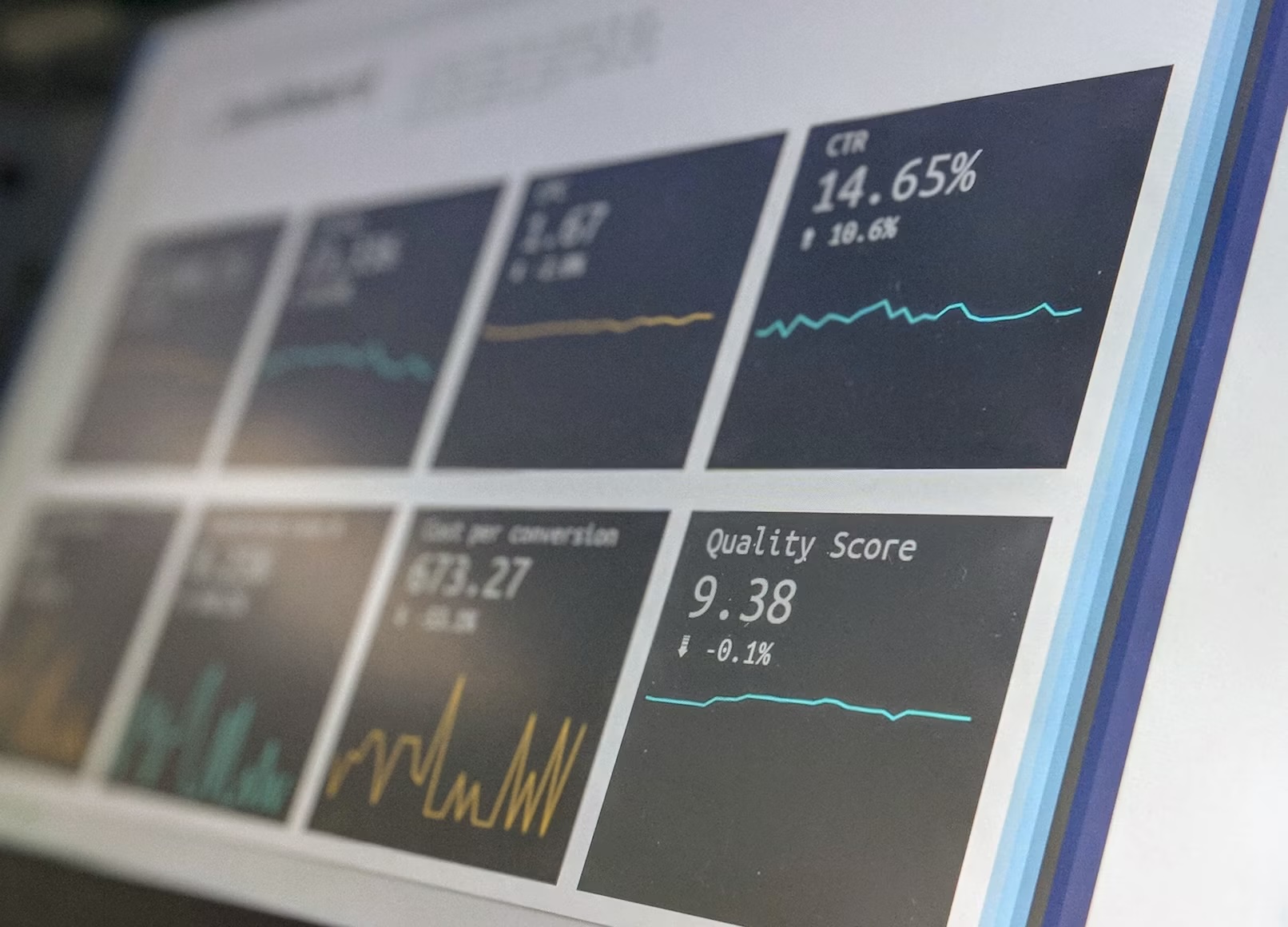\n[Photo](https://unsplash.com/photos/turned-on-monitoring-screen-qwtCeJ5cLYs) by Stephen Dawson via Unsplash\nImagine you are building a new model. You get decent baseline results with a simple model, but try to improve performance with more advanced models. During development, your PM acquires some additional data that could prove useful, and can now revert to a simpler model. After extensive hyperparameter tuning, you consult your team and they advise you to optimize for a different performance metric. After you finally deliver a model, your stakeholder changes the direction of the project, requiring a complete overhaul.\nThis is a common situation for data scientists, especially those with cross-collaborative teams, stakeholders, and changing priorities. Model development can quickly become a wild goose chase of figuring out requirements, data sources, performance metrics, etc. Through all of this chaos, it is critical that teams are able to not only keep track of all phases of model development, but are also able to reproduce results quickly. **You need to model governance.**\n## Model Governance\nModel governance refers to the framework by which a team maintains controls around its use of models, including experiment tracking, version control, reproducibility, etc. It is a critical capability that many teams do not consider until their models are already in production. It is important to have a process to effectively track development efforts, models in production, and data leveraged so that organizations can ensure quality, compliance, and monitor machine learning integration.\nLearn this step by step with the interactive [Machine Learning](https://roadmap.sh/machine-learning) roadmap.\n\nImage by Author\nTo ensure that the right models are in production, we need a way to manage various models and versions, track performance metrics, and reproduce results. This is where ML Flow comes in. **ML Flow is an open-source ML Ops platform that allows flexible model development, deployment, and management by streamlining logging and tracking of models, metrics, and more.**\nThis article will give an introduction into how to install ML Flow, create experiments, log models and more.\n···\n## ML Flow Tutorial\n### Model Development\nFor our model, we will construct a basic linear regression model. This is a model to predict the annual salary of data professionals using inputs that include job title, company size, etc.\n_See data here:_[_https://www.kaggle.com/datasets/ruchi798/data-science-job-salaries_](https://www.kaggle.com/datasets/ruchi798/data-science-job-salaries) _(CC0: Public Domain). I slightly modified the data to reduce the number of options for certain features. Please note that this is a very poor model. We are using it only to demonstrate ML Flow._\npython\n\n```\n#define independent and dependent features\nX = salary_data.drop(columns = 'salary_in_usd')\ny = salary_data['salary_in_usd']\n\n#split between training and testing sets\nX_train, X_test, y_train, y_test = train_test_split(\n X, y, random_state = 104, test_size = 0.2, shuffle = True)\n\n#define parameters separately to log\nparams = {\"fit_intercept\": True,\n \"positive\": False}\n\n#fit linear regression model\nregr = linear_model.LinearRegression(**params)\nregr.fit(X_train, y_train)\n\n#make predictions\ny_pred = regr.predict(X_test)\n```\n\nNote that we define the model parameters separately. This will be important when we incorporate ML Flow.\n### Logging Model with ML Flow\nTo start using ML Flow, you can navigate to the terminal and pip install it as a module. Next, run the server command to host a local server on your machine and leverage the ML Flow user interface.\npowershell\n\n```\npip install mlflow\n```\n\npowershell\n\n```\nmlflow server --host 127.0.0.1 --port 8080\n```\n\nNow that we have ML Flow installed and our local server running, we can log our model. **Before logging a model, we need to start a new ‘experiment’.** Think of this as a project, a bin where we will log and store all related models, metrics, data. etc. In the code below, we start a new experiment titled “Logging Example”.\n**An experiment consists of runs, which contain the model used, its parameters, metrics, artifacts, and anything else that you choose to log.** As you log more runs, we can track our progress and compare the performance of the various models developed.\nUsing the code below, we:\n 1. Start the experiment\n 2. Start a run titled “salary_baseline_regression”\n 3. Log the adjusted R2 as a metric\n 4. Log the model’s parameters\n 5. Set a tag for the model\n 6. Log the actual model\n\n\npython\n\n```\nimport mlflow\nfrom mlflow.models import infer_signature\n\n#set tracking uri\nmlflow.set_tracking_uri(uri = \"http://127.0.0.1:8080\")\n\n#create a new MLflow Experiment\nmlflow.set_experiment(\"Logging Example\")\n\n#start an MLflow run\nwith mlflow.start_run(run_name = \"salary_baseline_regression\") as run:\n\n # Log the loss metric\n mlflow.log_metric(\"Adjusted R2\", r2_score(y_test, y_pred))\n \n #log the hyperparameters\n mlflow.log_params(params)\n\n #set a tag that we can use to remind ourselves what this run was for\n mlflow.set_tag(\"Model Type\", \"Baseline\")\n\n #log the model\n model_info = mlflow.sklearn.log_model(\n sk_model = regr,\n artifact_path = 'model',\n signature = infer_signature(X_train, regr.predict(X_train)),\n input_example = X_train,\n registered_model_name = \"salary_baseline_regression\")\n```\n\n**After running, you can navigate to the ML Flow UI using the following link:**[**http://localhost:8080/**](http://localhost:8080/)\n### Navigating ML Flow UI\nThe ML Flow UI will open on the ‘Experiments’ tab. Here, we can see the experiment we created, the run for our baseline model, the model used, as well as metrics and parameters we logged.\n_Note that the metrics and parameters may not be displayed at first. You can add them to the table using the ‘Columns’ drop down._\n\nImage by Author\nNext, click on the run name to navigate to the run view. This brings us to the overview tab where we can clearly see everything we have logged (model, R2 metric, model parameters).\n\nImage by Author\nNext, click on the model name or navigate to the model view. Here we can view our model, add descriptions and/or tags, and keep track of it’s versions. The version number will increase every time we create a run using this model.\nThe tags and descriptions are helpful for overall documentation and to tag models in development vs. under review vs. in production.\n\nImage by Author\nSo far, we’ve seen how to create experiments and runs, as well as log models, metrics, parameters, etc. These are the very basics of ML Flow. Now let’s explore more options to automate some of the process and make best use out of ML Flow.\n### Advanced Logging Options\nThere are likely many metrics we would like to track, which will vary depending on the model and approach. Adding and removing metrics every time we change our approach can be laborious. However, **we can feed ML Flow our test data and results to automate the logging of metrics and streamline our process.**\nFirst, let’s save a copy of our test data and the results of our model.\npython\n\n```\n#merge salaries and predictions for mlfow\neval_data = X_test.copy()\neval_data[\"salary\"] = y_test\n```\n\nNext, we give ML Flow our data and tell it what our target variable is (salary). Now we can add a few things to our ML Flow process:\n 1. Log our data to keep track of model inputs\n 2. Use mlflow.evaluate() to automate logging the model metrics\n\n\nWe can also log ‘artifacts’, which can be many things. During development and evaluation, it may be helpful to develop visualizations that reflect model performance. We can log those as well using mlflow.log_artifact().\npython\n\n```\n#set tracking uri\nmlflow.set_tracking_uri(uri = \"http://127.0.0.1:8080\")\n\n#create an instance of a PandasDataset\ndataset = mlflow.data.from_pandas(\n eval_data, source = 'kaggle', name = \"ds_salaries\", targets = \"salary\")\n\n#create a new MLflow Experiment\nmlflow.set_experiment(\"Salary Prediction\")\n\n#start an MLflow run\nwith mlflow.start_run(run_name = \"salary_baseline_regression\") as run:\n\n #log the dataset\n mlflow.log_input(dataset, context = \"training\")\n \n #log the hyperparameters\n mlflow.log_params(params)\n\n #log pngs\n mlflow.log_artifact('Result.png')\n\n #set a tag that we can use to remind ourselves what this run was for\n mlflow.set_tag(\"Model Type\", \"Baseline\")\n\n #log the model\n model_info = mlflow.sklearn.log_model(\n sk_model = regr,\n artifact_path = 'model',\n signature = infer_signature(X_train, regr.predict(X_train)),\n input_example = X_train,\n registered_model_name = \"salary_baseline_regression\")\n model_uri = mlflow.get_artifact_uri(\"model\")\n\n #create the model uri and evalute the model\n result = mlflow.evaluate(model = model_uri, data = dataset, model_type = \"regressor\", evaluators=[\"default\"])\n```\n\nNow, if we navigate back to the ML Flow UI and click on the run, we can see that there are several metrics we are tracking. \n\nImage by Author\nAnd if we want to evaluate multiple models in a run, we can compare their performance side-by-side using the automated visualizations below.\n\nImage by Author\nTo view the visualizations you logged, navigate to the artifacts view.\n\nImage by Author\nLastly, we can now view our our data inputs and their types. It is best to log datasets as we drop or add new features, sources, etc.\n\nImage by Author\n### Recalling ML Flow Models\n**To reproduce a model that we have logged, we can easily recall models from ML Flow using the model name and version.** This can also be used to retrain models that are currently in production.\npython\n\n```\nmodel_name = \"salary_baseline_regression\"\nmodel_version = \"latest\"\n\n# Load the model from the Model Registry\nmodel_uri = f\"models:/{model_name}/{model_version}\"\nmodel = mlflow.sklearn.load_model(model_uri)\n```\n\n### Databricks Integration\nIf you are (like me) a fan of Databricks, ML Flow is fully integrated within the platform. No need to run ML Flow locally, as Databricks integrates the ML Flow UI within their 'Experiments' view. It also includes additional features like tracking for generative AI applications, agents, and integrates AutoML for model optimization. See full documentation here: \n···\n## Conclusion\nIn conclusion, model governance is a must-have capability for any organization to ensure quality and compliance. Tracking and monitoring tools like ML Flow offer solutions to streamline model governance processes and fully manage model development and deployment.\n···\n_I hope you have enjoyed my article! Please feel free to comment, ask questions, or request other topics._\n_Connect with me on LinkedIn:_[_https://www.linkedin.com/in/alexdavis2020/_](https://www.linkedin.com/in/alexdavis2020/)\n## Register Now to Continue Reading\n### Unlock Towards Data Science with a Free Account\nAll articles on Towards Data Science are available to registered users. Create a free account today to access this article and thousands more.\nRegister for freeSign in to your account\n* * *\n\nWritten By\n## [Alex Davis](https://towardsdatascience.com/author/adavis08/)\n[See all from Alex Davis](https://towardsdatascience.com/author/adavis08/)\n[Data Science](https://towardsdatascience.com/tag/data-science/)[ML Flow](https://towardsdatascience.com/tag/ml-flow/)[Mlops](https://towardsdatascience.com/tag/mlops/)[Model Development](https://towardsdatascience.com/tag/model-development/)[Model Governance](https://towardsdatascience.com/tag/model-governance/)\nShare This Article\n * [](https://www.facebook.com/sharer/sharer.php?u=https%3A%2F%2Ftowardsdatascience.com%2Fyour-ml-experiments-are-a-mess-heres-the-fix%2F&title=Are%20Your%20ML%20Experiments%20a%20Mess%3F%20Here%E2%80%99s%20the%20Fix)\n * [](https://www.linkedin.com/shareArticle?mini=true&url=https%3A%2F%2Ftowardsdatascience.com%2Fyour-ml-experiments-are-a-mess-heres-the-fix%2F&title=Are%20Your%20ML%20Experiments%20a%20Mess%3F%20Here%E2%80%99s%20the%20Fix)\n * [](https://x.com/share?url=https%3A%2F%2Ftowardsdatascience.com%2Fyour-ml-experiments-are-a-mess-heres-the-fix%2F&text=Are%20Your%20ML%20Experiments%20a%20Mess%3F%20Here%E2%80%99s%20the%20Fix)\n\n\nTowards Data Science is a community publication. Submit your insights to reach our global audience and earn through the TDS Author Payment Program.\n[Write for TDS](https://towardsdatascience.com/submissions/)\n## Related Articles\n * [](https://towardsdatascience.com/3-bitter-lessons-i-wish-i-knew-earlier-as-a-big-data-engineer-e2956bcc7b29/)\n## [3 Bitter Lessons I Wish I Knew Earlier As a Big Data Engineer](https://towardsdatascience.com/3-bitter-lessons-i-wish-i-knew-earlier-as-a-big-data-engineer-e2956bcc7b29/)\n[Data Science](https://towardsdatascience.com/category/data-science/)\nThe Dos and Don'ts of data engineering\n[Nam Nguyen](https://towardsdatascience.com/author/namnguyenwrite/)\nAugust 6, 20216 min read\n * [](https://towardsdatascience.com/multithreading-multiprocessing-python-180d0975ab29/)\n## [Multi-threading and Multi-processing in Python](https://towardsdatascience.com/multithreading-multiprocessing-python-180d0975ab29/)\n[Machine Learning](https://towardsdatascience.com/category/artificial-intelligence/machine-learning/)\nA deep dive into multi-threading and multi-processing with Python and how they are related to concurrency and parallelism\n[Giorgos Myrianthous](https://towardsdatascience.com/author/gmyrianthous/)\nJanuary 21, 202210 min read\n * [](https://towardsdatascience.com/why-hire-an-ai-consultant-50e155e17b39/)\n## [How to Hire an AI Consultant](https://towardsdatascience.com/why-hire-an-ai-consultant-50e155e17b39/)\n[Artificial Intelligence](https://towardsdatascience.com/category/artificial-intelligence/)\nSo, you know you need some machine learning/AI development. Why not just do it yourself? Well, the short answer is that specialists have...\n[Daniel Shapiro, PhD](https://towardsdatascience.com/author/lemaysolutions/)\nJune 27, 201711 min read\n * [](https://towardsdatascience.com/predicting-apple-stock-prices-with-neural-networks-4aefdf10afd0/)\n## [Predicting Apple Stock Prices with Neural Networks](https://towardsdatascience.com/predicting-apple-stock-prices-with-neural-networks-4aefdf10afd0/)\n[Artificial Intelligence](https://towardsdatascience.com/category/artificial-intelligence/)\nHow to use recurrent neural networks to predict stock prices.\n[Soner Yıldırım](https://towardsdatascience.com/author/sonery/)\nJuly 9, 20207 min read\n * [](https://towardsdatascience.com/dimensionality-reduction-for-linearly-inseparable-data-5030f0dc0f5e/)\n## [Dimensionality Reduction for Linearly Inseparable Data](https://towardsdatascience.com/dimensionality-reduction-for-linearly-inseparable-data-5030f0dc0f5e/)\n[Data Science](https://towardsdatascience.com/category/data-science/)\nNon-linear dimensionality reduction using kernel PCA\n[Rukshan Pramoditha](https://towardsdatascience.com/author/rukshanpramoditha/)\nDecember 20, 20226 min read\n * [](https://towardsdatascience.com/an-attempt-to-fine-tune-facial-recognition-eigenfaces-a6baa8fc0e62/)\n## [An attempt to fine-tune facial recognition - Eigenfaces](https://towardsdatascience.com/an-attempt-to-fine-tune-facial-recognition-eigenfaces-a6baa8fc0e62/)\n[Deep Learning](https://towardsdatascience.com/category/artificial-intelligence/deep-learning/)\nI translated a scientific paper into python to check whether it can help in reducing space and time consumption\n[Prashant Mudgal](https://towardsdatascience.com/author/prashantmdgl9/)\nDecember 29, 202010 min read\n * [](https://towardsdatascience.com/recreating-an-ml-masters-degree-with-online-courses-8f90a7088cf8/)\n## [Recreating an ML Master's degree with Online Courses](https://towardsdatascience.com/recreating-an-ml-masters-degree-with-online-courses-8f90a7088cf8/)\n[Deep Learning](https://towardsdatascience.com/category/artificial-intelligence/deep-learning/)\nUse online courses to create your curriculum\n[Pascal Janetzky](https://towardsdatascience.com/author/pascaljanetzky/)\nJune 14, 20217 min read\n * [](https://towardsdatascience.com/reinforcement-learning-part-3-monte-carlo-methods-7ce2828a1fdb/)\n## [Reinforcement Learning, Part 3: Monte Carlo Methods](https://towardsdatascience.com/reinforcement-learning-part-3-monte-carlo-methods-7ce2828a1fdb/)\n[Machine Learning](https://towardsdatascience.com/category/artificial-intelligence/machine-learning/)\nFrom casinos to AI: unveiling the power of Monte Carlo methods in complex environments\n[Slava Efimov](https://towardsdatascience.com/author/slavahead/)\nMay 23, 202413 min read\n * [](https://towardsdatascience.com/7-must-know-data-wrangling-operations-with-python-pandas-849438a90d15/)\n## [7 Must-Know Data Wrangling Operations with Python Pandas](https://towardsdatascience.com/7-must-know-data-wrangling-operations-with-python-pandas-849438a90d15/)\n[Artificial Intelligence](https://towardsdatascience.com/category/artificial-intelligence/)\nA comprehensive practical guide\n[Soner Yıldırım](https://towardsdatascience.com/author/sonery/)\nMarch 9, 20215 min read\n\n\n * [YouTube](https://www.youtube.com/c/TowardsDataScience)\n * [X](https://x.com/TDataScience)\n * [LinkedIn](https://www.linkedin.com/company/towards-data-science/)\n * [Threads](https://www.threads.net/@towardsdatascience)\n * [Bluesky](https://bsky.app/profile/towardsdatascience.com)\n\n\n[](https://towardsdatascience.com/)\nYour home for data science and AI. The world's leading publication for data science, data analytics, data engineering, machine learning, and artificial intelligence professionals.\nSubscribe to Our Newsletter[Write For TDS](https://towardsdatascience.com/submissions/)•[About](https://towardsdatascience.com/about-towards-data-science-d691af11cc2f/)•[Advertise](https://contact.towardsdatascience.com/advertise-with-towards-data-science)•[Privacy Policy](https://towardsdatascience.com/privacy-policy/)•[Terms of Use](https://towardsdatascience.com/website-terms-of-use/)\n© Insight Media Group, LLC 2026•[The New Stack](https://thenewstack.io)•[roadmap.sh](https://roadmap.sh)•[Creator Network](https://insightmediagroup.io/creator-network)\n#### Recommended Articles \nClose\n * [  How Relevance Models Foreshadowed Transformers for NLP ](https://towardsdatascience.com/how-relevance-models-foreshadowed-transformers-for-nlp/ \"How Relevance Models Foreshadowed Transformers for NLP\")\n * [  Javascript Fatigue: HTMX Is All You Need to Build ChatGPT — Part 1 ](https://towardsdatascience.com/javascript-fatigue-you-dont-need-js-to-build-chatgpt/ \"Javascript Fatigue: HTMX Is All You Need to Build ChatGPT — Part 1\")\n * [  The Subset Sum Problem Solved in Linear Time for Dense Enough Inputs ](https://towardsdatascience.com/subset-sum-problem-solved-in-linear-time-for-dense-enough-inputs/ \"The Subset Sum Problem Solved in Linear Time for Dense Enough Inputs\")\n * [  Does Your Company Have a Data Strategy? ](https://towardsdatascience.com/does-your-company-have-a-data-strategy-e8944dbec4ae/ \"Does Your Company Have a Data Strategy?\")\n\n\n",
"body_base_path": "attachments/630d1c3d535e/pages/",
"body_markdown_path": "attachments/630d1c3d535e/pages/archived-body.md",
"local_html": "attachments/630d1c3d535e/pages/archived-body.html",
"body_source": "prior_capture"
}